E-Paper



Bids invited to lay groundwork for Great Nicobar airport project
The government seeks bids for marine geotechnical work for a new airport on Great Nicobar Island, facing opposition from tribal councils over land concerns.

 Prefer HTon Google


The government has invited bids for marine geotechnical investigation work for a greenfield international airport at Chingenh on Great Nicobar Island to be developed by the Airports Authority of India (AAI), according to documents seen by HT.
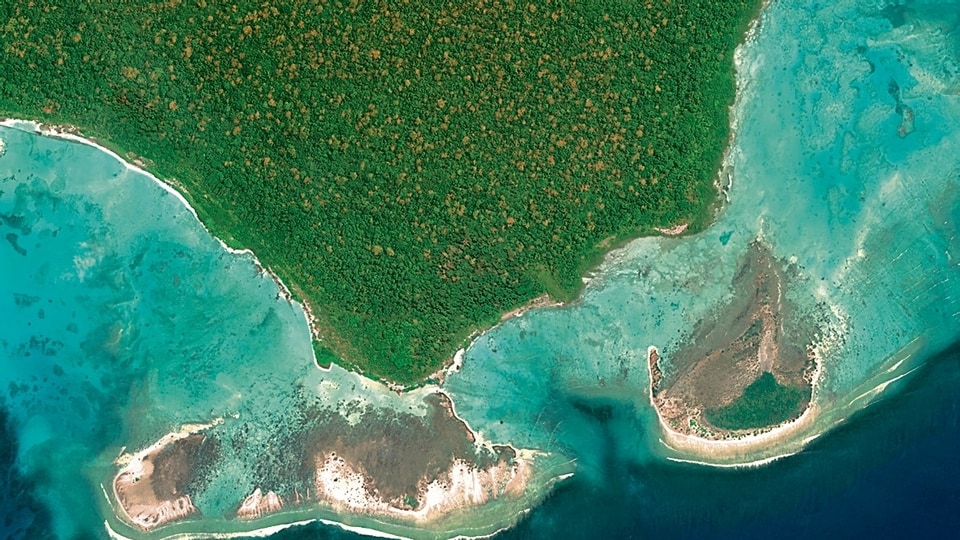
Chingenh is one of the so-called pre-tsunami villages, from which tribals were relocated to various camps after the 2004 tsunami; they have since been seeking permission to return, but the administration hasn’t allowed them to.
HT reported on January 23 that members of the Tribal Council of Great Nicobar say the Andaman and Nicobar administration has asked them to give up claims to some of the villages in which they used to live before the tsunami –– a request they are not keen to accede to because the old villages are an integral part of their culture and heritage. During the press meeting by Tribal Council members on January 22, they also made it clear that they did not agree with diversion of forest land for this project.
The international airport is one of the four components of the Great Nicobar Holistic Development project. The other three are an International Container Transshipment Terminal (ICCT); a power plant; and a township. The total land required for the project is 166.10 sqkm.
The tender called by Engineers India Limited, a state-owned engineering consultancy and project management company on February 4, is aimed at ensuring that investigations related to design and construction of offshore and coastal infrastructure required for an airport is conducted; this is especially important given the environmental vulnerability of the entire chain of islands in the Bay of Bengal.
Such investigations normally include in-depth soil sampling, drilling, and geophysical surveys to evaluate the seabed and sub-seabed conditions. Further, AAI, last November,also invited an e-tender for “Project Management Consultancy Services for Development of Greenfield Airport at Great Nicobar Island (GNI)” .
That tender document said the project cost is estimated to be ₹8,573 crore. AAI also called for a pre-bid meeting and site visit at Chingenh, according to the document.
One of the major concerns is the huge loss of forest land involving the airport.
According to the Evaluation of Social Impact Assessment Study for Greenfield International Airport at Great Nicobar Islands, published in 2024, the total area of the proposed airport is 845 ha (hectares) or 8.45 sqkm, out of which forest land is 142 ha (1.42 sqkm) .
HT first reported on April 14, 2023, that the Tribal Council of Little and Great Nicobar , in August 16, 2022, withdrew the no-objection certificate (NOC) given for diversion of land –– roughly half of which is tribal reserve land –– for the controversial Great Nicobar Township and other infrastructure projects.
The withdrawal of the permission was after the council said it was not informed that the land being marked for development included areas and villages that the communities lived in prior to the 2004 tsunami disaster.
“As you are well aware, 84.10 sqkm of this diverted forest is a tribal reserve which is now set to be denotified. We were not made aware of this information, nor were we shown on a map the extent of the Tribal Reserve area that falls within the proposed plan. We were shocked and distressed to learn that parts of our pre-Tsunami villages of Chingenh (along the south east coast) and Kokeon, Pulo Pacca, Pulo Baha and In-haeng-loi (along the southwest coast which are affiliated to the largest Great Nicobarese village Pulo Bhabhi) also will be denotified and diverted as part of holistic development plan of Great Nicobar,” the Tribal Council said in a letter to Amardeep Raju, member secretary of the Union environment ministry’s expert appraisal committee in 2022, withdrawing their NOC to the diversion.
Great Nicobar has four communities: the Great Nicobarese, who lived along the south-eastern and up to the mid-western coast of the island; the Little Nicobarese, who lived from the mid-western coast to the northern coast; the various Shompen bands, who are scattered in the interiors of forests and valleys; and migrants and settlers who occupy settlements along the east coast.
HT reached out to AAI, but did not receive a comment till the time of going to print.