E-Paper



Bird flu impacts 3 migratory water birds, apart from poultry and crows: Centre
Wildlife wardens have been asked to coordinate with state governments and the ministry of animal husbandry and fisheries everyday, authorities say


Bird flu has impacted the bar-headed geese, black and brown headed gulls and the Eurasian teal among migratory birds, and crows and poultry among domestic birds till now, according to the Union environment ministry.
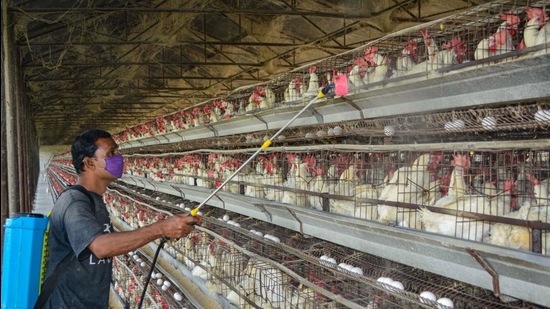
The ministry had constituted a committee comprising the inspector general, deputy inspector general of forests and wildlife and a project scientist to monitor the handling of the avian flu situation by states. The committee held a meeting with all state chief wildlife wardens on Tuesday to take stock of the situation and ensure that Centre’s advisory is being followed.
“Increasing surveillance and monitoring of wild birds, particularly waterfowls, including ducks, geese, and waders in natural habitats, are therefore essential to check disease transmission. Coordination between the forest department, wetlands authority and the animal husbandry and veterinary departments at the state level is critical to ensure that transmission from wild to domestic birds and vice versa is curbed.The wildlife division of the ministry of environment, forests and climate change has also been sending advisories to the states, which need to be followed in letter and spirit. NGOs with a vast network of bird watchers and ornithologists could also be approached for their expertise and resources to monitor vulnerable areas in states, which could then be shared with the government agencies for further action,” said Dipankar Ghose, director, wildlife and habitats programme, WWF India.
Also Read: Bird flu spreads to forests, triggers concerns about safety of endangered species
“The wildlife wardens have been asked to coordinate with state governments and the ministry of animal husbandry and fisheries everyday. They have also been asked to ensure states are complying with the advisory issued to them and that any bird deaths or suspicious cases have to be reported to us,” said Soumitra Dasgupta, additional director general (wildlife).
“We are keeping a watch on any new species contracting the virus. As of now cases have been reported from protected and forest areas of Himachal Pradesh, Kerala and Gujarat.
According to the International Union for Conservation of Nature (IUCN), bar-headed geese are in abundance hence they are of “least concern” but their numbers are declining. They breed in Afghanistan,Kyrgyzstan, Mongolia, Russian Federation (Central Asian Russia) and Tajikistan, and have a very large range.
“Most migratory waterfowl species are known to be carriers of the H5N1 virus. After the infection surfaced in Himachal Pradesh, it has been reported in six to seven states. Most recently reports of red junglefowls have come in. They are a relatively rugged species so its very surprising that they contracted the virus. The avian influenza virus normally doesn’t jump over to humans but can be easily transmitted from migratory species to domestic birds and has great potential to completely damage our poultry—birds and even pigs,” said Bivash Pandav, director of Bombay Natural History Society (BNHS), who has specialised in research of water birds.
He cautioned that the possibility of endangered bird species contracting the virus cannot be ruled out.
“We have to be extremely watchful and monitor wetlands and other wintering grounds. You cannot catch migratory birds and vaccinate them. All you can do is protect other species like vultures etc. A lot of precaution must be exercised in zoos. This epidemic cannot be taken lightly as the virus mutates and evolves very quickly,” he added. Birders and nature lovers can help in reporting cases of dead or sick birds, but Pandav cautioned that they avoid going close to the birds.
According to an advisory by the environment ministry, affected birds display symptoms such as tremors, diarrhoea, head tilt and paralysis. The disease spreads quickly, causing paralysis and staggering. The advisory to state chief wildlife wardens says an action plan should be prepared for monitoring the migratory birds and dealing with any emergency. Dead birds should be handled with utmost caution and scientific supervision and surveillance should not be restricted to the protected areas alone, but to all such wetlands and habitats that provide grounds to the migrating birds and to areas where there is a possibility of interaction of migratory birds and poultry such as backyard poultry.