E-Paper



Blood donors asked for health status, but not tested for Covid-19
The number of blood donation camps organised every month has gone down from 35 to zero in Delhi since social distancing was mandated to contain the Covid-19 outbreak, and IRCS is reaching out to individuals to motivate them to donate.

 Prefer HTon Google


Blood donors are now asked for their health status, including symptoms of coronavirus disease (Covid-19), but are not being tested for it even as the number of cases nationwide crossed 6,700 on Friday.
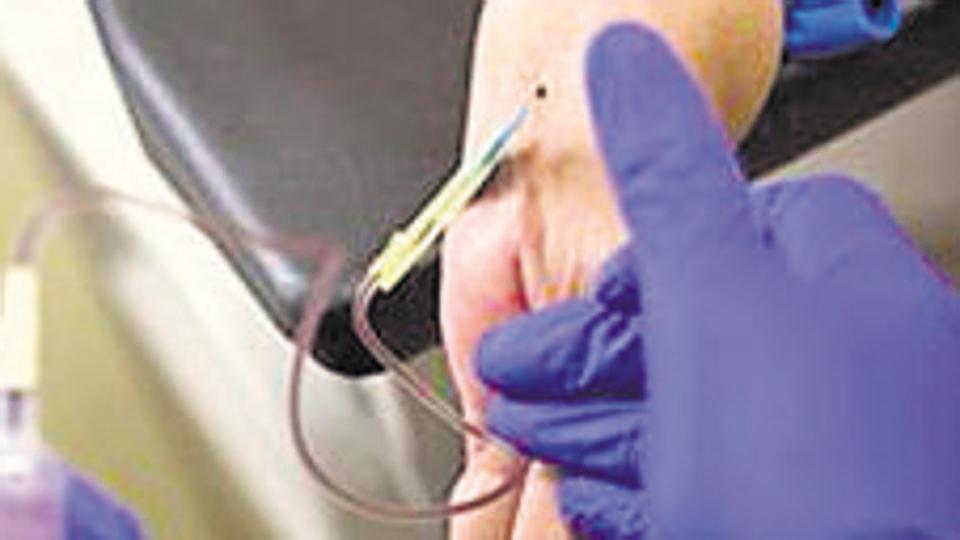
Despite the lockdown, there is no shortage of blood and its components as requirement for trauma cases and elective surgeries has substantially reduced.
“We have started thorough screening of all donors. They have to fill up a detailed form about their health status and also [provide] details such as their Covid-19 status, or if anyone they know has tested positive or someone in their neighbourhood has any Covid-19-like symptoms,” said RK Jain, secretary general of the Indian Red Cross Society (IRCS).
“We are doing our own risk profiling before allowing [them] to donate,” he said.
The number of blood donation camps organised every month has gone down from 35 to zero in Delhi since social distancing was mandated to contain the Covid-19 outbreak, and IRCS is reaching out to individuals to motivate them to donate.
IRCS recently tied up with resident welfare associations and plans to send mobile collection vans to residential colonies from Monday. Since the government declared blood as an essential supply on April 9, blood collection vans can move without restriction.
“We reached out to our voluntary donors individually, arranged pick and drop for them, and even forwarded short videos of children who need regular blood transfusions to motivate these people to come out and donate blood,” said Vanshree Singh, director (blood bank) at IRCS.
“I have been issuing passes to ensure their movement isn’t hampered in any way. In areas where there were multiple donors, we even send our mobile van.”
IRCS secretary general RK Jain said: “Since elective surgeries are not happening, and trauma cases have gone down, what we are getting these days is requests for blood from people who undergo regular transfusions, such as people suffering from thalassemia and other blood disorders, chemotherapy patients, and anaemic pregnant women. By and large, we managed to stay afloat due to demand from a particular set of people going down, and that compensated for the reduced blood donations.”
The Centre has declared blood services as essential services.
The Union health ministry’s recommendations to states, issued on April 9, said that “addressing concerns of those running blood centres and blood transfusion services, especially regarding concerns with managing safety and adequacy of blood during this period of restrained gatherings and social distancing… it is essential that the supplies of safe blood continue to be maintained at licenced blood centres in the country”.
It added, “Activities for blood collection and voluntary blood donation therefore are required to be continued judiciously during this period to meet the blood requirements.”
Blood banks across the world are dependent on voluntary donations from healthy individuals to meet demand for blood and its components.
Singh said: “We are tying up with resident welfare associations to park our blood collection vans near residential localities so that people don’t have to travel long distances to donate blood. And at the time, we will follow all infection control and social distancing measures, such as two couches instead of the earlier practice of four to draw blood.
“There will be a gap of at least three metres between the two couches and at one time, there will be no more than three people allowed into the camp. The vans will be disinfected on a regular basis.”
Apart from the camps, the IRCS will run a fleet of cars to pick and drop donors from their residences to the donation centres.
The news of donation camps being held will put a lot of harried minds at ease.
Shobha Tuli, founder of Thalassemics India, said: “The challenge is that thalassemia patients need fresh blood, which should ideally not be more than five to seven days old. The guidelines say less than two weeks old, because if the blood is older, the haemoglobin doesn’t rise enough in these patients. So holding camps will help as donors otherwise have to go to a hospital and donate. We alerted patients that they should try to arrange for donors should such a problem arise.”
RN Makroo, president of the Indian Society of Transfusion Medicine, said many blood banks have started pooling resources. “We are sharing the supply because this is an extraordinary situation. We tell regulars to try and inform the centre in advance of their arrival, preference and requirement, so that the centre is prepared to make adequate arrangements.”