E-Paper



Budget 2026: ECMS outlay doubled to ₹40,000 crore; ISM 2.0 announced
Finance minister Nirmala Sitharaman announced expanded incentives under ECMS and launched India Semiconductor Mission 2.0 to boost electronics manufacturing

 Prefer HTon Google


Union finance minister Nirmala Sitharaman on Sunday announced a major expansion of incentives under the Electronics Component Manufacturing Scheme (ECMS) and unveiled the next phase of India’s semiconductor push with the launch of India Semiconductor Mission (ISM) 2.0. Both schemes are run by the Ministry of Electronics and Information Technology (MeitY).
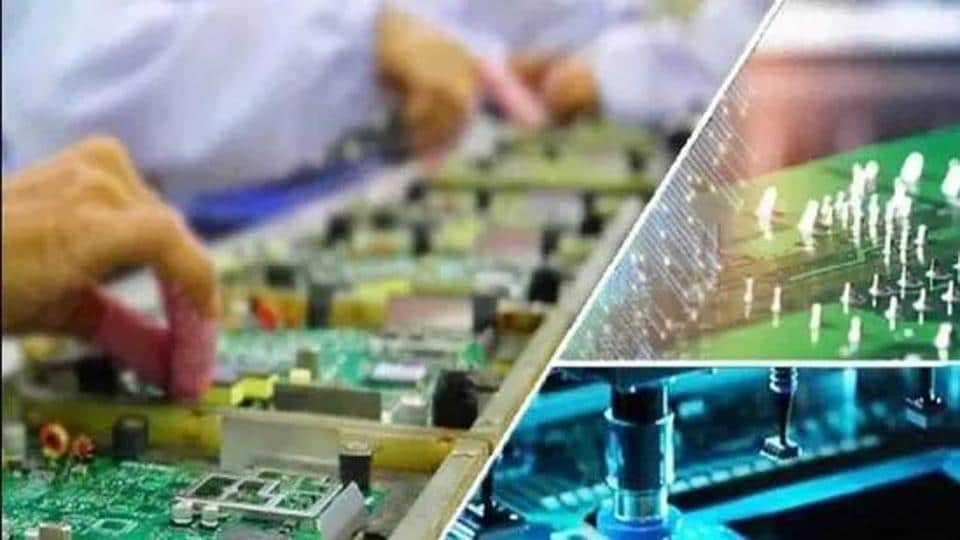
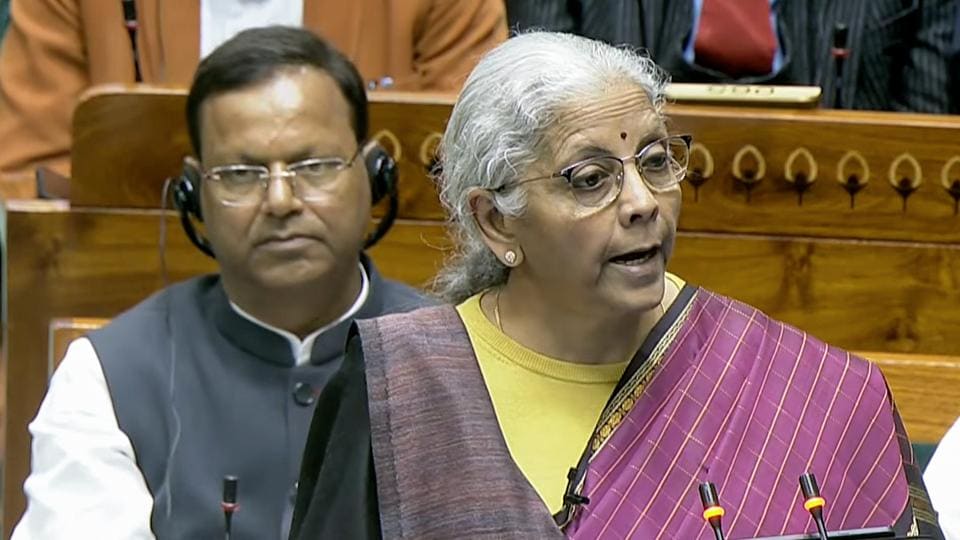
In her Budget speech, the finance minister announced a sharp increase in funding for ECMS to ₹40,000 crore.
The ECMS was notified in April 2025 with a budget outlay of ₹22,919 crore for six years, with projected production worth ₹10.34 lakh crore and potential employment generation for 1.42 lakh people, according to the government.
Sitharaman said the scheme has already attracted investments at more than double the initial target.
Also read:Budget 2026: ₹5,000 crore to develop CER around temple towns, tier-2, 3 cities
MeitY minister Ashwini Vaishnaw has previously said that the scheme, with 249 applications, had drawn investments of over ₹1.15 lakh crore—nearly double the government’s initial target of ₹59,350 crore.
The total number of approved projects under the scheme currently stands at 46, with cumulative investments of ₹54,567 crore, projected production of ₹3,67,669 crore, and a promise of over 50,000 direct jobs.
The scheme is building the foundation for a $500 billion electronics manufacturing ecosystem by 2030–31, powering technology sovereignty and global trust in India.
Also Read:India to host 1st Big Cat Summit of heads of 95 countries in 2026: Sitharaman
Announcing the scaling up of manufacturing in seven strategic and frontier sectors, Sitharaman said, “India Semiconductor Mission 1.0 expanded India’s semiconductor sector capabilities. Building on this, we will launch ISM 2.0 to produce equipment and materials, design full-stack India IP, and fortify supply chains. We will also focus on industry-led research and training centres to develop technology and skilled workforce.”
The MeitY minister had recently said that the government plans to support at least 50 fabless chip companies under ISM 2.0 by scaling up the Design Linked Incentive (DLI) Scheme, with the long-term goal of producing “one AMD” and “one Qualcomm” out of the country.
Also Read:Gross GST revenue saw 6.2% annualized growth to over ₹1.93 lakh cr in Jan 2026
ISM 2.0 is expected to be announced in three months after the government finalises its structure, including funding, incentives for fabless startups, a sharper focus on advanced design, and a roadmap to achieve 3-nanometre and 2-nanometre technology nodes.
ISM 1.0, announced in late 2021 with a financial outlay of ₹76,000 crore, has approved a total of 10 semiconductor projects spread across six states, with four expected to begin chip production this year. The projects cover fabs, advanced packaging, OSAT/ATMP units, and related facilities. These approved projects collectively represent investment commitments of around ₹1.60 lakh crore.