
 E-Paper



Built with no steel or iron, Ayodhya Ram Temple is an architectural marvel. Know why
Pran Pratishtha: The temple has been constructed in ancient India's Nagara style.

 Prefer HTon Google


The grand Ram Temple in Ayodhya is a well-thought-out, scientifically executed and marvellous projection of Indian traditional heritage. It was designed by celebrated architect Chandrakant B Sompura, with the help of his son Ashish, and incorporated his vision, which he outlined 30 years back.
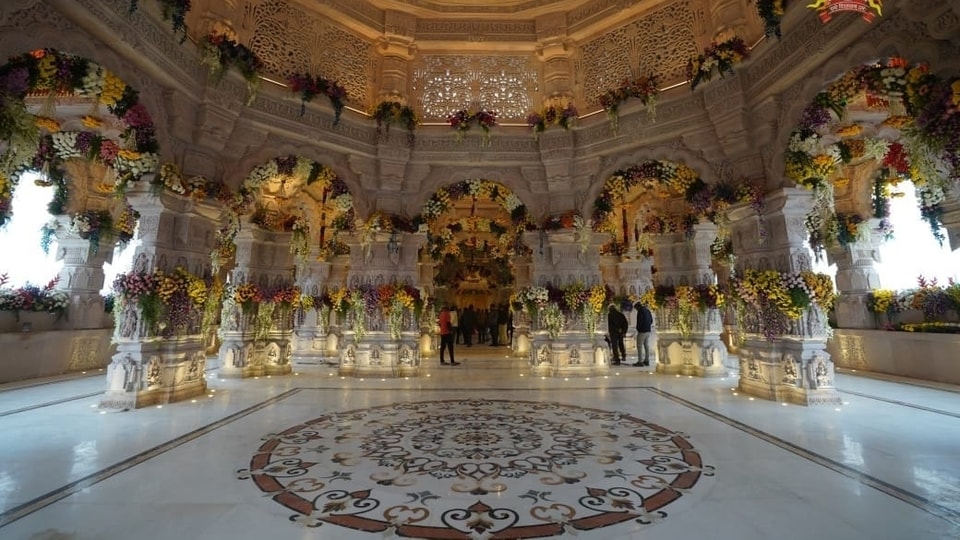
Standing on 2.7 acres of land in the temple town, the temple is 161 feet tall, 235 feet wide, and has a total length of 360 feet. It has been constructed in one of the two distinguishing temple-building styles from ancient India – Nagara – following all the Vedic rituals with an amalgamation of modern technology.
Follow live updates on Ram Mandir inauguration
Features of the temple
The built-up area of the temple is nearly 57,000 square feet and is a three-floor structure.
It stands on a raised plinth, with the most sacred part of the temple called ‘garbha griha’ or the sanctum sanctorum, towered over by the tallest shikhara or the mountain peak on the third floor. A total of five such shikharas are constructed over five mandapas. It also has 300 pillars across the mandapas, and 44 teak doors have been installed.
Nearly two lakh bricks inscribed with Lord Ram's name in different languages and collected over 30 years are being integrated into the temple.
The insides of the sanctum sanctorum were decorated using Makrana marble, the same stone used to build the Taj Mahal.
No steel or iron was used
During the Gupta Period, from where the Nagara style emerged, the use of iron or steel was not prevalent in the construction of temples. The durability of iron is roughly 80-90 years. The temple is built using granite, sandstone, and marble with a lock and key mechanism, which ensures a lifespan of up to 1,000 years. Notably, no cement or mortar has also been utilised in its construction.
The area was first excavated to a depth of 15 metres, and 47 layers of engineered soil were laid to make a solid base. A 1.5-metre thick M-35 grade concrete raft was laid, and a 6.3-metre thick plinth of solid granite stone was placed on top to make it sturdy.
Science juxtaposing tradition
Few top Indian scientists have contributed to making the iconic Ram Temple. ISRO technologies have also been used in the construction. Pradeep Kumar Ramancharla, the director of the Central Building Research Institute (CBRI), has been actively associated with the project.
A special ‘Surya Tilak’ mirror, a lens-based apparatus, was designed by a team of scientists from CBRI and the Indian Institute of Astrophysics (IIA). It will be used for a ceremonial anointment of Lord Ram on every Ram Navami day at noon with the sunlight on the idol's forehead.


