
 E-Paper



Cannot cast doubt on Covid vaccination, its efficacy: Supreme Court
The bench, which also comprised justice AS Bopanna, was hearing a public interest litigation (PIL) that sought an investigation into deaths and other adverse events reported soon after certain people were administered the vaccine.


The Supreme Court on Friday said that the country cannot afford any laxity in vaccinating its population against Covid-19, and that the top court would be extremely circumspect in casting any doubt on efficacy of the inoculation programme by correlating or linking deaths with vaccines.
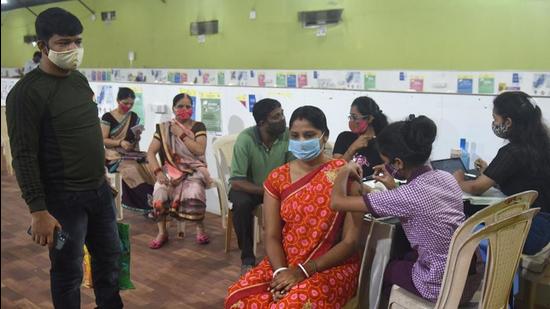
“This (vaccination) is a matter of highest national importance. We cannot afford the price of laxity at such a crucial juncture. You have to vaccinate people to protect them, protect their lives right now,” said a bench headed by justice Dhananjaya Y Chandrachud.
The bench, which also comprised justice AS Bopanna, was hearing a public interest litigation (PIL) that sought an investigation into deaths and other adverse events reported soon after certain people were administered the vaccine. The plea, filed by Ajay Kumar Gupta, a doctor, and four others, also demanded compensation for those dying or experiencing serious adverse events within 30 days of vaccination.
Senior advocate Colin Gonsalves, appearing for the petitioners, complained that India has abandoned active surveillance, and there is no mechanism for reporting adverse events occurring soon after vaccination. He said there were at least 900 separate newspaper reports about death of people immediately after inoculation.
The bench, however, retorted: “After a person has taken Covid vaccine, every death cannot be attributed to vaccine. You cannot correlate these deaths to vaccination. Death can occur due to several other reasons, including pre-existing diseases. Vaccination doesn’t control other diseases.”
It added: “Look at the enormous benefit of vaccination. WHO has been advocating it. People worldwide are getting benefitted. We should not be casting doubt on vaccination.”
Gonsalves, on his part, tried to convince the bench that he was not trying to create doubts about vaccination but was concerned about lack of a monitoring mechanism wherein people were not getting checked after adverse events occur.
To this, the bench again responded: “The world has seen a pandemic of an unseen nature. Every country is vaccinating its people. We cannot cast any doubt on our vaccination programme.”
Gonsalves, however, stressed the contention that other countries across the globe were doing active surveillance while India jettisoned it.
“We cannot make a policy on this. We have to look at all this as a nation... When there are guidelines in place why should the court intervene at this crucial stage,” responded the bench.
The health ministry has a set surveillance protocol to deal with Adverse Events Following Immunisation (AEFI), that is followed across Covid vaccination centres. There are AEFI committees formed at the district, state and central level to monitor such cases. District committees document the cases and report to state committees, which in turn, send the case file to the national AEFI committee to examine cases.
The committees consist of senior doctors from various disciplines such as cardiology, neurology, paediatrics, medicine etc.
Protocols are also in place for systemic investigation and causality assessment of serious AEFIs, which doesn’t end at hospitalizing the recipient, rather it needs to be established whether the reaction was caused by vaccination or something else.
The court finally decided to the seek assistance of solicitor general (SG) Tushar Mehta before taking a final call on the fate of the PIL. The bench asked Gonsalves to serve a copy of the petition on the office of the SG, who has been appearing in all the cases relating to vaccination policy before the top court, and fixed the matter after two weeks.
“There is something in our mind. We will take a call,” remarked the bench while adjourning the case.
India has reported 0.004% overall adverse events so far, according to data on the CoWIN dashboard. The national AEFI committee experts have linked three deaths to Covid-19 vaccines.
A majority of AEFIs are minor in nature: pain, mild swelling at injection site, mild fever, body ache, nausea, giddiness and mild allergic reactions such as rashes etc.
The PIL, filed through advocate Satya Mitra, has also demanded disclosure of all information related to the phase 1, 2 and 3 trials of the vaccines in use and to further direct the public authorities and all private establishments to make the vaccine purely voluntary as per the instruction of the Union of India.
It also asked for obtaining the consent of those getting vaccinated. “Informed consent is a fundamental principal both for clinical trials as well as for the administration of the vaccine. Nowhere in the country are people being informed both orally and in written form regarding the serious adverse events that could happen after the administration of the vaccine,” said the plea.
“Checking the effect on the person vaccinated for a few minutes after the vaccination (maximum 30 minutes) is tantamount to criminal negligence since the adverse events can happen at varying period of time including extended periods of time and even lifelong. The criminal conspiracy lies in the manufacturer and the government entering into an arrangement whereby the adverse events are hidden,” the plea alleged.


