
 E-Paper



Two CBSE Class 10 Board exams a year: How will it work? All details inside
CBSE's move to hold Class 10 board exams twice a year aligns with the National Education Policy’s recommendation for flexible exam scheduling.

 Prefer HTon Google


The Central Board of Secondary Education (CBSE) on Wednesday announced that starting from 2026, Class 10 students will have the option to appear for board exams twice in a single academic year.
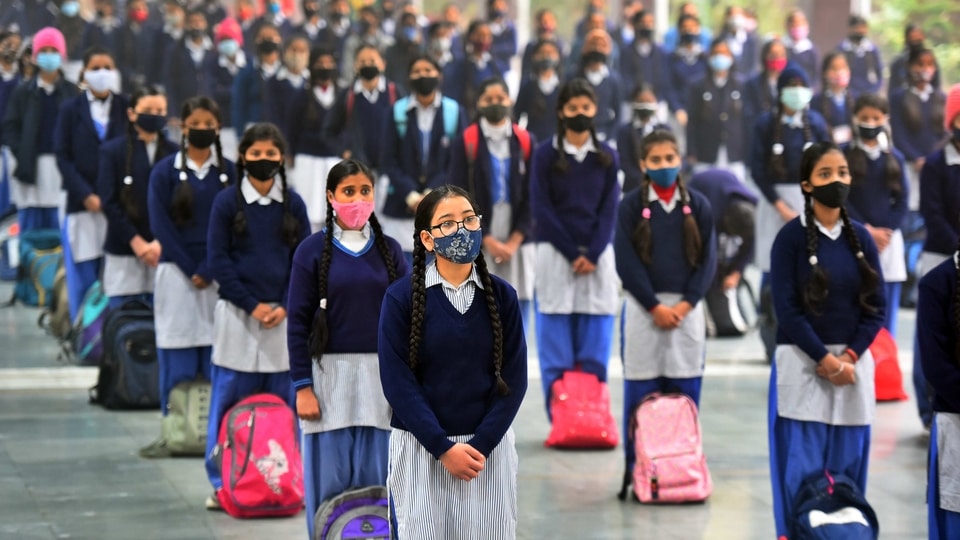
This follows the board's approval of a new system allowing two exam sessions annually for Class 10, in line with recommendations made under the National Education Policy (NEP).
“The first phase will be conducted in February and second in May. The results for the two phases will be announced in April and June, respectively,” CBSE Examination Controller Sanyam Bhardwaj said.
What we know
- Starting in 2026, Class 10 students will have the option to take the CBSE board exams twice in one academic year. However, appearing for the first phase of the exam, scheduled for February, will be compulsory, according to the CBSE press release.
- The second phase, to be held in May, will be optional and open to students who wish to improve their scores.
- Officials clarified that participation in the first phase is mandatory, while the second attempt is only for improvement. Students will be allowed to improve marks in any three subjects, including science, mathematics, social science, and languages.
- For students in winter-bound schools, the new norms allow them to choose between either of the two exam phases.
- The internal assessment component will be conducted only once during the academic year.
- The CBSE had announced these draft norms back in February and released them publicly for feedback from stakeholders.
- The new National Education Policy (NEP) recommends that board exams become less high-stakes by allowing students to appear for them up to twice in a school year.
CBSE introduces new primary language rule at foundational level
Last month, the CBSE has released a directive that will change how languages are taught in affiliated schools at the foundational level across India, according to a previous Hindustan Times report.
Schools will now have to use the child’s “mother tongue” or the state language as the main language of instruction from kindergarten to Class 2, as per the new National Curriculum Framework (NCF) 2023 guidelines.
A circular dated May 22, 2025, states that the language of instruction should be one most familiar to the child—ideally the “mother tongue.” If that’s not feasible, the school must use the state language. This language will be used to teach all subjects in the early years until the child acquires basic literacy in another language.
The new language policy will come into effect in July 2025. From then on, schools will be expected to submit monthly progress reports, and academic observers may conduct visits to monitor how effectively the policy is being put into practice.
In Maharashtra, CBSE schools had mostly followed English as the medium of instruction and taught Hindi as a second language. From the academic year 2025–26, Marathi will become the main medium of instruction, while English or Hindi will be the second language.
This move aligns CBSE schools with the National Education Policy (NEP) 2020, which recommends teaching young children in their home language to improve early cognitive and emotional development.
CBSE has also advised schools to make use of NCERT resources like ‘Jadui Pitara,’ which offers story-based and engaging educational content, along with digital textbooks available in various languages. The overall teaching method will be play-based and activity-driven, particularly at the pre-primary level.


