E-Paper



Centre asks states to create diverse public health cadre
The health ministry has proposed four verticals — specialist cadre, public health cadre, health management cadre, and teaching cadre — at the state, district and block levels

 Prefer HTon Google


States in India should create a multidisciplinary public health management cadre, the health ministry proposed on Saturday, offering a framework to separate the clinical cadre from the public health cadre, which would lead to more effective public health care delivery, as doctors will be freed from administrative tasks.
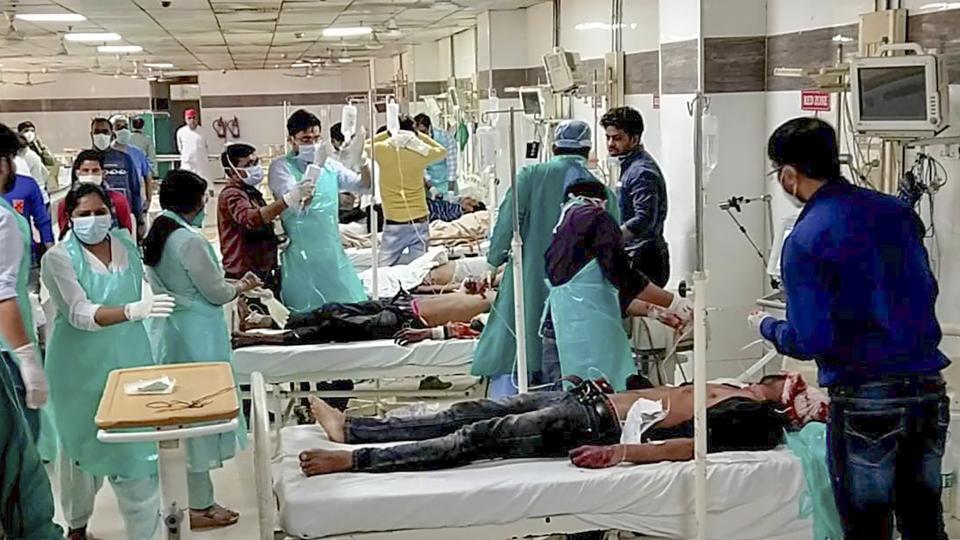
The clinical role would be separate from managerial roles to improve overall efficiency, according to the framework released by health minister Mansukh Mandaviya.
“To achieve best utilization of expertise and talent for ensuring health for all, there is a need to segregate service providers as per clinical and public health functions among various types of cadres with flexibilities as per the functional requirement of the state,” the guidelines said.
The health ministry has proposed four verticals — specialist cadre, public health cadre, health management cadre, and teaching cadre — at the state, district and block levels.
“This is meant to have separate roles assigned for better health care delivery,” a health ministry official aware of the matter said on condition of anonymity.
Specialists will be the clinical specialists with postgraduate degree or diploma in streams like medicine, surgery, orthopaedics, obstetrics and gynaecology, dermatology, psychiatry, and so on. The public health cadre will consist of professionals with an MBBS degree and postgraduate qualification on preventive and social medicine, or public health. All new MBBS doctors will be required to acquire public health qualification within certain time (3-5 years).
The health management cadre will consist of health and other professionals with relevant qualifications and support in running various national health programmes and public health functions. The entry will be from block level and mostly consist of graduates with postgraduate qualification in public health (70%) or MBA with specialization in human resources, procurement and supply chain, finance , operations, and hospital and health management.
States will have the flexibility to change the percentage as per the local context and requirement, the guidelines said.
The teaching cadre will be as per the national medical commission guidelines.
The career progression for each cadre will be distinct in their own respective streams with flexibility for inter-cadre deputation, if a person has the required qualification.
To implement the framework, the guidelines propose a mapping of existing public health personnel, including general duty medical officers and specialists at various levels in the present health cadre, and identification of positions at various facilities.
States have been advised to prepare a road map to impart public health training to the in-service candidates; recruit required doctors as per sanctioned positions by establishing a recruitment board; and prepare a structure for health management cadre with a mix of public health professionals and MBAs.
The framework, however, is advisory in nature and not mandatory for states to follow.
The proposed framework would help improve health care delivery on the ground, and are much needed, experts said.
“It was much needed because doctors should be able to focus purely on clinical activities and not really be loaded with managerial work, procurement, finances, etc., which consumes a significant amount of time,” said Dr KK Talwar, former director at Postgraduate Institute of Medical Education and Research, Chandigarh.