
 E-Paper



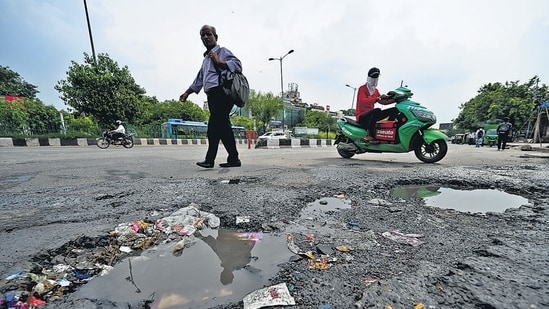
Centre plans to use ‘Whitetopping Technology’ for pothole-free national highways. What is it?
Whitetopping Technology involves applying a concrete overlay on top of existing bituminous pavements.


The Ministry of Road Transport and Highways (MoRTH) plans to implement a new policy for repairing existing national highway sections using “Whitetopping Technology”. The ministry has requested feedback from stakeholders on the proposed policy, titled “Use of Whitetopping Technology for Rehabilitation/Strengthening of National Highways,” by September 7.
“India has presently about 1.46 lakh km length of National Highways (NH) network. As we are building more and more 2/4/6 lane National Highways and Expressways, the quantum of aged asset is increasing which warrant rehabilitation to extend its life further. Flexible pavement constitutes the most important and largest component of ageing NH network. There are several rehabilitation/strengthening techniques/treatments available for flexible pavement and White Topping is one of them,” the ministry said in a statement released on August 22.
Also Read | 'Yamaraja' and 'Chitragupta' conduct long-jump in Udupi? Viral video of unique protest against potholed roads
According to official ministry documents, Whitetopping is being extensively used under the Pradhan Mantri Gram Sadak Yojana (PMGSY). By March 2022, the National Rural Infrastructure Development Agency had approved 4,831 km of road length for white topping. Since 2016, the BBMP has implemented this technology for its roads, focusing on select roads in Bengaluru under Special Infrastructure Projects Grants.
What is Whitetopping Technology?
Whitetopping is a technology widely adopted under PMGSY, offering improved serviceability, extended service life, lower life-cycle costs, and enhanced safety compared to conventional concrete pavements. It is an effective long-term solution for addressing ongoing maintenance issues in roads with poor drainage.
Also Read | Monsoon brings potholes back to major road stretches across Delhi
The technology involves applying a Portland Cement Concrete (PCC) overlay on top of existing bituminous roads. While the initial cost of Whitetopping may be higher than flexible overlays, it proves to be a cost-effective and economical choice over the life cycle of the pavement.
What are the benefits?
- Whitetopping Technology involves applying a concrete overlay on top of existing bituminous pavements. The ministry said this approach offers several benefits, including extending the pavement’s lifespan by 20-25 years.
- It also reduces the frequency of lane closures during its design life and presents lower life-cycle costs compared to bituminous overlays. Additionally, the technology provides a durable wearing course suitable for high rainfall areas. The concrete's lighter colour enhances light reflection, absorbs less heat, and helps mitigate the urban heat island effect.
- Whitetopping on existing bituminous pavements provides many additional benefits compared to the conventional bituminous overlay alternative. Some of the benefits are the following:
- Whitetopping provides long life, low maintenance, low life-cycle costs, and environmental benefits compared to bituminous overlays.
- Bituminous overlays lose serviceability faster, with shorter lifespans after each successive overlay. Whitetopping resists deformation issues like rutting and cracking common in bituminous pavements, especially in hot climates.
- If laid on a solid base, it improves the structural capacity of existing bituminous pavements, reducing structural distress. Compared to bituminous surfaces, it requires less maintenance and results in fewer road closures.
- Cost-effective for managing budget constraints and high traffic, relevant to Indian conditions. Effectively fills ruts in bituminous pavements as concrete is stiffer and more consistent at high temperatures.
- Vehicles consume less fuel on concrete roads than on bituminous roads.


