
 E-Paper



Centre set to launch digitized platform to benefit migrant workers
The platform will allow migrants to register themselves. Registered workers will get a unique ID. The common service-centres are points of access to a host of government digital services across the country. There are nearly 400,000 CSCs countrywide.


The Union government is likely to launch by next week a digitized platform for migrant workers that will enable authorities to direct state-run benefits to them and intervene during crises. The Supreme Court had, earlier, set July 31 2021 as the deadline to so do.
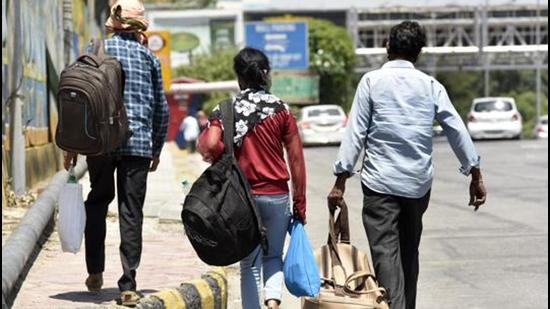
In the summer of 2020, tens of thousands of low-paid workers fled major cities, such as Mumbai and Chennai, under traumatic conditions without much food or money following a stringent national lockdown during the first wave of coronavirus infections. These workers walked down highways to reach their native villages, exhausted.
The government wasn’t able to respond with any immediate help because there was no database of who these people were. The then labour minister, Santosh Gangwar, told Parliament in September 2020 that there was no data on how many migrant workers left cities or how many died.
The migrant workers’ portal is supposed to address this gap. It is a joint venture between the labour and employment ministry and common service-centres (CSC) run by the electronics and information technology ministry.
The platform will allow migrants to register themselves. Registered workers will get a unique ID. The CSCs are points of access to a host of government digital services across the country. There are nearly 400,000 CSCs countrywide.
The Supreme Court, while dealing with a case on the plight of unorganized workers, had on June 29 set a deadline of July 31, 2021 to “prepare a mechanism” for registration of unorganized-sector workers. Similar deadlines were issued in 2018 and 2019.
Once it goes live, migrants can access the portal at the nearest CSC. “The (unique identity) number can be used to access government schemes and services, irrespective of their place of stay,” an official of the IT ministry familiar with the matter said.
Workers in the informal economy are estimated to contribute nearly 50% to the country’s gross domestic product or GDP, a measure of incomes and output.
“One is not clear given the humungous task of registration whether this project will be completed in the near future. The first part is registration of course,” said KR Syam Sundar, an economist with the Xaviers Labour Relations Institute, Jamshedpur.
According to Sundar, the Supreme Court has been seized with “governments’ apathy in complying with critical procedural requirements concerning unorganized workers over the (past) decade and a half”.
Registration of workers could take time because workers will be registered as and when they apply. “But we will launch a big awareness drive so that nobody is left behind,” a labour ministry official said, requesting anonymity.
While there are no official estimates of migrant workers, a novel statistical tool developed by former chief economic adviser Arvind Subramanian had revealed an annual “interstate migrant population of about 60 million and an inter-district migration as high as 80 million” between 2001 and 2011.
According to the first official cited above, the portal is similar to a platform launched last month by the Gujarat government for ‘building and construction’ category workers so that they can access the state’s welfare schemes. The Gujarat portal saw a registration of over 100,000 workers within a fortnight of launch, the official said.
While the unique identification number allotted to migrants will be similar to the biometric Aadhaar, Aadhaar will not be made mandatory to register on the portal.


