
 E-Paper



Centre to launch projects for lion, dolphin conservation
Asiatic lions are confined to Gir National Park and its surrounding environs in Gujarat’s Saurashtra. The Gujarat forest department in June suggested their population has increased by 29%— from 523 in 2015 to 674 in 2020.

 Prefer HTon Google


Prime Minister Narendra Modi on Saturday announced the Centre will soon launch Project Lion and Project Dolphin for the biodiversity conservation of these species on the lines of and to replicate the successes of Project Tiger launched in 1973.
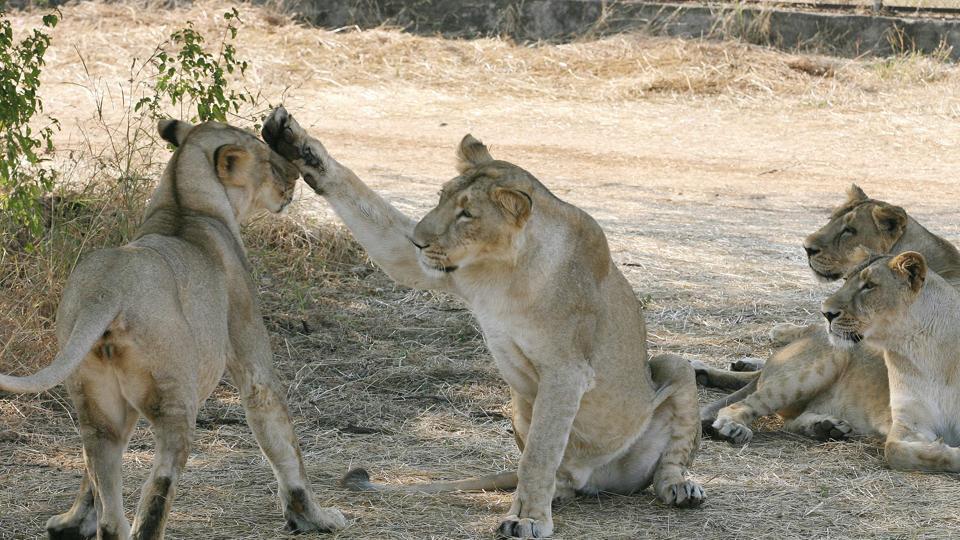
In his Independence Day speech, Modi underlined commitment to the promotion and conservation of biodiversity and said India is one of the very few countries where the forest cover is expanding. “We have successfully carried forward Project Tiger and Project Elephant. The Tiger population has increased in India. In the coming days, we are starting Project Lion for the Asiatic lions. And under Project Lion, the work on the required infrastructure for the protection and security of Indian lions and in particular the special type of health infrastructure required will be undertaken. And emphasis will be laid on Project Lion.”
Modi said Project Dolphin will focus on both river and sea dolphins. “This will also give a boost to biodiversity and also create employment opportunities. This is also a centre of attraction for tourism.”
Asiatic lions are confined to Gir National Park and its surrounding environs in Gujarat’s Saurashtra. The Gujarat forest department in June suggested their population has increased by 29%— from 523 in 2015 to 674 in 2020. It said the distribution area of lions in Saurashtra has increased by 36% from 22,000 sqkm in 2015 to 30,000 sqkm. Experts have called for the reintroduced of the species outside Gujarat for the long term conversation of the Asiatics lions.
The Gangetic dolphin is an indicator species, whose status provides information on the overall condition of the ecosystem and of other species in that ecosystem, for the Ganga ecosystem and is extremely vulnerable to changes in water quality and flow. It is categorised as endangered on the International Union for the Conservation of Nature Red List.
Union environment ministry officials said the projects Modi announced are new and different from previous ones for Asiatic Lions and Gangetic Dolphins. The ministry launched the Asiatic Lion Conservation Project in February last year. Vaccination of livestock, control of cats and dogs in lion habitat, identification of wildlife corridors, improvement of habitat, legal aid, wildlife forensic systems, and attractive relocation packages for pastoral communities were the highlights of this project.
Additional director general (forests) Soumitra Dasgupta said it is a proud moment for them that Modi has announced the projects to conserve Dolphins, which are an indicator species, and Asiatic Lions a flagship species. “The Prime Minister referred to a long-term plan. It will involve the conservation of lions and their habitat in a holistic manner. There will be a focus on conflict mitigation and technology for management. Reintroduction... we have to see what are the possibilities. Last year, only some financial measures were announced but this project is new and long term,” said Dasgupta. He was referring to reintroduction of lions to other habitats apart from Gir Sanctuary in Gujarat. For example, Kuno Palpur Sanctuary in MP is being considered by the ministry for reintroduction of lions.
Dasgupta said Project Dolphin will also be new, focusing on dolphins in the oceans and rivers. “Dolphin tourism is being prompted by other countries but we have not explored it very much. This will also help secure livelihoods...”
World Wide Fund For Nature India (WWF India)’s program management director Diwakar Sharma said lions in India face most of the issues that other large carnivores face. “These include habitat loss and fragmentation, human-wildlife conflict, and illegal trade. The Asiatic lion is confined only to the Gir protected area and its surrounding environs,” he said.
Sharma said the current Asiatic lion population is built from a very small number in the early 20th century and thus faces the additional threat of genetic homogeneity, which makes the species susceptible to diseases like canine distemper. “It is thus in the interest of long term Asiatic lion conservation that the species be reintroduced to other places in and outside Gujarat.”
A WWF-India and the Uttar Pradesh forest department assessment in 2012 and 2015 recorded 1,272 dolphins in the Ganga, Yamuna, Chambal, Ken, Betwa, Son, Sharda, Geruwa, Gahagra, Gandak and Rapti. “The Ganges river dolphin is threatened due to habitat degradation as a result of water development projects [dams, barrages and dredging operations], sand mining, overfishing, and pollution. The incidental catch of dolphins in the fishing gears, specifically gillnets are key causes of dolphin mortality in the Ganga,” said WWF India’s river basin management associate director Nitin Kaushal.


