
 E-Paper



Centre withdraws 10,000 soldiers from Kashmir to send a message
The partial troop withdrawal and the appointment of a senior politician Manoj Sinha as Lt Governor of Jammu and Kashmir is not a coincidence, a senior official said.

 Prefer HTon Google


A security review last week on Jammu and Kashmir led the government to order the withdrawal of 10,000 troops from the union territory, a move that is seen as part of the Centre’s outreach to the Kashmir valley. The review was ordered by the Home Minister Amit Shah when he was still recuperating in a Gurugram hospital earlier this month.
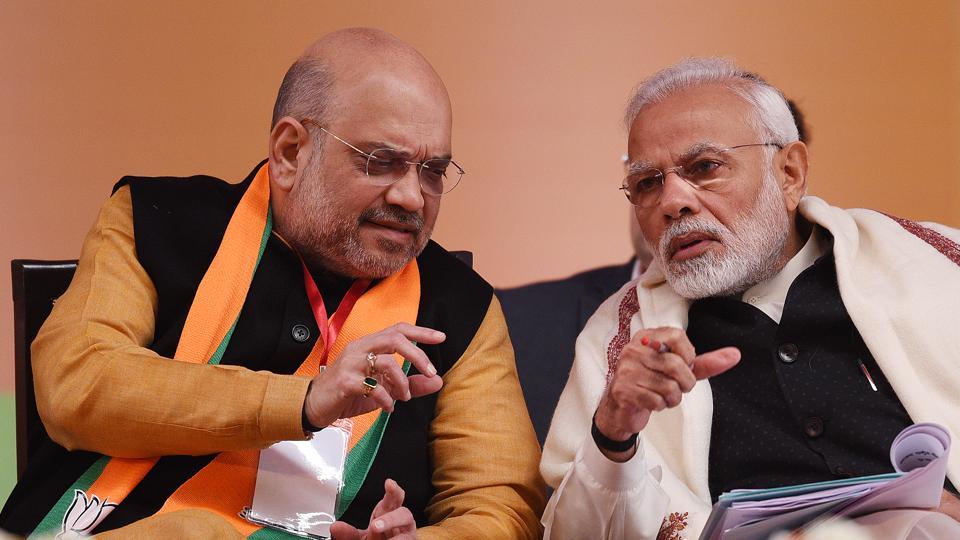
The review, and the withdrawal of about 100 companies of central security forces, comes around the time that the government has spotlighted development activities and appointed senior politician Manoj Sinha as Lieutenant Governor of the centrally-administered territory.
An official underscored that the timing of the two developments, one after another, was not a coincidence, but designed to message people that the government was willing to address their concerns.
One view has been that far too many security personnel are deployed in the union territory to prevent about 200 hardcore terrorists trained across the border from carrying out strikes.
Also Read: New L-G Manoj Sinha fuels hope of political revival in J&K
At last week’s security review, there was some acknowledgement within the security establishment that the forces could do with fewer numbers, particularly given its successes over the last one year in eliminating top terrorist commanders. Security officials have also claimed that there has been some improvement in how the public responds to counter-terror operations.
A team of security officers next travelled to Jammu and Kashmir on 15 August to interact with field commanders and lay the groundwork for the troop withdrawal. A few hours before the team landed, Prime Minister Narendra Modi - addressing the nation from Red Fort in Delhi - described the past year as ‘a very important milestone’ for the development journey of Jammu, Kashmir and Ladakh regions and spoke about assembly elections in J&K as soon as the election commission completes the delimitation exercise.
“It was felt that the kind of force deployed in J&K may be fairly construed to be disproportionate under the existing security situation, which could lead to inconvenience to the local population,” a top police officer who was part of the process told Hindustan Times.
Apart from top army commanders, top officers of the Border Security Force (BSF), Central Reserve Police Force (CRPF), Central Industrial Security Force and other central and forces were part of the review.
There was a view that instead of relying too much on check-posts in Srinagar and elsewhere in the valley, the security establishment should step up reliance on technology to target terrorists. Simultaneously, the security forces in the Kashmir valley have also been told to carry out more night domination patrols to restrict movement of terrorists in districts that are counted as terror hotspots such as Kulgam and Anantnag districts in south Kashmir and Baramulla district in the north.


