
 E-Paper



Chhattisgarh artist to sell artwork to help ex-Maoists find livelihood
Ajay Mandavi has changed the lives of over 150 former Maoists in Chhattisgarh’s Kanker district by teaching them the art of wooden calligraphy and help them lead a life of peace.

 Prefer HTon Google


Ajay Mandavi has changed the lives of over 150 former Maoists in Chhattisgarh’s Kanker district by teaching them the art of wooden calligraphy and help them lead a life of peace.
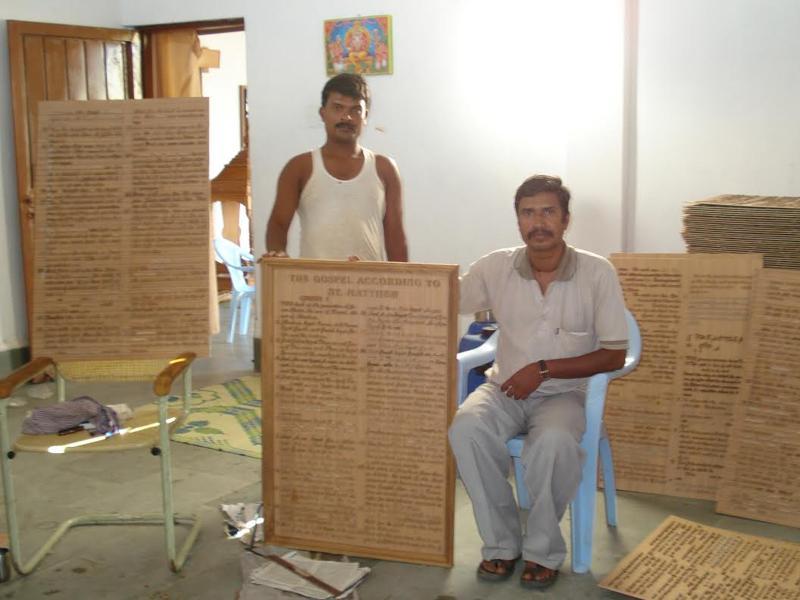
And through Shanta Art, a self-help group that he founded in 2015, Mandavi strives to give these former outlaws a livelihood and a sense of respect.
He started with five former Maoists and a few villagers who made wooden artefacts like nameplates, key rings and other items. Now there are 165 men, who were once arrested for their Maoist links, who learn the art from Mandavi.
However, the government official is upset nowadays because of the financial crunch his students are facing. He accused some district officers of not paying the money Shanta Art earned and robbing the livelihood of his students.
“The money which should be given to us was swindled by some officials of Kanker. Some panchayats have given us the money but most of them brought the nameplates for Rs 750 and never paid,” Mandavi told Hindustan Times.
Despite the hardship, the 49-year-old has again found a way to help his students.
He plans to his sell the 384-page Bible he made by inscribing wooden letters on wooden pages and a wooden frame of Shri Shri Ravishankar. It was registered in the Limca Book of Records as “the largest wooden painting” of the godman in 2004.
“It took me two years to make that piece (the Bible). Many people want to buy a page from that work but I had never thought of selling that but now I will,” he added.
He wants to use the money to open shops in the district, and if possible in state capital Raipur, for his students. “They are trained artists but now they have no market. I am their only hope. When they come to me and tell me their hardships, I feel guilty somewhere,” Mandavi, who still trains inmates of Kanker jail, said.
“I want to sell them so that they do not divert again towards Maoism or any other crime.”
Ramesh Potai, a former Maoist who is a part of Shanta Arts, said they are idle and helpless because they have no money and hoping that Mandavi will find a way out for them once again.
“We want to work because for us this is the only creative thing we have learned from Mandavi sir ... If Mandavi sir’s attempt works, surely it will help hundreds of Maoist who have learnt this art,” Potai said.
OP Singh Parihar, a local journalist, said Mandavi has helped many former Maoists and that it’s the government’s turn to help him.
“His work is commendable. Why is not the government giving him projects for his students? His students are setting an example in this Maoist-affected area,” Parihar said.
His views are shared by DR Kawad, a panchayat inspector and senior taxation officer in Bhanupratapur.
“In my area, I promoted the work of Shanta Art and released the money on time but in most of the areas money was not paid, which is shameful. The government should promote the attempt of Mandavi who showing the former Maoists the right path.”
Maoists are believed to be present in at least 16 out of the 27 districts of the state. They have been waging a war on government and security forces for over three decades.
Maoists routinely surrender to the police citing increased presence of security forces in Maoist strongholds. Some even say the provisions of surrender and rehabilitation policy of the state government besides police awareness campaign also prompt them to join the mainstream.
-kW0H-U20214218012MgB-250x250%40HT-Web.jpg)


