
 E-Paper



Chhattisgarh Budget 2026-27: A step towards 2047 Viksit goal, says CM
Chhattisgarh's ₹1.72 lakh crore budget aims for "Viksit Chhattisgarh 2047," but opposition calls it a "ChatGPT Budget" lacking substance and seriousness.

 Prefer HTon Google


Chhattisgarh chief minister Vishnu Deo Sai on Tuesday described the ₹1,72,000 crore budget for 2026–27 as a statement of intent for the future and a foundational step towards achieving the vision of “Viksit Chhattisgarh 2047”. But the opposition Congress termed it a “ChatGPT Budget” lacking seriousness and substance.
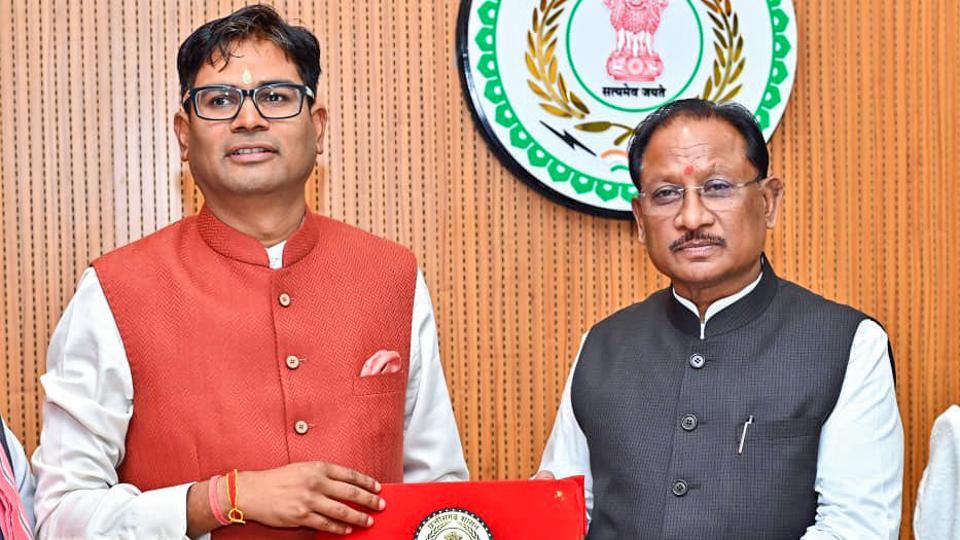
Finance minister OP Choudhary presented the annual budget in the Chhattisgarh Legislative Assembly, outlining the government’s priorities in agriculture, infrastructure, women’s empowerment, industrial growth and tribal development.
Calling the budget transformative, Sai said, “With record investments in agriculture, infrastructure, women’s empowerment and industrial expansion, we are building the structural strength required for sustained double-digit growth.” He said the government’s focus is firmly on inclusive development to ensure that Bastar, Surguja and every village in the state actively participate in and benefit from the growth process.
The chief minister said the budget is anchored in the SANKALP framework — Inclusive Development, Infrastructure, Investment, Skilled Human Resources, Antyodaya, Livelihood and Policy to Performance — with emphasis on last-mile delivery and targeted development of tribal regions such as Bastar and Surguja. He said the renewed thrust on these regions was among the key highlights of the financial proposals.
“Our government believes in working in mission mode. To achieve this, we have created five Chief Minister Missions. Through these, Chhattisgarh’s development will gain a new direction, sharper focus and greater speed. I congratulate the people of the state on this remarkable budget,” Sai said.
In response, senior Congress leader and former chief minister Bhupesh Baghel launched a sharp attack, branding the financial plan a “ChatGPT Budget.” In a post on X, Baghel said that after pushing the state into a difficult situation through “ignorance”, the finance minister delivered a speech that sounded like poetic lines often seen written behind trucks. “It appears this Budget was written by ChatGPT, relying only on artificial intelligence. Neither the wisdom of the government nor the seriousness of its officials is visible in it. Ultimately, nothing stands above the wisdom of the people,” he wrote.
Baghel compared the budget announcements to repeatedly promising to fly a kite in stages without actually flying it, alleging that the government was making hollow declarations year after year.
Leader of Opposition Charan Das Mahant also criticised the budget, saying the government had woven a web of heavy words but failed to present a concrete roadmap for progress. He alleged that new schemes were being introduced merely to facilitate corruption and claimed that the Budget offered little relief for unemployed youth. Mahant further said that employees who have been on strike over their demands were ignored in the financial proposals.
-kW0H-U20214218012MgB-250x250%40HT-Web.jpg)


