
 E-Paper



Child marriages: Supreme Court orders mandatory sex education in schools
The Supreme Court has told state governments to integrate comprehensive sexuality education into school curricula to combat child marriage

 Prefer HTon Google


The Supreme Court on Friday gave comprehensive directions to address child marriages in India, issuing a specific order to integrate comprehensive sexuality education (CSE) into school curricula across all states and Union territories (UTs), even as it stopped short of declaring that the 2006 Prohibition of Child Marriage Act (PCMA) can override personal laws.
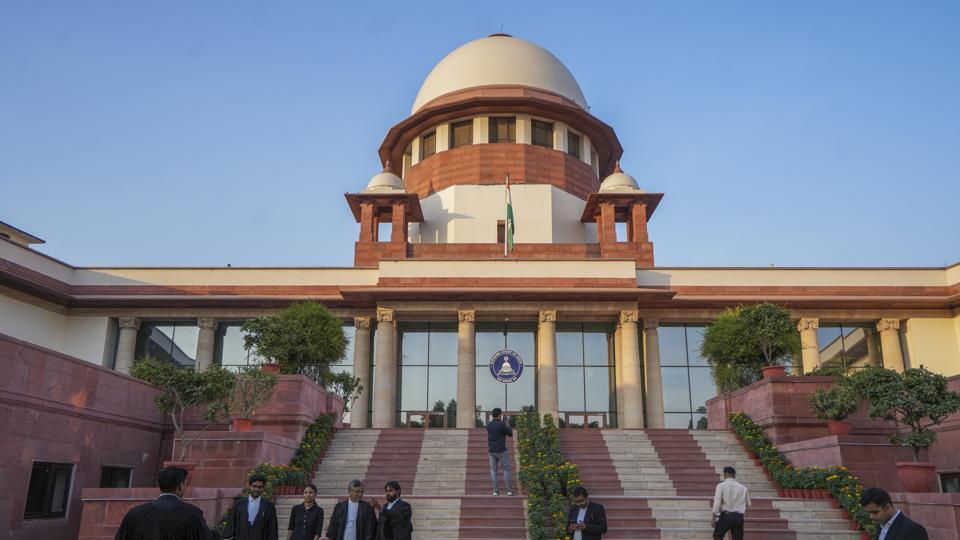
Turning down the Union government’s plea to declare that PCMA will prevail over personal laws governing marriage, a bench led by Chief Justice of India Dhananjaya Y Chandrachud cited the ongoing deliberations in Parliament as a reason for not ruling on whether the act should supersede personal laws of various religious communities where marriages can take place before the age of majority -- 18 years.
Applicable personal laws in Islam allows a Muslim girl to enter into a contract of marriage after attaining puberty at 15 years whereas a set of common civil and criminal laws in India proscribes the marriage of girls under 18, and further makes sexual intercourse with minors a penal offence.
“The Prohibition of Child Marriage (Amending) Bill 2021 was introduced in Parliament on 21 December 2021. The bill was referred for examination to the Department Related Standing Committee on Education, Women, Children, Youth and Sports. The bill sought to amend the PCMA to expressly state the overriding effect of the statute over various personal laws. The issue, therefore, is pending consideration before Parliament,” noted the bench, also comprising justices JB Pardiwala and Manoj Misra.
Delivering an extensive judgment on a petition demanding stringent enforcement of PCMA, the bench underscored the significance of child protection, stating that the focus of the authorities must be on prevention and protection rather than just punitive action.
“The aim of the law enforcement machinery must not be solely focused on increasing prosecutions without making the best efforts to prevent and prohibit child marriage. The focus on penalisation reflects a harms-based approach which waits for a harm to occur before taking any steps. This approach has proven to be ineffective at bringing about social change,” it held.
The crime of promoting or conducting a child marriage is punishable with a jail term that can go up to two years along with a fine. Such marriages are not nullified from the beginning and are voidable at the instance of one of the parties.
The top court came down hard on the existing provisions. “The existence of child marriage and its continued recognition in the law as a valid (and voidable) marriage threatens the dignity of children. The institution of child marriage, more directly than any other institution, stipulates for the sexual abuse of child brides by design.” But it refrained from ruling on the constitutionality of the law because there was no legal challenge raised to PCMA provisions.
The bench was hearing a PIL by non-governmental organisation Society for Enlightenment and Voluntary Action and activist Nirmal Gorana in 2017, alleging that PCMA was not being enforced in “letter and spirit”, as it delivered the verdict that marks a significant step in the fight against child marriage.
Harmful effects of child marriage:
The bench highlighted that child marriages are not just unlawful but also violative of minors’ rights to freely choose their lives. By being subjected to early marriages, it said, minors lose the autonomy to make critical decisions about their futures, including education and personal development.
In the 141-page judgment, the bench elaborated on the harmful effects of child marriage, emphasising that it not only violated the rights of children but also inflicted lifelong physical and psychological damage. The court noted that child marriage is an affront to constitutional principles of equality, liberty and free expression, and stripped children of their right to self-determination, autonomy and sexuality.
The judgment specifically highlighted the violation of Article 21 of the Constitution, which guarantees the right to life and liberty. Children married as minors are deprived of their right to choice, education and the development of the child. For girls, early marriage results in severe health complications, as they are often forced into early childbirth, which leads to higher risks of maternal morbidity, including conditions like anaemia, high blood pressure and complications during pregnancy. Such marriages, it said, also impose social isolation and patriarchal burdens, with young girls facing forced conjugal relations and reproductive pressures, while boys bear premature responsibility as providers.
“The frontal assault of patriarchal institutions is in, all at once, denying any deviance and valuing some over others...When women are forced into marriages to protect their ‘chastity’ and ‘virginity’ she is denied her right to sexuality, bodily autonomy and the freedom to make choices for herself as she sees fit. The minor is then boxed with the expectation of compulsory heterosexuality. The ability of a person to experience sexual desire organically and to navigate their choice in intimacy is effaced at the altar of tradition and social norm,” it underlined.
According to the bench, the multi-dimensional assault of child marriage is not only oppressive to heterosexual girls and boys but also to all gender and sexual minorities.
Sexuality education and protocols for schools
Stressing that sexuality education is a vital tool in the long-term eradication of child marriage, the court directed that this initiative be aligned with frameworks established by the World Health Organisation (WHO) and other global experts in the field.
The court emphasised that comprehensive sexuality education must include not only discussions on sexual and reproductive health but also crucial information on the legal aspects of child marriage, gender equality and the physical and mental health impacts of early marriage. The content, the court directed , must be age-appropriate and culturally sensitive, empowering students with knowledge about their legal rights, the importance of delaying marriage, and the broader implications of child marriage on well-being and future opportunities.
The court’s direction to integrate sexuality education is part of a broader strategy aimed at prevention. Schools, particularly those in regions with a high prevalence of child marriage, are now required to include dedicated sections in textbooks that outline legal protections, health risks, and preventive measures related to child marriage.
Legal and administrative reforms:
In addition to the educational measures, the court addressed gaps in the legal framework and enforcement of PCMA, 2006. It directed that Child Marriage Prohibition Officers (CMPOs) should be appointed at the district level, with exclusive responsibility for preventing child marriages. To strengthen enforcement, the court ordered that state governments allocate sufficient resources to these officers, and that collectors and superintendents of police take active roles in prosecuting individuals who facilitate or solemnise child marriages.
The court also called for the establishment of specialised police units and fast-track courts to handle cases of child marriage swiftly, recognising that delays in legal proceedings can lead to additional harm for the affected children.
A community-driven approach:
Acknowledging the deep-rooted cultural practices that often perpetuate child marriage, the court emphasised the need for community-driven strategies. It directed the states and UTs to develop annual action plans for preventing child marriage, incorporating local cultural contexts into their efforts.
The ministry of women and child development was further tasked with exploring economic incentives to prevent child marriages. This includes programmes such as conditional cash transfers, scholarships, and financial incentives for families to keep girls in school, ensuring they are not forced into early marriage for economic reasons.
Accountability and resource allocation:
In an effort to ensure accountability, the Supreme Court directed that any failure by district authorities to act in child marriage cases would warrant immediate administrative action. Additionally, it mandated that quarterly performance reviews be conducted by the ministry of women and child development, and that refresher training for CMPOs be carried out every six months.
The judgment directed the National Legal Services Authority (NALSA) to conduct nationwide legal awareness campaigns to educate communities about the illegality of child marriage . NALSA was also tasked with providing free legal aid to the victims of child marriages.



