
 E-Paper



PLA drags its feet over disengagement. Stalemate at Ladakh continues
It is understood that the military commanders’ marathon meeting ended in a stalemate with both sides holding their ground and the PLA commander asking for concessions for complete disengagement.

 Prefer HTon Google


The high-powered China Study Group (CSG) met on Tuesday afternoon to assess feedback from the August 2 meeting of Indian and Chinese military commanders in Moldo-Chushul even as ground reports indicate that the People’s Liberation Army (PLA) is dragging its feet in restoring status quo in eastern Ladakh.
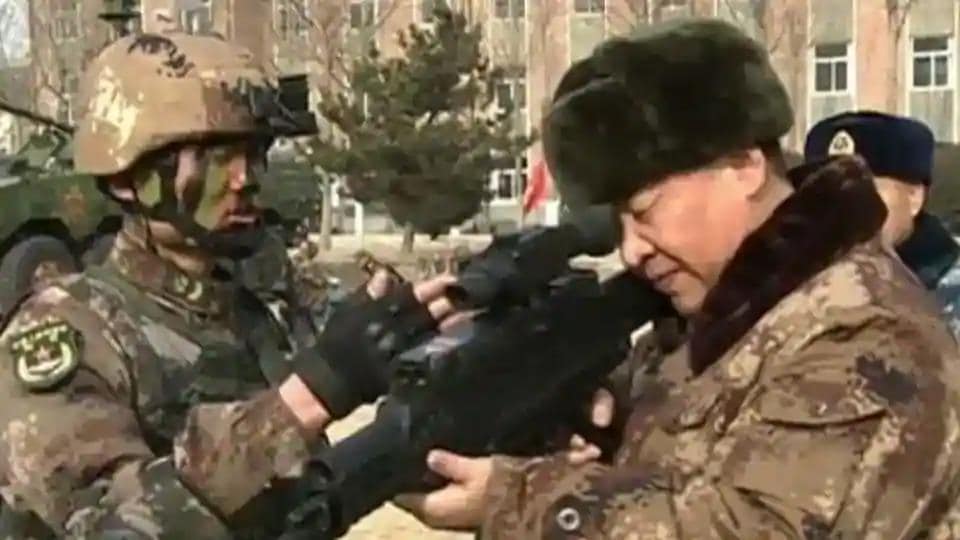
It is understood that the military commanders’ marathon meeting ended in a stalemate with both sides holding their ground and the PLA commander asking for concessions for complete disengagement.
Also read: India-China expand border talks, to revisit patrolling protocol to avoid skirmishes
The CSG will convey to the Indian Army the next steps to be taken on the ground; restoration of the pre-April 20 positions at four frictions points in eastern Ladakh is a prerequisite for normalisation of bilateral ties. The meeting was attended by the senior most ministers and officials of the government.
While the Narendra Modi government remains tight-lipped about the August 2 commanders meeting, but a Chinese spokesman’s statement trying to delink the boundary problem from overall bilateral ties is an indicator that the PLA is resisting moves to restore status quo ante.
“The two (India and China) should place the boundary issue in a proper position in bilateral relations and make sure differences do not escalate into disputes,” the Chinese spokesman said.
This is diplomatic jargon for saying that border problems and overall bilateral ties should be kept on different, parallel tracks. It comes at a time when India is trying to block Beijing’s influence in core sectors of India like telecommunication and power as well as higher education and media.
Also read: India, China set to hold fifth round of commander-level talks today on LAC disengagement
This is contrary to the long-held position of the Modi government that peace and tranquility on the Line of Actual Control was at the heart of bilateral ties. The Indian army, on its part, is prepared for a long haul on the border not only to forestall further aggression by the PLA in the coming months, but also to put pressure on it to restore status quo ante.
Although Indian and Chinese special representatives on boundary talks on July 5 charted out a map for disengagement and then de-escalation, the PLA is dragging its feet both at patrolling point 17 and 17A (General Area Gogra) and on the finger features on the banks of the Pangong Tso.
On both 17 and Pangong Tso, the Chinese want the Indian Army to concede some ground despite being the first aggressor in the Gogra-Hot Springs area. “ It is trying to impose the 1960 map on East Ladakh and claiming the PLA new positions are well within his perception of the 1,597 km LAC along occupied Aksai Chin,” said a senior official.
While the Indian army and the PLA are no longer face to face on any off the four friction points, the Chinese are trying to position themselves on dominating heights in order to add more depth to their bases in Aksai Chin area.


