E-Paper



China’s special envoy for Afghanistan makes low-key visit to India
China’s special envoy on Afghan affairs Yue Xiaoyong made a low-key visit to New Delhi for talks with the Indian diplomat handling matters related to Afghanistan, with the move being seen as an acknowledgement of India’s role in the war-torn country.

 Prefer HTon Google


China’s special envoy on Afghan affairs Yue Xiaoyong made a low-key visit to New Delhi for talks with the Indian diplomat handling matters related to Afghanistan, with the move being seen as an acknowledgement of India’s role in the war-torn country.
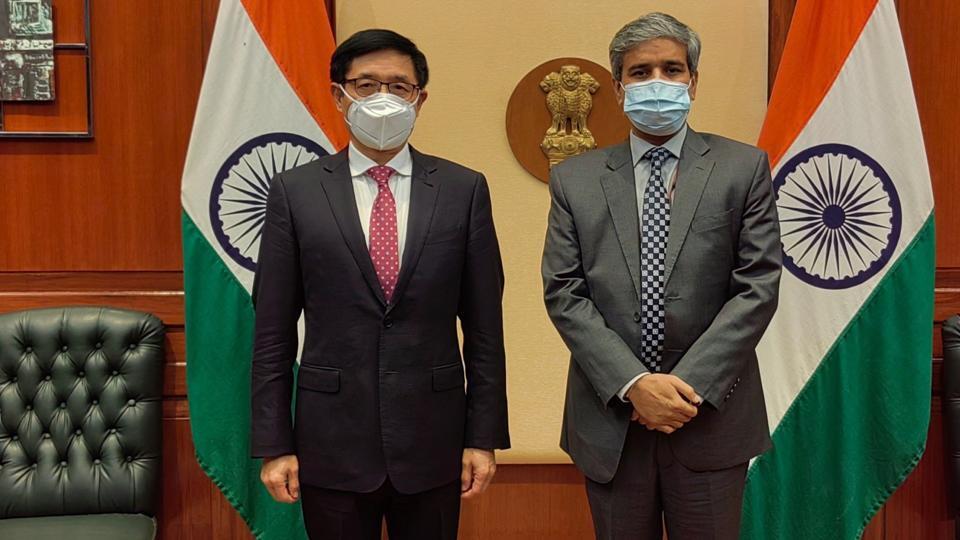
This was the first visit to India by Yue, who was named the special envoy for Afghan affairs a year ago, and follows trips by him to Pakistan and Turkey for discussions on the situation in Afghanistan.
Also read: White House summons Chinese envoy over Taiwan provocations, Beijing issues threat
There was no official word from the Indian side on Yue’s meeting on Thursday with joint secretary JP Singh, who handles the crucial Pakistan-Afghanistan-Iran division in the external affairs ministry and has been involved in recent contacts with senior Taliban leaders.
Yue said in a tweet that the meeting had focused on ways to ensure peace and stability in Afghanistan. “Good to visit India first time ever meeting w/ Mr. (JP) Singh, Joint Secre’y of Indian FM and exchanged views on Afghanistan. Both agreed to encourage engagement, enhance dialogue and give positive energy for Afghan peace and stability,” he said.
The Chinese side had sought the meeting and the move was being seen in New Delhi as an acknowledgement by Beijing of India’s important role in Afghanistan, people familiar with the matter said.
The meeting is also being seen in the context of recent one-off engagements that the two sides have had on important matters and does not in any way signal that relations are moving towards normalisation, especially in view of the differences between New Delhi and Beijing over the military standoff in Ladakh sector, the people said.
This is also the first time that senior officials of the two sides have discussed Afghanistan since the takeover of the country by the Taliban almost a year ago. China was among a handful of countries that didn’t close its embassy in Kabul after the Taliban grabbed power on August 15 last year, and though it has not formally recognised the regime, it has said it wants “friendly and cooperative” ties.
Also read: ‘Avoid such activities’: India-China military talks held over airspace violations
Chinese foreign minister Wang Yi has met top Taliban leaders and there have been numerous reports of Chinese firms being involved in exploitation of Afghanistan’s mineral resources.
India re-established a diplomatic presence in Kabul by deploying a “technical team” at the embassy in June.
Yue travelled to India shortly after a visit to Turkey on August 1 for talks on the situation in Afghanistan and on strengthening cooperation to ensure peace, stability and development. Yue also visited Pakistan on July 18 and held talks with foreign secretary Sohail Mahmood, including on the extension of the China-Pakistan Economic Corridor (CPEC) to Afghanistan.
At the time, Yue had appreciated Pakistan’s “important and constructive role” in Afghanistan. He also held talks with Pakistan’s special envoy for Afghanistan, Mohammad Sadiq.