
 E-Paper



CISF ordered to screen cargo, in-line baggage at airports due to enhanced security measures
The Central Industrial Security Force (CISF) has extended an additional security cover at 69 civil airports of the country under its counter-terrorist cover.

 Prefer HTon Google


The Central Industrial Security Force (CISF) on Saturday said it has extended an additional security cover to temporarily supervise cargo operations and in-line hold baggage screening system at 69 civil airports of the country under its counter-terrorist cover.
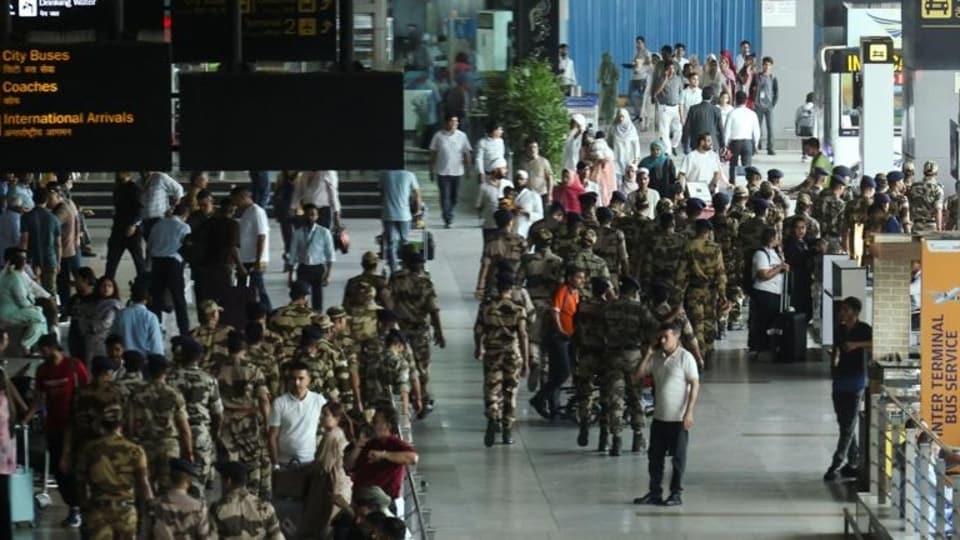
A spokesperson for the paramilitary force said the move has been initiated following a directive issued by the Bureau of Civil Aviation Security (BCAS) on May 9 "temporarily" extending CISF's cover to these processes in "direct response" to the terrorist attack in Pahalgam and the subsequent security scenario in the country.
Also Read: 32 Indian airports shut for civilian flights amid tensions with Pakistan | Full list
This new arrangement will be in place till May 18, the spokesperson said.
The CISF usually is only entrusted to frisk passengers and their cabin baggage. The cargo and In-line Hold Baggage Screening System (ILHBSS) checking was done by private security staff engaged by the airlines and airport operators.
Also Read: Delhi IGI airport sees 130+ cancellations, extra security, elaborate checking
"The enhancement of CISF's mandate is essential to reinforce security arrangements at all civil airports," the spokesperson said.
He added that the CISF has responded immediately and resumed "oversight" over cargo and baggage operations.
Also Read: Delhi airport resumes normal operations, issues travel advisory
The CISF will also "oversee" operations and the security staff of airport operators for ILHBSS, he said.
The directives also authorise CISF personnel to perform random checks and oversee access control to these "critical" facilities (airports), the spokesperson added.
All the airports under cover of the CISF have "already implemented" the new strengthened system, he said.
Prior to this directive, CISF's deployment as the primary aviation security force did not explicitly extend to the direct security and screening of cargo operations and the ILHBSS, officials explained.
The decision aims to introduce a crucial secondary layer of security checks to enhance aviation security, he said.


