E-Paper



Civic polls round the corner, Odisha urges power regulator not to raise tariff
The state energy department has requested the Odisha Electricity Regulatory Commission (OERC) not to increase retail tariff for 2022-23.


BHUBANESWAR: With urban body polls likely to be held in April, the state energy department on Saturday requested the Odisha Electricity Regulatory Commission (OERC) not to hike the electricity tariff for retail consumers in 2022-23.
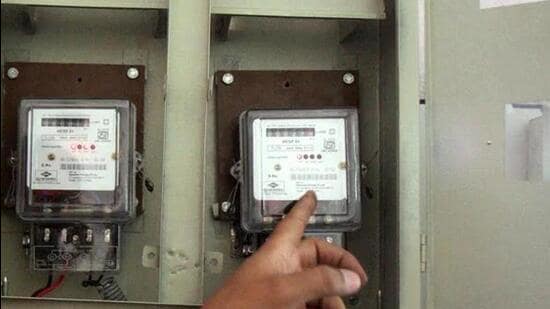
“During the hearing of the ARR (aggregate revenue requirement) of GridcoOdisha by OERC today, Energy Department requested the Commission not to increase retail tariff for 2022-23. It urged the Commission to take into account the surplus revenue of DISCOMs during the current year,”the Energy department said in a Twitter post on Saturday.
“OERC was requested to direct the DISCOMs (distribution companies) to bring down the aggregate technical and commercial losses faster so that consumers get the benefit of low tariff,” it added. Since the Covid-19 pandemic broke out, the commission has raised the power tariff for domestic consumers twice, first in October 2020 and again in April 2021, by 50 paise per unit.
At present, domestic consumers pay ₹3 per unit of electricity for the first 50 units and ₹4.80 for consumption above 50 units and up to 200 units. For consumption above 200 and below 400 units, the consumers pay ₹5.80 per unit while consumption above 400 units is being billed at ₹6.20 per unit.
Earlier, the four power distribution companies - TPCODL, TPNODL, TPSODL, TPWODL - that supply power to over 96 lakh consumers urged the OERC to raise the tariff projecting a revenue gap of ₹1192.37 crore for the year 2022-23.
The OERC was also requested not to pass any orders that affect the commercial viability of GRIDCO as the State’s long term energy security and development is dependent on the operational viability of the State-owned Corporation.
Early this month, Odisha Janshakti Manch, a citizen’s body alleged that ordinary electricity consumers of Odisha are paying more tariff than the consumers in many other states.
The body alleged that even though Odisha is a power surplus state, the people of Odisha pay ₹945 for consuming less than 200 units per month, while the consumers in Andhra Pradesh pay ₹620 for the same. The body said people in Punjab pay ₹672 for consuming less than 200 units while those in Chhattisgarh pay ₹861. In Delhi, people consuming less than 200 units do not have to pay any charges. In Tamil Nadu, 100 units of free electricity is provided bi-monthly, the OJM said.
The citizen’s body said tariff in Odisha is high as the rates were determined by OERC based on estimation and projection of expenses provided by the distribution and transmission companies without doing any independent audit of the exact expenses and losses made by the DISCOMs. In Delhi the rates were drastically reduced after making an independent audit; hence an independent audit must take place immediately before any rate revision, the OJM said.
Incidentally, performance review of the TPCODL from April 2020 to March 2021 showed that the new management was able to bring down the overall aggregate technical and commercial losses from 30.44 % during the same period in 2019-20 to only 29.54 % against the OERC benchmark of 23.77 %.