
 E-Paper



CJI: Need to prepare for increased litigation on crypto, AI in the future
Speaking at the inauguration of a two-day judicial conference on Mediation and Information Technology in Gujarat, the CJI Ramana also said the country’s alternate dispute resolution (ADR) model has the potential to transform India’s legal landscape.

 Prefer HTon Google


Underlining that litigation in the coming years will be on issues such as cryptocurrency, data protection, encryption and artificial intelligence, Chief Justice of India (CJI) NV Ramana asked lawyers on Saturday to familiarise themselves with new technology.
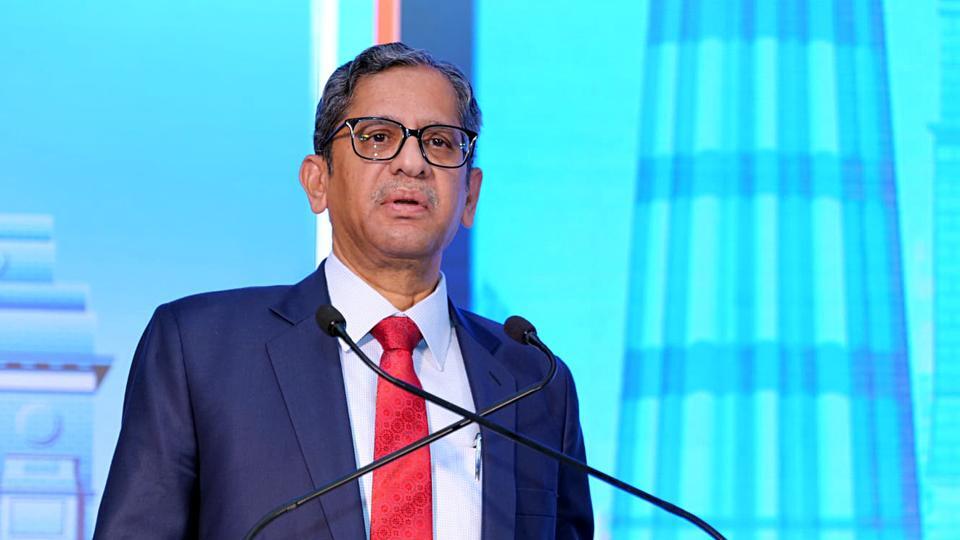
Speaking at the inauguration of a two-day judicial conference on Mediation and Information Technology in Gujarat, the CJI also said the country’s alternate dispute resolution (ADR) model has the potential to transform India’s legal landscape.
“All those engaged in justice dispensation mechanism, judges, lawyers, law enforcement agencies, and others, now need to have a thorough understanding of new technologies,” he said.
“The rapid development of technology has resulted in increased complexity even within the legal and regulatory landscape of the country. For instance, technological developments such as cryptocurrency, data protection, encryption, and artificial intelligence have caused courts and law enforcement agencies to engage with novel issues. With the passage of time, there is a possibility of increased litigation on these issues,” he added.
The event was presided over and inaugurated by President Ram Nath Kovind.
Kovind, while highlighting the twin issues of mediation and information communication technology (ICT) in furthering the cause of access to justice, said: “Among many objectives of the switch to ICT, the topmost has to be the improvement of access to justice. What we are aiming at is not change for the sake of change, but change for the sake of a better world.”
On mediation, Kovind, who was a lawyer, said: “In mediation, everyone is a winner,” as he said that “If any pending litigation is settled by mediation, the entire court fees deposited by the litigant party are refunded.”
During his address, CJI Ramana also spoke of dispute resolution. “Since alternate dispute resolution (ADR) is designed around a participatory model, its adoption is going to break the existing barrier. From being an ‘outsider’ to the process, citizens with their direct involvement will become ‘insiders’,” he said.
Technological advancements are doing away with constraints to parties, he said. “Distance, money and time are no longer barriers for parties. Online mediation has the ability to revolutionise the justice delivery system by promising simple and affordable justice for all.”
Due to obstacles in prolonged formal litigation, people hesitate to approach the judiciary, he said, adding that the concept of ADR -- through Lok Adalats, Gram Nyayalayas, mediation and arbitration centres -- has the potential to transform India’s legal landscape by providing millions of people a platform to settle their grievances. “This can help reduce pendency, save judicial resources and time, and allow litigants a degree of control over the dispute resolution process and its outcome,” the CJI said.
Union law minister Kiren Rijiju was also present at the event. He informed the gathering that the Centre is giving full attention to the subject of ADR and a bill on mediation, that is pending before Parliament, is “taking good shape”.
The Mediation Bill 2021 proposes to encourage ans promote institutional mediation for resolution of disputes.
“We have got inputs from all stakeholders and also from Supreme Court judges. We have also got inputs from retired Supreme Court judges and this mediation bill is now with the parliamentary standing committee of law and justice. As soon as it comes to us, it will be passed with all amendments needed,” said the union minister.
Several top court judges and chief justices of high courts were also present at the event along with Gujarat governor Acharya Devvrat and chief minister Bhupendra Patel.


