
Sign in

Cold wave conditions continue for 4th day as mercury plunges to 3.8°C in Delhi

Cold wave conditions were expected to abate from Thursday as a feeble western disturbance approaches and the minimum temperatures were expected to go up

Updated on: Jan 14, 2026, 09:53:34 IST
Share
Share via
  • facebook
  • twitter
  • linkedin
  • whatsapp
Copy link
  • copy link

Cold wave conditions continued for a fourth day on Wednesday as the mercury plunged 3.6 degrees below normal to 3.8°C at Safdarjung, Delhi’s representative weather observatory, and the air quality remained “very poor”. A minimum temperature of 3.6°C was recorded at the Lodhi Road observatory, 4°C at Ayanagar, 4.4°C at Palam, and 4.6°C at Ridge.
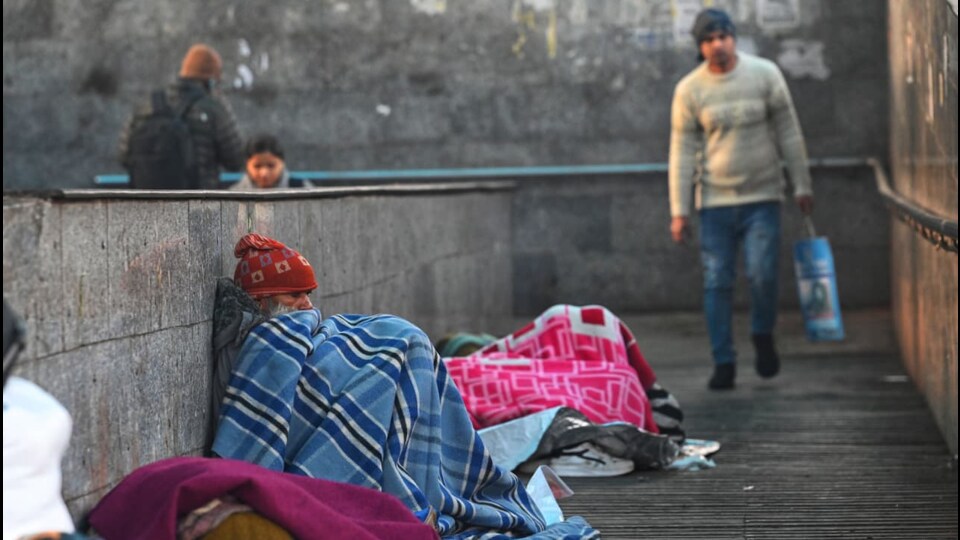
A 24-hour average AQI of 354 (very poor) was recorded at 9am on Wednesday. (HT PHOTO)

On Tuesday, Delhi recorded a minimum temperature of 3°C, the coldest in three years since January 2023. The minimum temperature of 2.9°C at Ayanagar on Sunday was the lowest for any weather station this season.

Cold wave conditions were expected to abate from Thursday as a feeble western disturbance approaches. The minimum temperature is expected to be between 4-6°C on Thursday, 5-7°C on Friday, and 8-10°C by Sunday.

An India Meteorological Department official said multiple weather stations logged cold wave conditions on Wednesday as the minimum was 4°C or lower.

A cold wave is when the minimum temperature is below 10°C, while its departure is also 4.5°C or more below normal. The minimum temperature of 4°C or lower is also classified as a cold wave.

A 24-hour average Air Quality Index (AQI) of 354 (very poor) was recorded at 9am on Wednesday, compared to 360 (poor) at 4pm on Tuesday. The Air Quality Early Warning System for Delhi said “very poor” air quality was expected until January 22.

  • Jasjeev Gandhiok
    ABOUT THE AUTHOR
    Jasjeev Gandhiok

    Jasjeev Gandhiok is an Assistant Editor with Hindustan Times, where he covers environment, climate change, the clean energy transition and wildlife at the National Bureau. Gandhiok has over a decade of experience in journalism and is based in Delhi. He has reported extensively on Delhi and the National Capital Region (NCR). This includes the region's air pollution woes, a polluted Yamuna and on urban wildlife still thriving in the region. He joined HT in October 2021. Prior to that, he had five-year stint at The Times of India in Delhi, where he also covered Delhi, with a focus on environment and wildlife. Gandhiok has covered some recent events around the Capital too, ranging from the farmers' protests, the northeast Delhi riots and the CAA-NRC protests, reporting from the ground on all of these. He also travels across the country to report on how environment and climate change impact everyday life, while also writing on endangered species. His reports in 2019 on toxic leachate from Delhi's landfills led to the National Green Tribunal (NGT) taking suo motu cognisance and ultimately asking the state government to start bio-mining to flatten and remove all three landfills in the capital. He also closely tracks the implementation of government policies on climate, renewable energy and environmental protection. His focus remains on impactful, public-interest journalism which explains how environmental decisions affect people's everyday lives.Read More

Get the latest India News, breaking headlines and real-time updates from across the country. Stay informed about politics, government policies, crime, weather and major national developments.