
 E-Paper



Cong's Manish Tewari wants freedom for MPs to vote across party lines in Parliament, introduces bill for it
An attempt to free lawmakers from "whip-driven tyranny", and promote "good lawmaking", said Chandigarh MP Tewari, rates voter-given mandate above party bindings

 Prefer HTon Google


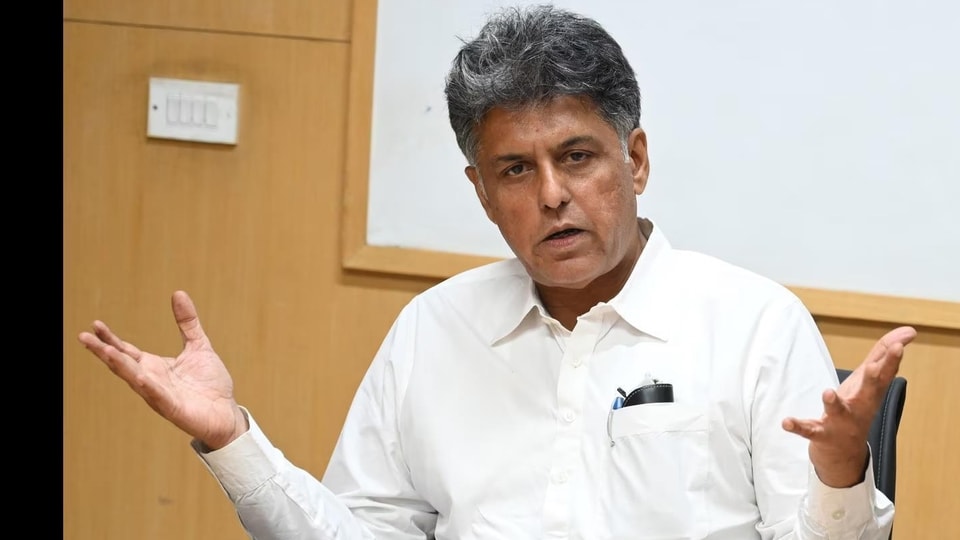
Senior Lok Sabha member Manish Tewari of the Congress wants members of Parliament to be free from the compulsions of party lines when voting on bills and motions. That is what he has proposed for legislatures in a private member's bill in the House during the ongoing winter session, which is to conclude on December 19.
At present, elected members are bound by law to vote as directed by their party through a formal note — what's called a “whip” in House-speak. Tewari's proposed legislation is for amending the anti-defection law to remove that compulsion.
The bill, the Chandigarh MP said, is his attempt to free lawmakers from "whip-driven tyranny", and promote "good lawmaking". Exceptions would include trust votes, adjournment motions, money bills and other matters "affecting the government's stability”.
He said the bill seeks to stress who has primacy in a democracy — “the elector who stands in the sun for hours… or the political party whose whip the representative becomes the helot of?”
Private member's bills are not known to pass — Tewari has introduced this for the third time after 2010 and 2021 — but his independent line comes at a time when his party, which is the main Opposition in Parliament, is beset with electoral losses and internal rumblings.
Tewari has over the years taken stances different from his party's on many issues, including most recently with his participation in the Narendra Modi government's global outreach after Operation Sindoor against Pakistan. Shashi Tharoor is the other prominent Congress leader among this lot.
“This bill seeks to return conscience, constituency and common sense to the echelons of the legislature,” Tewari told news agency PTI. Whips turn lawmakers into “lobotomised numbers” and “dogmatic ciphers”, according to the senior leader who served as a minister in Manmohan Singh's UPA government.
He said laws are often pushed through without discussion. “The reason for this, is that parliamentarians do not see a role for themselves in lawmaking,” he argued.
“So, the law is made by some joint secretary in some ministry; it is brought to Parliament, where a minister reads out a prepared statement explaining what it is; then it is put to a pro forma discussion," he explained.
"And then, as a consequence of a whip-driven tyranny, those on the treasury benches invariably vote for it, and those on the opposition benches vote against it,” he noted.
Also read | ‘Right to disconnect’, criminalising marital rape: Private bills by Tharoor, others seek big changes
He asserted that good lawmaking can occur “where MPs would actually spend time looking at best practices around the world, researching legal precedent, and then contributing to the proceedings".
“From 1950 to 1985, whips carried no coercive consequences,” the MP, who is also a lawyer, said.
For why the anti-defection law was hardened, he cited the start of a trend of defections in 1967 — “Aaya Ram Gaya Ram" — when one legislator in Haryana switched sides “eight times in one day”.
"Almost 18 years later, then prime minister Rajiv Gandhi brought the anti-defection law as the 10th Schedule to the Constitution of India," he said. “It has been 30 years, the anti-defection law, however well intended it may be, has not been able to check the menace of defection."
He said defections became “a retail activity in the 1960s, a wholesale activity by the 1990s; and by the 2000s, especially after 2014, a mega mall activity".


