
 E-Paper



Constant communal tension a violation of right to life: Supreme Court
Supreme Court emphasised on Friday as it reproached the Maharashtra government for failing to stop the 1992-93 Mumbai communal riots that left 900 people dead and more than 2,000 injured.

 Prefer HTon Google


A constant atmosphere of communal tension is a violation of the constitutional right to life guaranteed to the citizens of the country, the Supreme Court emphasised on Friday as it reproached the Maharashtra government for failing to stop the 1992-93 Mumbai communal riots that left 900 people dead and more than 2,000 injured.
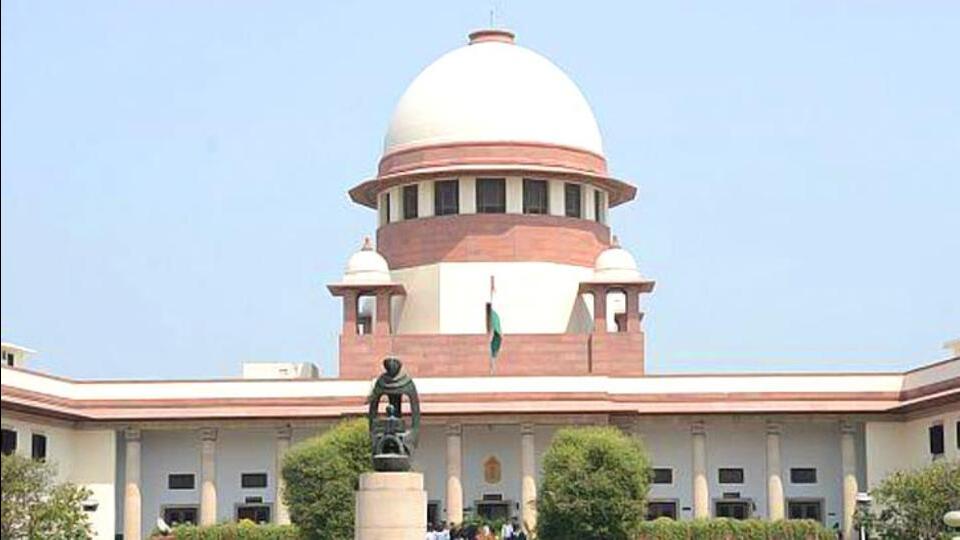
Issuing a slew of directives to the Maharashtra government for tracing the absconding accused and paying compensation to the riot victims, a bench of justices Sanjay Kishan Kaul, AS Oka and Vikram Nath underscored that a constitutional court cannot shut its eyes towards the plight of victims just because the petition was pending in the top court for 21 years.
“Article 21 of the Constitution of India confers a right on every citizen to live with human dignity. Article 21 encompasses into itself the right to live a meaningful and dignified life... If citizens are forced to live in an atmosphere of communal tension, it affects their right to life guaranteed by Article 21...We cannot allow the victims to suffer only because there was a delay in the disposal of this writ petition,” held the bench.
Also read: Can’t deny citizens grounds for refusing security clearance: SC tells Centre
The court added: “It cannot be disputed that certain groups were responsible for the large-scale violence in December 1992 and January 1993. There was a failure on the part of the state government to maintain law and order and to protect the rights of the people guaranteed under Article 21 of the Constitution of India.”
The state was ruled by the Congress at that time, with Sudhakarrao Naik serving as chief minister.
The order came on the petition filed by Shakeel Ahmed in 2001, demanding implementation of recommendations made by the Justice BN Srikrishna Commission in 1998 on issues spanning compensation to the victims, efficient investigation and quick trials, and police reforms.
Noting that 97 out of 253 criminal cases were dormant because the accused were untraceable, the top court ordered the state government to immediately constitute a special cell to trace the missing accused and make them stand trial.
“The state government shall provide details of 97 cases on dormant files to the registrar general of the Bombay high court within one month from today. On receipt of the details, the high court, on the administrative side, shall issue necessary communication to the concerned courts in which the cases are pending to take necessary steps to trace the accused,” it added. The court further took note of a latest affidavit filed by the Maharashtra government that family members of 108 persons missing after the riots were not paid compensation of ₹2 lakh each because they could not be located or the families failed to fulfil the formalities.
Directing the state government to “make all possible efforts to trace the legal heirs/family members of the missing persons” and pay all compensation within nine months, the top court set up a three-member committee, to be headed by the member secretary (a judicial officer) of the Maharashtra State Legal Services Authority, to monitor this exercise. The committee has been asked to submit a compliance report after ten months.
Also read: On Delhi air pollution, SC to hear plea seeking urgent steps next week
It further clarified that the state government shall pay interest at the rate of 9% to all the victims if it has not disbursed the compensation within six months of the government resolution dated July 22, 1998, announcing the monetary measure.
“900 persons died and more than 2,000 persons were injured. The houses, places of business and properties of the citizens were destroyed. These are all violations of their rights guaranteed under Article 21 of the Constitution of India. One of the root causes of their suffering was the failure of the State Government to maintain law and order. Therefore, the affected persons had a right to seek compensation from the state government,” it maintained.
“We hope and trust that after 75 years of independence, riot like situations will never arise,” added the court, as it directed the state government to expeditiously implement the recommendations made by Justice Srikrishna Commission regarding the improvement and modernisation of the police force.



