E-Paper



Expect India to pitch 450GW renewable energy target in Glasgow: Alok Sharma
Alok Sharma, the COP26 president, said India’s informal goal of 450GW should be formalised in its NDC before the UN climate change talks get underway in Glasgow on October 31

 Prefer HTon Google


Just days before a major UN-led summit on climate change opens in Glasgow, Alok Sharma, the president of the event popularly known as COP26, said he expects India to present its Nationally Determined Contribution (NDC) at the talks with a 450GW renewable energy target by 2030 incorporated in it.
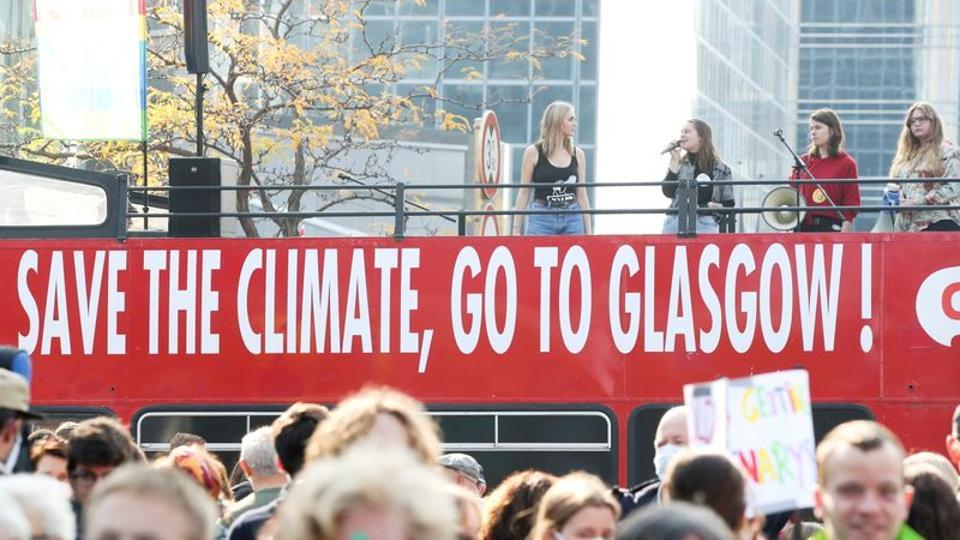
Saying that every country starts with a different energy mix, Sharma added that India’s informal goal of 450GW should be formalised in its NDC before the COP26 gets underway on October 31.
“That is what I told Indian officials and ministers when I was there,” said Sharma at a virtual press conference organised on Tuesday by Covering Climate Now, a global collaboration of journalists and newsrooms to produce more informed and urgent climate change stories. HT is a part of the initiative.
The COP26 annual summit on climate change action is also called the United Nations Climate Change Conference.
There is no confirmation on what India’s submission at COP26 is likely to be. At an informal briefing on COP26 to select journalists last week, officials said details related to the submission and stance are yet to be approved by the union Cabinet.
Also Read: India lost $87 billion to climate disasters in 2020: Report
“These decisions are taken at the highest level and have to be passed by the Cabinet before they are announced,” said an official. Officials have not commented on whether India will present an updated NDC.
In response to a question about the depleting carbon budget and if he sees developed countries taking up advanced net zero targets, Sharma said it’s an issue that was raised when he was in New Delhi.
“The CBDR (Common But Differentiated Responsibilities) is part of the Paris Agreement. My consistent message to every country is that we all need to play our part. I am impressed with the target of 450GW. What I want is that should reflect in the NDC.”
Over 120 world leaders, including Indian Prime Minister Narendra Modi, are expected to attend the summit on November 1 and 2.
Sharma said Chinese President Xi Jinping has not confirmed his presence, but a Chinese negotiating team will be present in Glasgow.
Sharma said Glasgow will be more challenging than Paris. “Our overarching ambition is to say at the end of Glasgow that we have kept [the Paris Agreement’s goal of limiting global warming preferably to] 1.5 degrees Celsius alive,” Sharma said.
He said an agreement is likely at the end of Glasgow on how the world will keep global warming under 1.5 degrees Celsius. “Glasgow will be the biggest event for the UK since the 2012 Olympics, but there is the added complexity of looking to reach an agreement with 200 parties,” he said.
Also Read: Ahead of CoP 26 meet: A Negotiation Strategy
Sharma underlined the need to bend the curve towards 2 degrees Celsius. “But it is still not what the Paris Agreement said. If all the commitments made are not well below 2 degrees Celsius, then we have to reflect on how in this decade we need to come back and reappraise the commitments that have been made. Again, we have to build consensus around this. We have to look to reach some agreement.”
A 14-15 member delegation with officials from the ministries of power, finance, earth sciences, agriculture, new and renewable energy, environment, and water will represent India at COP26. Environment minister Bhupender Yadav will head the Indian delegation.
PM Narendra Modi and British Prime Minister Boris Johnson are expected to make a joint statement on a mission dubbed “Green Grids Initiative - One Sun One World One Grid (GGI-OSOWOG)” at COP26.
The GGI-OSOWOG project will bring technical, financial, and research cooperation to help facilitate cross-border renewable energy transfer projects as part of the International Solar Alliance.
Yadav is expected to lead India during the negotiations in the second week of COP26 when issues related to the Paris rulebook are likely to be deliberated. The rulebook is a set of guidelines for implementing the 2015 Paris Agreement.
Officials have maintained it is not mandatory for India to update its NDC. “It can update it during the global stocktake in 2023. Whatever India announces will be on a voluntary basis,” said an official, requesting anonymity. “Developed countries have been pushing India to announce a net zero emissions target. But for us, our position is clear. Action has to be taken based on historical responsibility, which means they (developed countries) transition to net zero emissions first, leaving the carbon space for us to grow.”
India is expected to push for climate change justice, and equity and contribution based on historical responsibility during negotiations with a similar stand as that of 24 other like-minded developing countries, including China.
Saudi Arabia, the world’s largest oil exporter, has announced plans to reach net zero emissions by 2060. The UAE became the first Gulf nation to commit to net zero emissions by 2050. Russia and China have also announced plans to transition to net zero by 2060. According to the UN, 130 countries have set or are considering a net zero emissions target by mid-century.
Centre for Science and Environment director general Sunita Narain said India should announce an enhanced NDC, not because of its responsibility or contribution to the greenhouse gas emissions, but because it is in the country’s best interest. “For us, climate action is for co-benefit,” Narain said.
World Resources Institute director Ulka Kelkar said India is entitled to carbon space, but can consider a suitable target year for net zero CO2 emissions. “India is already putting in place the building blocks of a net zero future, such as scaling up renewable energy and investing in green hydrogen. Over time, it can also consider adding a carbon tax and retiring old inefficient thermal power plants, which will yield economic gains and health benefits.”