
 E-Paper



Coronavirus: US to begin random anti-body testing to gauge undetected community spread
Coronavirus: Antibody testing could also give important clues for managing the disease in India. Countries like Germany, Italy, UK and now US are considering issuing immunity passports to certify a person has recovered and doesn’t have the potential to infect others as an exit strategy from lockdowns.


The United States’ National Institutes of Health (NIH) is testing 10,000 random people who had not tested for Covid-19 for the presence of antibodies to assess how many have had disease but went undiagnosed, and gauge the extent of “undetected community spread”.
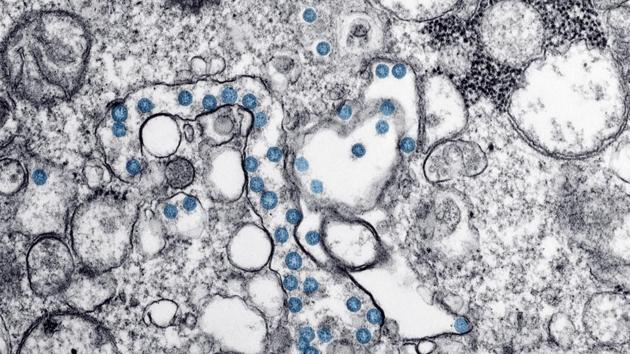
“This study will give us a clearer picture of the true magnitude of the Covid-19 pandemic in the US by telling us how many people in different communities have been infected without knowing it, because they had a very mild, undocumented illness or did not access testing while they were sick. These crucial data will help us measure the impact of our public health efforts now and guide our Covid-19 response moving forward,” said Anthony S Fauci, director, National Institute of Allergic and Infectious Diseases, which is under the NIH.
Antibody testing could also give important clues for managing the disease in India.
“It will not tell us who is currently infected. It will tell us who has been infected in the past. Generally, antibodies are developed five to seven days after contracting the infection. Such testing tells us how widespread the infection is in the community, how large is the proportion of asymptomatic patients is, and whether mild symptoms are more common or severe. Such tests are required to understand the virus. It is a surveillance tool and is cheaper than reverse transcription polymerase chain reaction (RT-PCR, which detects active infection)” said Dr Tarun Bhatnagar, epidemiologist, Indian Council of Medical Research-National Institute of Epidemiology. India plans to start rapid antibody testing of all people in hot spots areas showing at least week-old symptoms.
The test involves analysing blood for two types of antibodies -- anti-SARS-CoV-2, and the proteins IgG and IgM. In blood samples found to contain antibodies against SARS-CoV-2, researchers will evaluate the person’s immune response for insights on why they had mild disease.
Countries like Germany, Italy, UK and now US are considering issuing immunity passports to certify a person has recovered and doesn’t have the potential to infect others as an exit strategy from lockdowns.
Dr. Fauci on Friday said the US government is planning to issue immunity cards and that a large number of antibody tests will be available in the market in the coming weeks.
“Antibody is just an indicator that you had the infection. You may still have to do an RT-PCR test to check if the person still has active infection. It will be too risky to allow people to go back to work without determining if there is active infection,” said Amit Singh, associate professor, Centre for Infectious Disease Research, Indian Institute of Science. He added that antibody testing is one of the best tools to assess community transmission. “That’s what South Korea did. They conducted mass scale antibody tests to plan and contain the disease in affected areas. India will do the same in coming weeks. “
South Korea has been running thousands of antibody tests everyday to contain the disease, but on Fridayofficials reported that 91 patients thought to have recovered tested positive again. This is why Singh stressed that antibody tests cannot be used for a final call on whether restrictions can be lifted.


