
 E-Paper



Dental Council of India against dentists in Covid-19 wards
The Union health ministry has asked states to make use of dental doctors in managing Covid-19 in the field, if required.

 Prefer HTon Google


The Dental Council of India (DCI) has issued an advisory to all state governments, dean of dental colleges and state dental councils, asking them not to post dentists in coronavirus disease (Covid-19) wards.
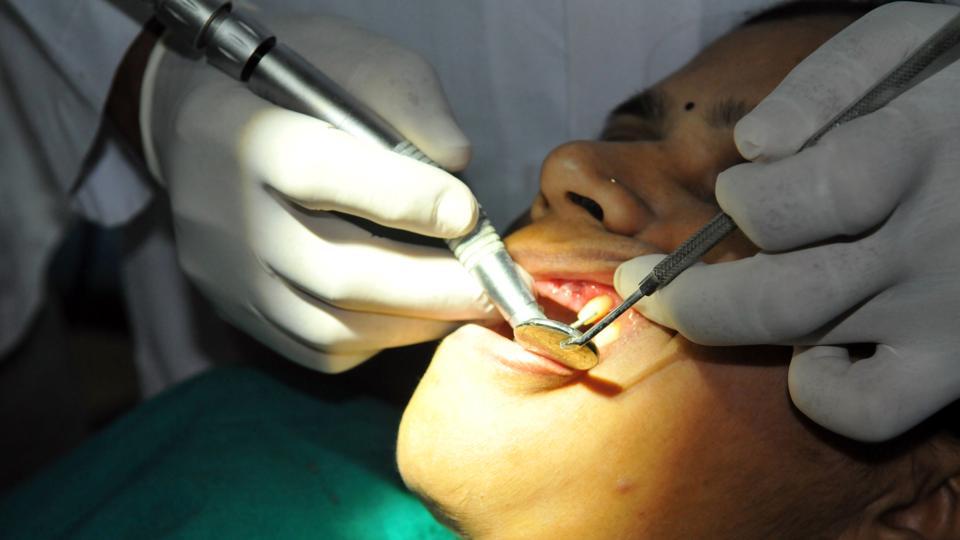
The Union health ministry has asked states to make use of dental doctors in managing Covid-19 in the field, if required.
The DCI advisory said dentists should only be used for non-medical work, such as pre-screening, recording case history and identification of vulnerable age groups, community engagement, contact tracing and patient tracking, and health facility infection control management.
“…the DCI noticed that the dentists are being posted in isolation wards to discharge their duties under COVID-19. The executive committee of the DCI, in its online meeting held on 13th May, 2020, has unanimously decided to issue an advisory to the effect that no dentist/dental professional should be posted in isolation wards to treat the COVID-19 patients, which may put the patient at risk,” wrote secretary, DCI, Dr Sabyasachi Saha, in his advisory released on Wednesday.
“A dentist, however, can perform the following duties: 1. pre-screening. 2. recording case history and identification of vulnerable age groups 3. community engagement, contact tracing and patient tracking. 4. health facility infection control management 5. administrative work related to COVID-19 from purchases, record management etc. 6. health dashboard maintenance and Information, education and communication (IEC) related activities 7. post discharge counselling and management of patients. 8. review supply chains and stocks of essential medicines 9. organising capacity building and training for healthcare professionals. Accordingly, the DCI hereby advise all the concerned authorities of the respective States/UTs/District Authorities etc. to follow the aforesaid guidelines/advisory,” it further reads.
“MBBS doctors will always be given first preference, but in case of any emergency situation then dentists can also be utilized as they have a medical background. We even have Ayush doctors in managing Covid-19 patients, dentists should be any day better equipped to handle patients who are not severely ill in an ICU,” says Dr KK Talwar, former director, PGI-Chandigarh.
A senior dental expert in the government, however, said that dentists should be deployed in Covid-19 wards only after training.
“When it comes to clinical skills, practice matters a great deal. For example, an ICU nurse might be able to put an intravenous line quicker than a doctor. They should be trained because dentists don’t do these things on a regular basis, which is crucial in how well a patient is handled,” he said, requesting not to be identified.
Dr Talwar agrees. “That is always an option to provide dentists some short training and utilise them.”
Meanwhile, the All India Ophthalmological Society (AIOS) also recently asked the Union health ministry to cancel all eye camps that are held across the country for at least two months because of the risk of patients getting infected with viral infection in these mass camps.
Such camps are organised in areas that are too far from specialist institutes. An affliction that is commonly treated here is that of cataract, a major cause of blindness. According to the union ministry of health and family welfare, over 6 million cataract surgeries were done every year since 2014.
“We have spoken to the government and asked them to shut all active camps to avoid congregation of patients. The chance of infection is very high among ophthalmologists since we are in close proximity to the patient and if the patient is infected, the blindness could be compounded,” said Dr Mahipal Sachdeva, president, AIOS. With migrant workers returning home, the infection risk has gone up.
Under guidelines for ophthalmologists that the AIOS released on May 11, it allows elective procedures, including cataract surgeries, in all areas except in containment zones. It requires patients to acknowledge risking infection at the treatment centre and declare whether they came in contact with a Covid-19 patient and whether they have activated the Aarogya Setu mobile digital tracking application.
The guidelines also ask whether they or anyone they were living with had a “red eye”, a reference to conjunctivitis, an extremely contagious disease that shows up as a result of bacterial or viral infection.
“Since conjunctivitis is reported as part of the disease spectrum of Covid-19 in China, all patients with conjunctivitis should be Covid-19 suspects and should be examined in isolation, using N95 mask and disposable gloves, face shield & gown,” it read.
It also sought that the Covid-19 test be administered on those donating their corneas that can be preserved for 48 hours till the test results are available. The RT-PCR test process (from collecting samples to providing results) can take as long as five days. “There is risk of transmission at the time of donation. Tears have been shown to have the coronavirus,” said Sachdeva.
“That [consent form] addresses the apprehensions of the community of doctors because anyone on Covid-19 duty is protected under the Epidemic Act. But otherwise there is no protection for anybody in the medical profession. Even organ donors have to be tested. We have written to the government to increase testing,” said Dr Rajan Sharma, president, Indian Medical Association.


