
 E-Paper



Courts can order voice samples from witnesses too, not just accused: SC
The court said the act of giving a voice sample does not amount to “self-incrimination” and falls within the same category as providing a fingerprint, handwriting or signature specimen

 Prefer HTon Google


The Supreme Court on Monday held that a court can direct not only an accused but even a witness to furnish a voice sample if it is required for the purpose of criminal investigation.
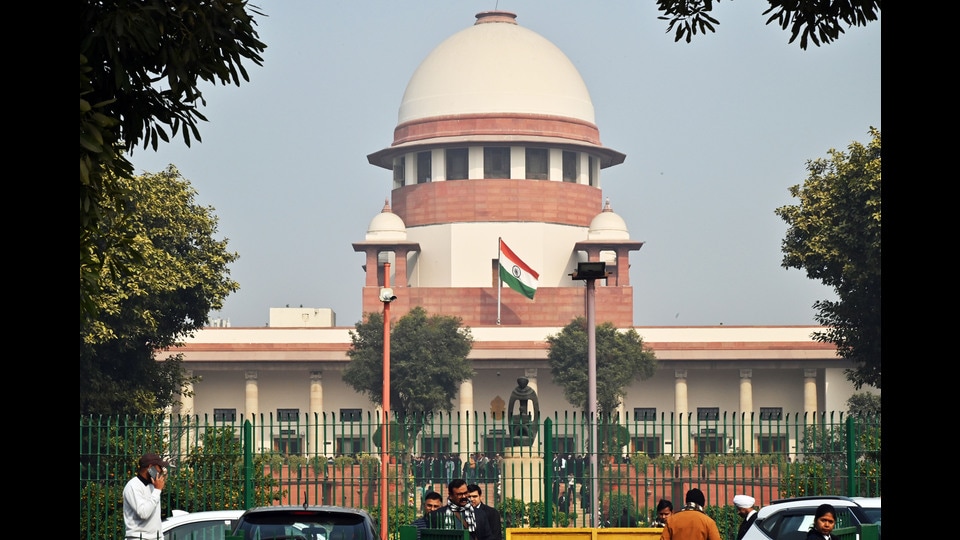
A bench comprising Chief Justice of India Bhushan R Gavai and Justice K Vinod Chandran said the act of giving a voice sample does not amount to “self-incrimination” and falls within the same category as providing a fingerprint, handwriting or signature specimen.
The court set aside a Calcutta High Court order that had refused permission to collect the voice sample of a witness, holding that the issue was already settled in the 2019 judgment of Ritesh Sinha Vs State of Uttar Pradesh, where a three-judge bench recognised a magistrate’s power to order such sampling.
“The high court has egregiously entertained a purely academic question already covered by a binding precedent of this court,” noted the bench, adding that the high court had incorrectly relied on a reference made to a larger bench -- a reference that had since been “closed unceremoniously, on default”.
Reaffirming the legal principle laid down in Kathi Kalu Oghad (1961) and Ritesh Sinha (2019), the Supreme Court said providing a voice sample does not constitute testimonial compulsion under Article 20(3) of the Constitution, which protects an accused from being forced to be a witness against themselves.
“It has to be noticed that Article 20(3) does not say that an accused person shall not be compelled to be a witness -- it says he shall not be compelled to be a witness against himself,” the court said, quoting from the earlier precedent. “A specimen handwriting or finger impression by itself is no testimony at all… They are only materials for comparison,” it added.
The bench clarified that the principle applies equally to any person, whether an accused or a witness, as the act of providing a voice sample is “wholly innocuous” and does not, by itself, incriminate anyone.
The case arose from a criminal investigation into the death of a 25-year-old woman in February 2021, which led to allegations of harassment by her husband’s family and counter-allegations of misappropriation of jewellery and cash by her parents.
During the probe, the investigating officer informed the court that a man acting as an agent for the woman’s father allegedly threatened a witness. To verify this, the officer sought permission from a magistrate to collect the agent’s voice sample.
The magistrate allowed the request, but the order was overturned by the Calcutta high court in March on the ground that the issue of compelling a witness, as opposed to an accused, to provide a voice sample had been referred to a larger bench of the Supreme Court.
The apex court, however, found this reasoning unsustainable, noting that the reference had been disposed of and that the existing precedent in Ritesh Sinha already empowered a magistrate to order such collection.
The bench also pointed out that even though the earlier Criminal Procedure Code (CrPC) did not expressly contain such a provision, the newly enacted Bhartiya Nagarik Suraksha Sanhita (BNSS), 2023, now includes Section 349, which explicitly empowers a magistrate to direct any person to provide a voice sample.
Hence, the court said, regardless of whether the CrPC or BNSS applies to the case, the power to order voice sampling exists, either by virtue of judicial interpretation under Ritesh Sinha or by express statutory provision under the BNSS.
“We hence do not find any reason to uphold the impugned order,” concluded the bench directing the man in question to furnish his voice sample in accordance with the order passed by the magistrate.



