
 E-Paper



Covid-19: Lack of clarity on firm may hurt monitoring
Monitoring home isolation of Covid cases requires specialised teams experienced in remote and residential patient care services, government officials and experts said on Wednesday.

 Prefer HTon Google


Monitoring home isolation of Covid cases requires specialised teams experienced in remote and residential patient care services, government officials and experts said on Wednesday as uncertainty persisted over whether a private company that has been carrying out this task in the national capital will be allowed to continue.
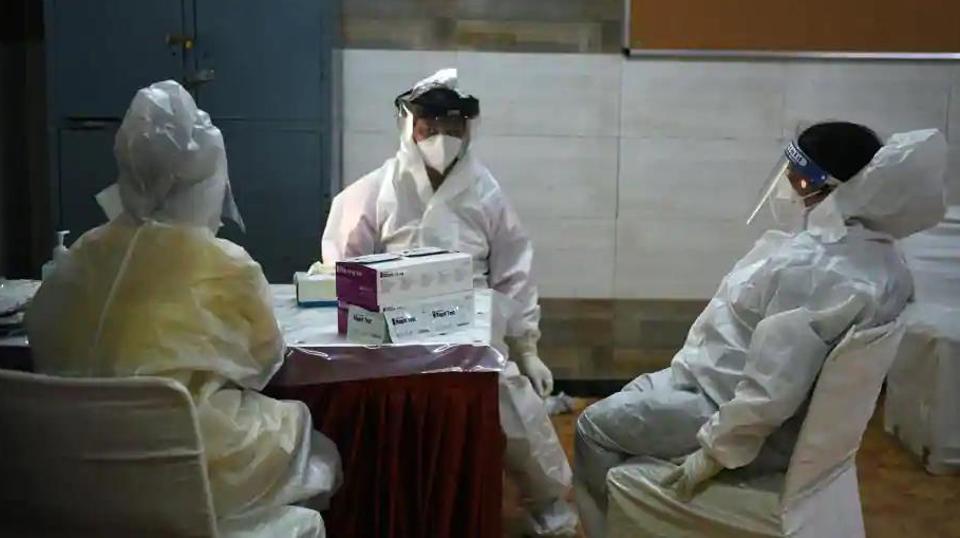
The company, Portea Medical, was caught in a tussle between the Delhi government and lieutenant governor Anil Baijal, who – as head of the Delhi Disaster Management Authority – scrapped the contract citing lack of due process.
The reasoning has been strongly rejected by the Aam Aadmi Party government that said the arrangement was made following central guidelines that allow for expediting of such processes in emergency situations like a pandemic.
“The Disaster Management Act specifically allows the Centre and state governments battling disasters and epidemics to procure goods and services without following the time-consuming tendering process, using a nomination route,” a Delhi government spokesperson said on Wednesday, adding that timeliness of decisions was “most crucial to ensure lives are saved”.
“Even to procure services though nomination route, there is a due process which was followed in this case,” the spokesperson added.
According to data from government officials and comments made by grassroots medical staff, the task of following up with home isolation cases requires phone calls to all active patients recuperating at their residence – a role that needs dedicated teams.
“Given the scale of the pandemic and keeping in mind our existing health infrastructure, it is not possible for the health workers to call every home isolation patient every day and advice them on best practices,” a government official said, asking not to be named.
Portea’s contract was cancelled on June 19 but the company was allowed to carry on follow-ups with 10,490 active home isolation cases it had been handling at the time. Since then, this number has grown by at least 4,000 and these new cases now need to be followed up by staff under the district surveillance officer (DSO) for whom the task is in addition to the containment and contact tracing responsibilities.
Two DSOs said their work load has increased manifolds since June 20, when the old guidelines were changed.
“First we are supposed to get the list of those testing positive in our district from the respective medical offices. Once we have the list we start visiting the homes of asymptomatic and mild patients for their clinical assessment and also to check their home for elibility, if needed. Now our teams have been asked to also make follow up calls to all home quarantine patients. We are managing with whatever little staff we have and sometimes calling one patient twice a day is not possible,” one of these officers said, asking not to be named.
The other officer added that they are also now fielding an increasing number of calls since cases are going up.
According to the Delhi health bulletin, there were 14,844 – or 56% of the city’s active cases – in home isolation on Wednesday.
“Suddenly, there is excessive burden on district surveillance officers and that can have a negative impact on Covid management efforts. Surveillance and management of home isolation cases require very specific training in the fields of data collection, data management and creating a quick response mechanism. Not all surveillance officers are experts on all fields. So, having an additional support system for this job is recommended,” said Jugal Kishore, head of community medicines department in Safdarjung Hospital.
In a statement, Portea detailed the scope of the work involved with home isolation, saying a comprehensive tracking system “involving government doctors and experts from Portea” monitored patients for the entire mandated isolation period of 17 days.
“Portea also submits regular reports on their condition flagging off any health complications. If required, the company arranges for a teleconsultation with Delhi government doctors using its technology platform. For cases where hospitalisation may be needed, Portea notifies the appropriate government agency for action on the ground,” it said, adding that it also handled identification of patients who can leave home isolation.
According to government data, of the 16,301 patients enrolled by the company, about 3% required hospitalisation – and 0.1% among them succumbed.
“To blame the process or an agency is clearly an afterthought by the LG and central government to justify a poorly taken decision that was quickly reversed after widespread criticism by the media, citizens, RWAs,” the government official quoted above said.


