
 E-Paper



Covid-19: Tamil Nadu dairy farmers face uncertainty in lockdown
In the past 10 days, Vetri, a dairy Farmer Producer Company has struggled to find buyers for the 1300 litres of milk produced daily by its 160-member farmers.


In the highly competitive milk industry where it is common for private companies to woo farmers at higher prices than the government-fixed rate, the new normal for S Arokyasamy, secretary of Vetri, a dairy Farmer Producer Company (FPC) in Krishnagiri district, is a distinct loss of advantage.
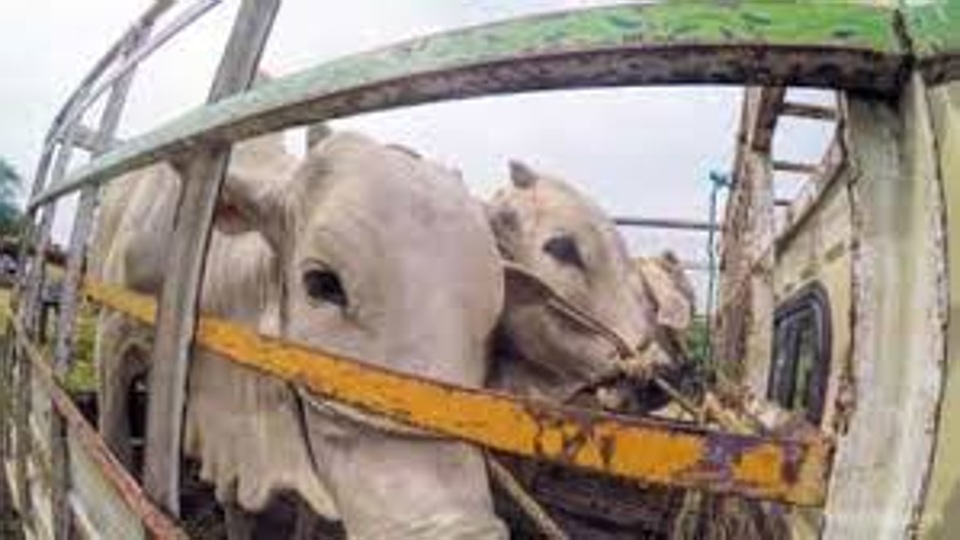
In the past 10 days, Vetri has struggled to find buyers for the 1300 litres of milk produced daily by its 160-member farmers. Many of Vetri’s clients — a bulk of which are small dairy shops, hotels, restaurants, factory canteens and colleges — have shut shop because of the lockdown that’s now extended to May 3.
In fact, nearly half of the 20.6 million litres of milk produced each day by the state’s 2.5 million dairy farmers is bought by the unorganised sector, like Vetri’s clients and even milkmen who supply non pasteurised milk to households. Co-operatives and private sector companies buy close to 37% of it. Unlike vegetable farmers, dairy farmers do not have the option of delaying the harvest or storing it for a day or two given the perishability of milk, which is why getting a good rate for their product is essential. Quite like the commodities market, prices fluctuate daily. And the season has just begun.
“Summer is usually the most profitable period for us as demand skyrockets. That’s when private companies pay a significant premium. Now, with most private companies shut, our only option is to sell at whatever price the companies offer. On top of that the price of cattle feed has increased during the lockdown. It’s a double whammy for us,” Arokyasamy said.
The price of cattle feed like gram husk has gone up by a third in the lockdown and now sells at Rs 1250 per quintal; steep for diary farmers who haven’t even been able to make a sale.
However, not everyone’s having a bad season. The state owned Aavin — a brand run by the Tamil Nadu Cooperative Milk Producers Federation (TCMPF) — has ramped up procurement at Rs 31 per litre, the rate fixed by the state, and has also added close to 25,000 more farmers into their network comprising 210 cooperatives. TCMPF has increased its daily procurement by up to 7% or roughly 200,000 litres, according to K Gopal, secretary, animal husbandry, Tamil Nadu. The government now buys close to 3.5 million litres a day.
“The government policy is to ensure that neither the farmers nor consumers get affected during the crisis. The dairy development department is creating hundreds of new village co-operative societies and enlisting as many farmer members as we can in double quick time,” Gopal said.
Earlier private players would lure farmers away from state co-operatives by paying them anywhere between Rs 5-8 a litre more than Aavin. Now, they don’t have to. Milky Mist, an Erode-based dairy firm and the country’s largest producer of cheese and paneer, has increased procurement by 50% to 600,000 litres a day with its supplier network ballooning from 47,000 farmers to 60,000 in just a few days during the lockdown. Earlier, they would procure milk at a rate at least Rs 2-3 higher than the government rate. Milky Mist now buys milk at Rs 31 a litre, benchmarked to Aavin’s price.
Founded by T Sathish Kumar, a 44-year-old first generation entrepreneur in 2018, the company doesn’t sell milk. It sells value-added products such as cheddar, cottage and mozzarella cheese that have a long shelf life. Thus, it can afford to buy milk in vast quantities at prices lower than usual. It also has the capacity to process one million litres of milk a day.
“We can absorb additional supplies because all our logistics infrastructure such as refrigerated tankers are owned by us. With grocery shops delivering at consumers’ doorsteps efficiently in the state, we are witnessing a big spike in home consumption demand,” said Kumar.
Aavin cannot lower its procurement price like private players, but because it is owned by the government it has an advantage others don’t possess in the lockdown. All its outlets and parlours are open for trade as usual. In the absence of competition, its milk sales have increased by 150,000 litres a day, and the household consumption of value-added products such as palkova, a milk-based sweetmeat, butter and paneer have shot up. Aavin is using the opportunity to expand into the suburbs of Chennai’s satellite towns — a delivery van now visits at least 15 new suburbs.
“Since private companies have abandoned farmers, we have filled the vacuum. This is a hugely competitive market. The private players with huge advertising and marketing budgets, and the ability to pay higher procurement prices ate into our market share. Now, we are using this as an opportunity to expand our market,” said S Vallalar, managing director, Aavin.


