
 E-Paper



Work allocation under NREGS rises amid Covid-19 surge
Most Indian states and Union territories have imposed lockdowns, prompting workers to return home, where they are likely to fall back upon MGNREGS.


The Centre allocated more work under the Mahatma Gandhi National Rural Employment Guarantee Scheme (MGNREGS) in April and May than in the corresponding period last year, signalling a greater job demand amid the surge in Covid-19 cases that has prompted lockdowns across the country, and pushed at least some migrant workers in the cities to return home, although the exodus is still a fraction of what was seen duuring the 68-day hard lockdown last year.
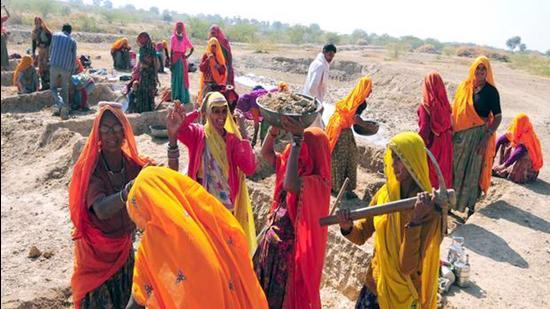
The rural development ministry, which administers the world’s biggest job guarantee scheme, budgeted for 335.7 million person-days of work in April under MGNREGS. As India’s Covid cases rose, the budget for May jumped to 799.4 million person-days of work, a rise of around 140%.
MGNREGS, which guarantees at least 100 days of manual work annually for at least one member of every rural household, generated 325.2 million person-days of work in April. As many as 335.9 million person-days of work have already been generated in the current month, showing a steep rise in job demand.
Demand for work under the scheme surged following the lockdown that was imposed to check the pandemic last year. The curbs in 2020 triggered an exodus of workers from the cities to their homes in the hinterland. It is believed that the job guarantee scheme and the performance of the agricultural sector (which bucked the trend) helped insulate the rural economy to some extent from the fallout of the pandemic.
In the middle of the lockdown last year in April, 175.7 million person-days of work was budgeted under the scheme. The budget saw a steep increase to 676.3 million person-days the following month. For the first time in MGNREGS’s history, more work was done in every month of FY20-21, barring April, than the budgeted quantum as workers left jobless by the lockdown returned to their homes last year. The year saw the highest ever spending under the scheme-- ₹1.11 lakh crores.
Most Indian states and Union territories have imposed lockdowns, prompting workers to return home, where they are likely to fall back upon MGNREGS.
This year’s Union budget, presented at a time when the country was seeing fewer than 10,000 cases of Covid-19 a day allocated ₹73,000 crore to MGNREGS. More demand for work under the scheme, widely seen as the last resort of employment in a calamity, will likely entail more allocations through additional funds or diversion of money from other schemes of the rural development ministry, a government official said.
The spread of the disease in rural areas -- not seen for several months during the first wave of the pandemic last year -- has added to the concerns of MGNREGS managers. A second official of the ministry said that apart from beneficiaries, many grassroots-level officials, who play a critical role in maintaining records and ensuring smooth payments, may be affected.


