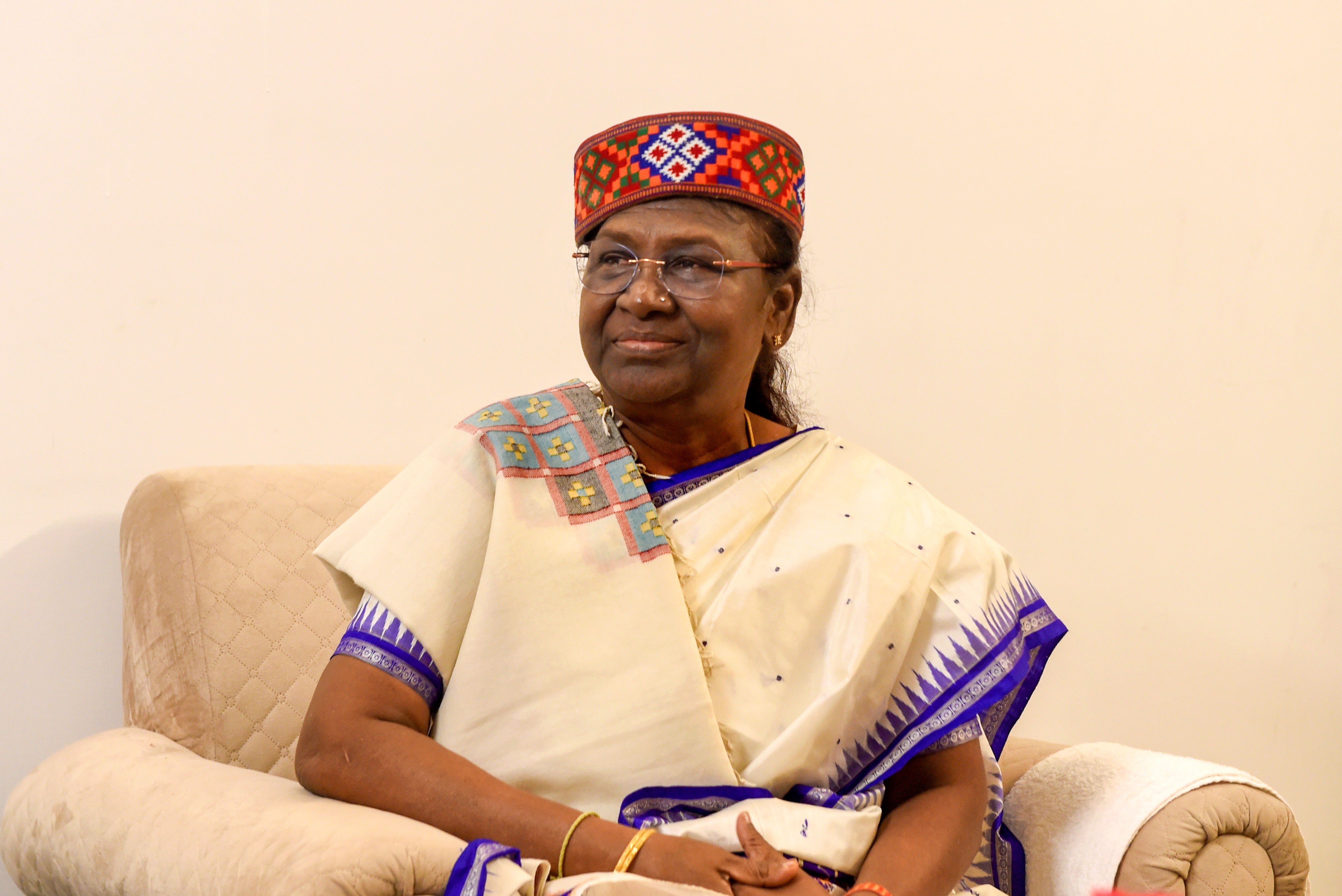
On Thursday morning, as her husband Sunaram wore a traditional loincloth and prayed to the Jaher Era, the sacred deity for the Santhal tribe, Savita Hembram scoured her closet for the most colourful saree, before settling on a red-and-blue one. Dressed in a hurry, the sarpanch of Uparbeda in Odisha’s Mayurbhanj district stepped out of her house and joined the rest of her village in a Santhali song, celebrating the woman that grew up next to her home — Droupadi Murmu, the 15th President of India.
Droupadi Murmu, who is set to be the first tribal woman President of India, in New Delhi. (PTI)
“Though celebrations have not stopped since she was named candidate last month, today is nothing less than a festival for us as a daughter of my village will become President,” said Hembram, who lives close to Murmu’s ancestral house in Uparbeda. “My husband and other menfolk went to Jaher Era. Which tribal woman will not feel proud today?”
It was in Uparbeda village where Murmu was born in 1958 and spent her early years, studying at the upper primary school till Class 7. On Thursday, the village wore a festive look with residents embracing each other, often breaking into song and dance, and flexing billboards with Murmu’s photo looking down at the revelry from every corner in the 2,500-strong village. By 12 pm, residents converged in the village playground for a meal of mutton and rice.
At Murmu’s ancestral home, her relative Dulari Tudu was harried but smiling constantly, distributing sweets to every visitor to the house. It is the peak paddy season, a time when the crop must be transplanted. “But today, everyone has taken a break. It is a special day for the entire area and we just want to live every moment of it,” said farmer Khelaram Hansdah, his hands held aloft in celebration outside Murmu’s home.
Barely 10 km away in Pahadpur, the ancestral village of Murmu’s bank official husband Shyam Charan Murmu, the SLS tribal residential school also wore a celebratory look. The school, run by her daughter Itishree, was started by Murmu in 2016 in the memory of her husband and sons Laxman and Sipun, all of whom died between 2009 and 2014. “She has always been our role model, but she is now an even bigger inspiration,” said a student of the school. “She comes to school regularly, so we can’t wait for her to come back.”
Like at Uparbeda, villagers in Pahadpur, too, reveled in Murmu’s win, staking claim to their piece in her rise. “Our prayer to the Jaher Era has been answered. We can’t express how happy we are. This is where she was married and has spent so much time. It is here she set up her school because she is passionate about education. This is the biggest thing to happen to our area,” said Sardar Murmu, an elderly resident of Pahadpur.
In Rairangpur town — where Murmu cut her political teeth in 1997, becoming the vice-chairperson of the civic body and later a legislator from the assembly constituency — celebrations began early on Thursday morning, and continued late into the night. The entire town was lit up with lights and flowers while people burst crackers for hours. The local traders’ community distributed over 3.5 quintal of laddoo (popular sweet) among residents. An exhausted Taranisen Tudu, who spent the entire day telling visitors and the press about Murmu’s story growing up, said, “Every single man on the street is feeling happy as if their own sister has become the President.”
At the Aurobindo Integral Education Centre in Rairangpur, where Murmu taught as an honorary teacher between 1994 and 1997, a holiday was declared and a meeting organised to reminisce about their most famous faculty member. Children, alumni, teachers and former teachers recounted how Murmu made everyone feel special. “When I came first in class in 1996, she picked me up and carried around her lap in the school. She would give chocolates to students and encourage everyone to excel,” said Abhisek Das, one of her former students.
Celebrations also broke out in rest of Odisha and state capital Bhubaneswar, where Bharatiya Janata Party workers beat drums and danced while distributing sweets to passersby.
Back at Uparbeda, Savita Hembram said Murmu’s election as the President will spur women’s education in the region. “Often in our households, we don’t get to study after getting married and no one asks about our dreams. I hope parents in my area will now take girls more seriously,” she said.
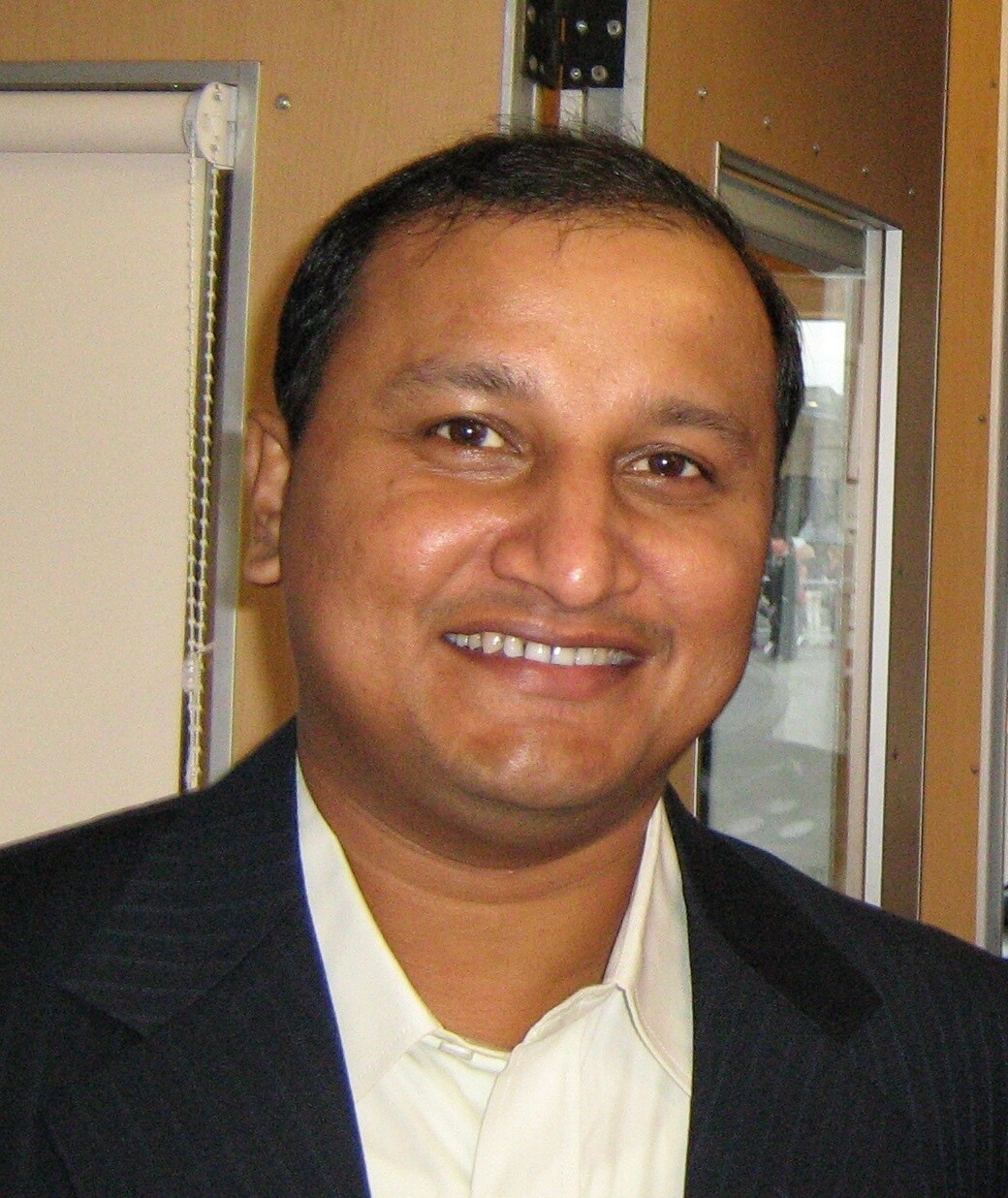
Debabrata Mohanty is a senior assistant editor of Hindustan Times who works as state correspondent from Odisha covering the state's politics, governance, public policy, natural disasters, environment and its society for close to three decades.
With his long years of reporting from the state capital of Bhubaneswar, Mohanty has been known as one of the most experienced and credible journalists covering Odisha for the national English dailies. His reporting combines on-ground detail with deep institutional knowledge detailing the state's changing politics, governance issues, administrative reforms and the functioning of its public institutions. He has regularly reported on issues ranging from legislative developments and public policy implementation.
Politics is his core areas of expertise as he closely tracks Odisha's political landscape, including the rise and transformation of the Bharatiya Janata Party (BJP), the Biju Janata Dal (BJD), the two principal political parties in Odisha. His long association with the state's political establishment enables him to write on contemporary developments in a larger political context.
Mohanty takes a deep interest in writing human interest stories, environmental issues and documenting the impact of cyclones, floods, heatwaves, and other climate-related events in one of the most disaster-prone states. His coverage extends to public health, governance reforms and stories on accountability of government institutions.
Before joining Hindustan Times, Mohanty worked with The Indian Express, Mail Today, and The Telegraph, where he covered at least six general elections and as many assembly elections. In 2007, he was selected for the prestigious Chevening Young Indian Print Journalist Programme at the University of Lincoln, United Kingdom, where he received advanced training in print journalism. In 2009 he won the Press Institute of India-International Committee of Red Cross award on conflict reporting for his on-ground reportage of 2008 Kandhamal riots.Read More
Get the latest India News, breaking headlines and real-time updates from across the country. Stay informed about politics, government policies, crime, weather and major national developments.
Home/India News/‘Daughter Of My Village Is President’: Pride, Hope Echo Across Odisha

 E-Paper