
 E-Paper



Delay in prosecuting the corrupt breeds culture of impunity: Supreme Court
Delay in prosecuting the corrupt breeds a culture of impunity and leads to systemic resignation to the existence of corruption in public life, the Supreme Court asserted on Tuesday.


Delay in prosecuting the corrupt breeds a culture of impunity and leads to systemic resignation to the existence of corruption in public life, the Supreme Court asserted on Tuesday, as it held that the period of four months for deciding the sanction to prosecute a public servant is not advisory but mandatory in law.
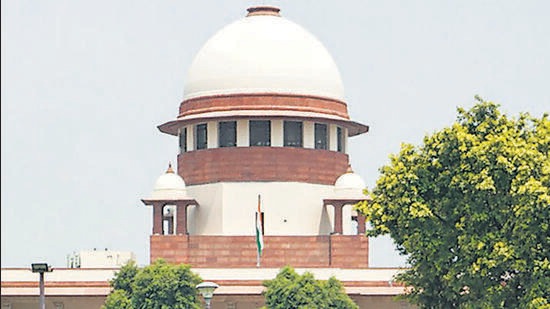
A bench of justices BR Gavai and PS Narasimha elucidated the legislative intent behind the 2018 amendment in the Prevention of Corruption Act which provides an outer limit of four months under Section 19 for the appointing authority to grant the prosecution sanction against the delinquent public servants, and also the principle of accountability warranting a time-bound and reasoned decision making.
“Delays in prosecuting the corrupt breeds a culture of impunity and leads to systemic resignation to the existence of corruption in public life. Such inaction is fraught with the risk of making future generations getting accustomed to corruption as a way of life. Viewed in this context, the duty to take an early decision inheres in the power vested in the appointing authority to grant or not to grant sanction,” it underlined.
The court cautioned that the sanctioning authority must bear in mind that public confidence in the maintenance of the rule of law, which is fundamental in the administration of justice, is at stake in corruption cases.
“By causing delay in considering the request for sanction, the sanctioning authority stultifies judicial scrutiny, thereby vitiating the process of determination of the allegations against the corrupt official… It can thus be concluded that the Parliament intended that the process of grant of sanction must be completed within four months, which includes the extended period of one month,” said the judgment, authored by Justice Narasimha.
Dealing with a corruption case involving a central government official, the bench rejected the Department of Personnel and Training (DoPT)’s argument that the period of four months is directory since Section 19 says that an “endeavour” shall be made to do so.
“In the first place, the consistent effort made by all branches of the State, the judiciary, the legislative, and the executive, to ensure early decision-making by the competent authority cannot be watered down by lexical interpretation of the expression ‘endeavour’,” it said.
Even as it declared that the four-month period is mandatory for the prosecution sanction, the court pointed out that non-compliance with this period cannot automatically lead to the quashing of criminal proceedings because the prosecution of a public servant for corruption has an element of public interest, having a direct bearing on the rule of law.
“The way forward is to make the appointing authority accountable for the delay in the grant of sanction,” said the court, adding it would be open for complainant, accused or victim to approach the concerned writ court to seek suitable remedies. Simultaneously, it said, the Central Vigilance Commission (CVC) shall enquire into the delay and take corrective actions. The court added that seeking CVC’s opinion before a final decision on the prosecution sanction will not vitiate the decision-making.


