
 E-Paper



Delhi brings Stage 1 of anti-pollution plan into force: What will change?
The plan enforces strict monitoring of polluting vehicles, controls for industries, power plants, and brick kilns.

 Prefer HTon Google


The first stage of the Graded Response Action Plan (GRAP) restrictions took effect in the national capital on Tuesday, as air quality remained in the ‘poor’ category for the third straight day.
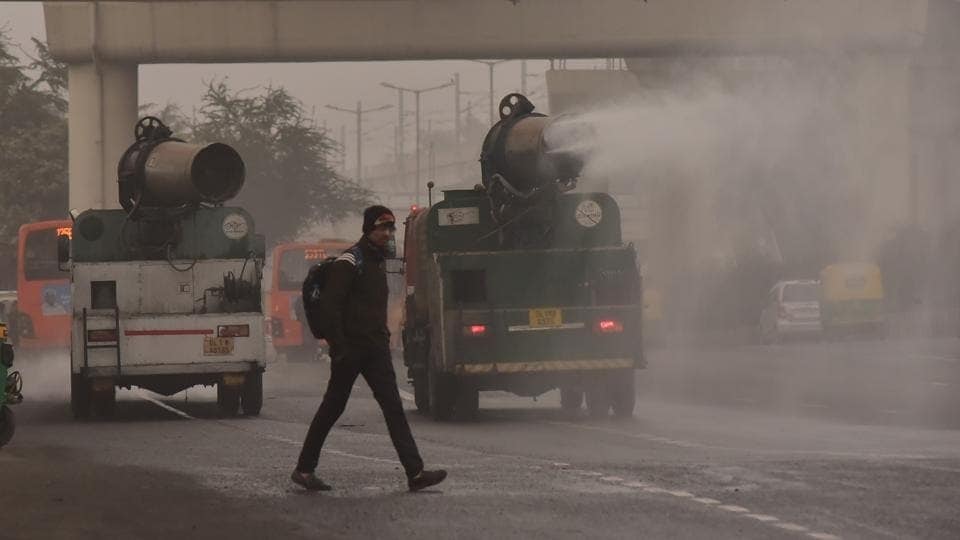
To tackle winter pollution, Stage 1 of the GRAP includes measures like dust control at construction sites, effective waste management, and frequent road cleaning.
Delhi's air quality has continued to stay in the 'poor' category, with a reading of 207 on Tuesday, according to the Central Pollution Control Board (CPCB). The city's AQI fell into the 'poor' zone after Dussehra.
The weather department reported a minimum temperature of 17.4 degrees Celsius on Tuesday, two degrees below normal. Humidity was at 64 percent at 8.30 am, according to the India Meteorological Department (IMD).
The IMD also predicted cloudy skies for the day, with the maximum temperature expected to reach around 35 degrees Celsius.
An AQI of 0-50 is classified as 'good', 51-100 as 'satisfactory', 101-200 as 'moderate', 201-300 as 'poor', 301-400 as 'very poor', and 401-500 as ‘severe.’
What will change with Stage 1 into force?
- The plan enforces strict monitoring of polluting vehicles, improved traffic management, and tighter emission controls for industries, power plants, and brick kilns.
- Regular mechanised road sweeping and water sprinkling to reduce dust.
- Strict dust control measures at construction sites and efficient waste management practices.
- Rigorous checks on polluting vehicles, improved traffic management, and emission reductions in industries, power plants, and brick kilns.
- Prohibition of open waste burning, restricted use of diesel generators, and bans on coal or firewood in eateries.
- Prompt response to pollution-related complaints through the 311 APP, Green Delhi App, SAMEER App, and other social media channels.
- Offices are encouraged to implement unified commuting for employees to reduce road traffic.
- Advisory promoting eco-friendly celebrations by avoiding the use of firecrackers during festivals.


