
 E-Paper



Delhi govt seeks pause on fuel ban for end-of-life vehicles, minister writes to air quality panel
Delhi environment minister Manjinder Singh Sirsa said that there was discontent among people due to the move.

 Prefer HTon Google


Delhi environment minister Manjinder Singh Sirsa has urged the Commission for Air Quality Management (CAQM) to hold its directions mandating a ban on fuel sales to end-of-life vehicles (ELVs) in the capital, ANI reported on Thursday.
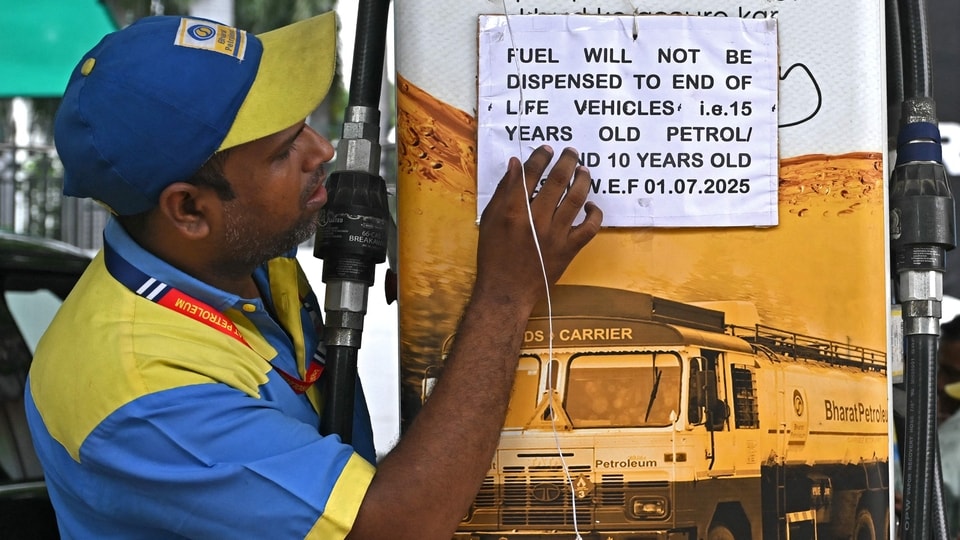
The government has said that the fuel ban on overage vehicles (over 10 years for diesel vehicles and over 15 years for petrol vehicles) is not feasible in the city due to technological challenges and complex systems.
“We urge the Commission to put the implementation of Direction No. 89 on hold with immediate effect till the Automatic Number Plate Recognition (ANPR) system is seamlessly integrated across the entire NCR,” the minister said in the letter to CAQM, according to ANI.
"We are confident that the ongoing multi-pronged efforts of the Delhi Government will achieve substantial improvements in air quality," it added.
In a press conference, Sirsa also said that people were discontented with this move, and the government stood with them, reported PTI.
Also Read | Just 123 vehicles detected as ELV crackdown starts
The CAQM issued directions to fuel stations in April, saying no end-of-life vehicles should be given fuel from July 1. End-of-life (EOL) vehicles included diesel vehicles older than 10 years and petrol vehicles older than 15 years. The ban applies to all ELVs – Delhi-registered or not.
According to official records, Delhi has approximately 60.14 lakh deregistered EoL vehicles, of which a significant number remain in active use. Data from the VAHAN database indicates that the city has over 62 lakh EoL vehicles, including 41 lakh two-wheelers and 18 lakh four-wheelers.
Also Read | Delhi: Dealers flag concerns for own safety while enforcing fuel ban on ELVs
Last month, the Delhi government had issued a Standard Operating Procedure for enforcing the fuel ban. It directed all petrol pumps must maintain a log, either manual or digital, of all denied fuel transactions involving such vehicles.
Fuel stations were also asked to display a signage saying: "Fuel will not be dispensed to End of Life Vehicles — i.e. 15 years old Petrol and CNG and 10 years old Diesel 01.07.2025."
Petrol stations are advised to train their staff on the CAQM regulations and compliance procedures for denying fuel to the EoL vehicles.


