E-Paper



Just 123 vehicles detected as ELV crackdown starts
Starting 6 am, 80 ELVS were impounded in Delhi, officials said. These included 45 impounded by Delhi’s transport department, 34 by the traffic police, and one by the Municipal Corporation of Delhi

 Prefer HTon Google


The first day of a crackdown on end of life vehicles (ELVs), estimated to run into millions, saw just 98 such vehicles detected at fuel stations in Delhi while some more were seized at the Noida border, transport department officials said on Tuesday.
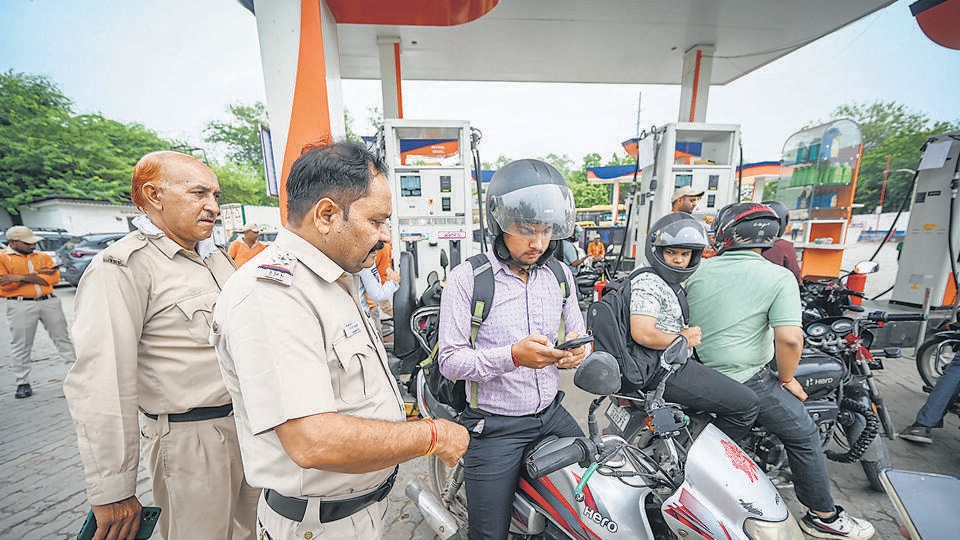
Starting 6 am, 80 ELVS were impounded in Delhi, officials said. These included 45 impounded by Delhi’s transport department, 34 by the traffic police, and one by the Municipal Corporation of Delhi (MCD). Officials did not clarify how many were two-wheelers or four-wheelers.
The drivers of 18 other vehicles detected by Automatic Number Plate Recognition (ANPR) cameras were allowed to leave with a no objection certificate and a fine, the officials said. A few drove off without stopping. Separately, the Noida police seized 25 vehicles during checks at the border with Delhi.
Fuel station operators said that it seemed ELV owners were avoiding filling their vehicles in the Capital instead opting to go to neighbouring cities like Gurugram and Noida.
The ELVs — petrol vehicles older that 15 years and diesel vehicles older that 10 years that have to be scrapped — were to be impounded on the spot and sent to a scrapping facility. There, these will be kept for 15 days, giving violators the chance to pay a fine and take the vehicle away -- to be sold outside NCR.
The Commission for Air Quality Management (CAQM), citing the VAHAN database, had said Delhi has 6.2 million ELVS, which included 4.1 million two-wheelers and 1.8 million four-wheelers. However, officials said this figure includes de-registered vehicles, vehicles already scrapped and those having a no objection certificate that grants a year’s time to sell these vehicles outside of NCR. An official aware of the matter said while an exact figure is unavailable, the actual number of ELVs plying on the roads may be around 600,000-- about 10% of the tally shared by CAQM.
Excluding the scrapped, de-registered and NOC vehicles, Delhi has around 8.1 million vehicles, according to the Delhi Statistical Handbook 2004.
Most owners use their ELVs only sporadically, opting to leave them parked, pointed out Amit Bhatt, Managing Director (India) at the International Council on Clean Transportation (ICCT). “This (drive) will mean these occasional uses will stop and the person will eventually have to scrap their vehicle. It also provides an opportunity for people to switch to electric vehicles,” he said.
Dr S Velmurugan, chief scientist and head of traffic engineering division of Central Road Research Institute (CRRI) concurred.
“What we have to realise is that a lot of these vehicles, mostly two-wheelers, were de-registered and people seldom use them. They just keep them parked at home, or in case of two-wheelers, use them for small trips such as getting groceries from the market. This new ban will mean they will not be able to ply...,” he said, stating while data on the number of ELV plying was unavailable, around 50% are likely still be making such trips in Delhi or NCR.
“The move will mean people either have to switch to public transport, or rely on cab aggregators. While we do not have adequate buses, our metro can handle an additional 15-17% load. We also know a number of people will have a second car or two-wheeler, so that may mean there is little impact on Delhi’s roads in terms of traffic density,” he added.
Transport expert and former CEO of World Resources Institute (WRI) India OP Agarwal said since most of these vehicles are lying parked in neighbourhoods around the city, street-level action would be required.
“I have seen such vehicles in my neighbourhood too, which are gathering dust and are never moved. The problem is a lot of people are still unaware of how to get vehicles scrapped,” said Agarwal, stating the transport department should do awareness drives.
On Tuesday, HT also came across vehicles at fuelling pumps that would soon have to be scrapped. Aman Jha (45), the owner of a 14-year-old petrol car, said while he understood the urgency of the move, however, for the middle class, it is a challenge to buy a new vehicle.
“I bought my car in January 2011 and it will complete 15 years next year in January. I cannot afford to buy another car right now, which is why I have taken so much care of this car. It is in excellent condition and I feel really helpless that this car will be scrapped,” he said.
Nischal Singhania, president of Delhi Petrol Dealers Association, said that fuel pumps located on or close to the Uttar Pradesh and Haryana borders witnessed around a 10-15% drop in sales.
“The ban created fear among most of the vehicle owners who usually refilled at the border fuel stations in Delhi, and many of them preferred to refill their vehicles from fuel stations located in neighbouring cities, such as Gurugram, Noida, Ghaziabad, and Faridabad. The ban will be more effective if the government enforces it across Delhi and NCR,” Singhania said.