E-Paper



Delhi riots not a spontaneous stir: Delhi Police to Supreme Court
Delhi Police labeled the 2020 riots as a "terrorist act" not mere protests against CAA, citing planned violence and conspiracy aimed at "regime change."

 Prefer HTon Google


The Delhi Police on Friday told the Supreme Court that the 2020 riots in the Capital were not an instance of a protest against the Citizenship Amendment Act (CAA) spiralling out of control but “a clear terrorist act.”
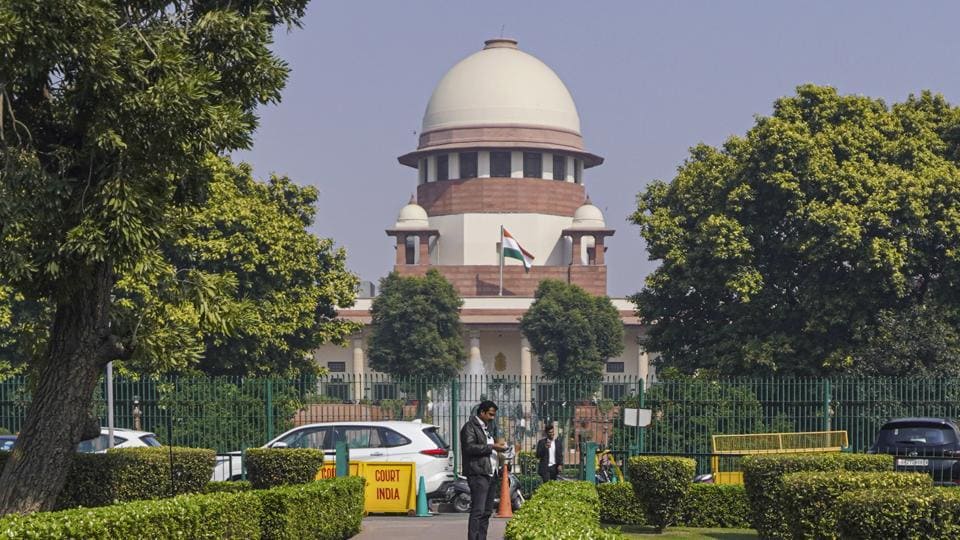
Additional solicitor general (ASG) SV Raju, appearing for the police, argued before a bench of justices Aravind Kumar and NV Anjaria that the violence was a planned and calibrated operation, marked by “armed mobilisation, petrol bombs, acid bottles, firearms, destruction of CCTV cameras,” and “coordinated road blockades,” resulting in 53 deaths and hundreds of injuries.
Raju said that the scale of the violence, its preparation, and the intent behind it left “no doubt” that the conspiracy went far beyond civil demonstrations against the CAA, adding that the broader purpose behind the anti-CAA protests was “regime change,” comparing the planning to violent political uprisings in Bangladesh and Nepal.
He made the submissions while opposing the bail pleas filed by Sharjeel Imam, Umar Khalid, Gulfisha Fatima, Meeran Haider, Shifa-ur-Rehman, Mohammad Saleem Khan and Shadab Ahmed, all accused of conspiring to orchestrate the unrest.
To support the police’s claims, Raju played a video from the Chand Bagh anti-CAA protest site and then laid out a chronology of the riots, starting with the alleged mobilisation at Chand Bagh and Jafrabad on February 23, 2020.
He cited what he called a “conspiratorial meeting” held that night in Chand Bagh to escalate tensions, followed by the disabling of CCTV cameras the next afternoon. Raju said the sequence of events, “from coordinated chakka jams to the destruction of surveillance, followed by armed attacks that left head constable Ratan Lal and IB officer Ankit Sharma dead” and several “senior police officers grievously injured,” showed that the accused were not protesting but “wanted large-scale violence.”
According to Raju, when the initial clashes on February 23 failed to produce the “desired scale of violence” because “no murder took place,” members of the Delhi Protest Support Group (DPSG) allegedly met again that night. Citing protected witness statements, he said the group believed CCTV cameras were limiting the extent of violence. “They wanted a high level of violence. This is revealed by protected witness statements,” Raju told the court.
A day earlier, the police had argued that evidence pointed to a “planned campaign for economic blockade” and “regime change,” allegedly driven by “intellectuals,” doctors and engineers who had abandoned their professions for “anti-national” activities. The ASG said the trial court had already taken cognisance of the offences and held that the UAPA provisions applied. Since the accused never challenged this order, he argued, the statutory bar on bail under Section 43D(5) stood firmly in place.
He also described Khalid as a “veteran of sedition,” referring to allegations from a 2016 JNU incident. When Justice Kumar asked where this appeared in the government’s counter-affidavit, Raju conceded it was not included there but formed part of the 20,000-page chargesheet.
that the broader purpose of the nati-CAA protest was “regime change” and that the planning resembled violent political uprisings in Bangladesh and Nepal. “These were people with scant regard for the Constitution,” he said.
Raju also called Khalid a “veteran of sedition,” referring to allegations from a 2016 JNU incident. When Justice Kumar asked where this appeared in the government’s counter-affidavit, Raju conceded it was not included there but formed part of the 20,000-page chargesheet.
The police concluded its submissions on Friday. The court will hear rejoinders from the accused on Monday.