
 E-Paper



Delhi riots: SC defers hearing on student activists’ bail plea
The adjournment comes a week after the justice Kumar-led bench had adjourned the hearing on September 12.


The Supreme Court on Thursday adjourned for the second time in a row the hearing on bail pleas filed by student activist Sharjeel Imam, former Jawaharlal Nehru University (JNU) scholar Umar Khalid, and three others accused in the 2020 Delhi riots conspiracy case, after justice Manmohan recused himself.
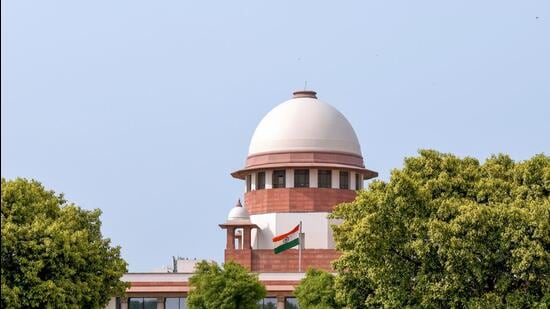
The bench, comprising justices Aravind Kumar and Manmohan, was scheduled to hear the petitions when the briefing counsel appearing on behalf of senior advocate Kapil Sibal informed it that Sibal was leading the arguments in the case. To be sure, Sibal does not appear before justice Manmohan, who had begun his legal career as a junior in Sibal’s chamber. Soon thereafter, the court adjourned the hearing to September 22.
According to people aware of the matter, Justice Kumar will sit in a different combination on September 22 to hear the matter, which will now be placed before the Chief Justice of India for fresh listing before an appropriate bench.
The adjournment comes a week after the justice Kumar-led bench had adjourned the hearing on September 12, observing that the voluminous case records had reached their residences past midnight and could not be examined in time.
The petitioners -- Imam, Khalid, Gulfisha Fatima, Meeran Haider and Shifa-ur-Rehman -- are among nine accused whose bail pleas were rejected by the Delhi High Court on September 2. The court had termed their roles in the alleged conspiracy “prima facie grave,” upholding the charges under the Unlawful Activities (Prevention) Act (UAPA).
Senior advocate Abhishek Manu Singhvi represents Gulfishan, while senior advocate Kapil Sibal appears for Khalid. Senior counsel Siddharth Dave represents Imam. Their petitions argue that prolonged incarceration -- Imam since January 2020 and Khalid since September 2020 -- amounts to punishment without trial, particularly as the trial remains far from conclusion with multiple supplementary charge sheets and dozens of witnesses yet to be examined.
On September 2, a high court bench of justices Navin Chawla and Shalinder Kaur (since retired) dismissed the bail pleas of the nine accused persons, relying on what the investigators described as a coordinated conspiracy culminating in the riots that left 53 people dead and hundreds injured.
The high court had noted that Imam and Khalid were the first to mobilise opposition to the Citizenship Amendment Act (CAA) passed in December 2019, through WhatsApp groups, pamphlets and speeches allegedly delivered on communal lines. Represented by solicitor general Tushar Mehta and special public prosecutor Amit Prasad, Delhi Police described the duo as the “intellectual architects” of the conspiracy.
The high court argued that Imam’s speeches in Aligarh, Asansol and Chakand, and Khalid’s speech in Amravati on February 17, 2020 -- where he referred to protests coinciding with then US President Donald Trump’s visit -- were not isolated acts. It ruled that the absence of either man from riot sites was immaterial, since mobilisation and planning had already taken place. “The mere absence… a few weeks or days before the riots may not be sufficient to mitigate their role,” the HC bench had noted.
The accused, however, maintain that they had no part in any meetings where violence was planned and insist their detention violates the principle that bail is the rule and jail the exception. They have also sought parity with fellow activists Natasha Narwal, Devangana Kalita and Asif Iqbal Tanha, who were granted bail in 2021.
Imam emphasised that he had been in custody since January 2020, weeks before the riots, and that his speeches had no connection with the violence. Khalid said his reference to Trump’s visit in his Amravati speech was innocuous and unrelated to the violence that began a week later.
The high court, nonetheless, rejected these arguments, stressing that unlike the limited roles of some co-accused who secured bail, Imam and Khalid’s involvement was prima facie more serious. It underlined that while the right to protest is protected, conspiratorial violence cloaked as demonstrations cannot be permitted.


