
 E-Paper



Delhi slum demolition: Don’t evict dwellers without alternative housing, Maken appeals to SC
The Supreme Court’s order barred any court in Delhi from issuing a stay on the eviction proceedings after Railways complained of political interference in the past over the removal of slums

 Prefer HTon Google


Congress leader Ajay Maken on Friday challenged the Supreme Court’s August 31 order for the demolition of slums along railway tracks in Delhi, calling it “inhuman”. Maken pleaded that no slum dweller should be evicted without alternative housing as per the Delhi Slum & Jhuggi Jhopri (JJ) Rehabilitation and Relocation Policy, 2015. The policy provides for the rehabilitation of slum dwellers before such demolitions.
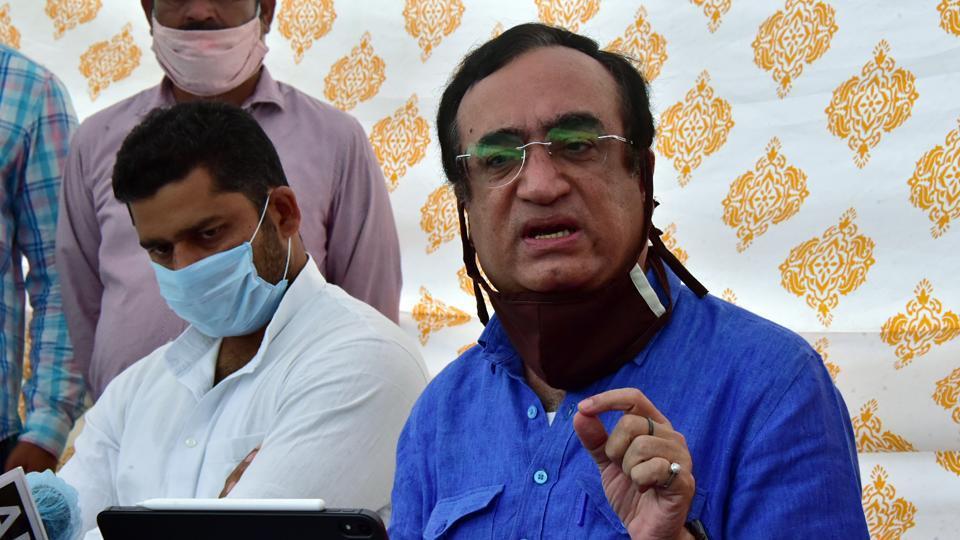
Maken’s lawyers have sought an urgent listing the plea as the Railways has issued demolition notices for 48,000 slum clusters with plans to carry out the demolition drive from Friday to Monday.
Also Read: Life a struggle, can’t SC rethink decision, ask residents of Delhi slums along railway lines
The Supreme Court’s order barred any court in Delhi from issuing a stay on the eviction proceedings after Railways complained of political interference in the past over the removal of slums and gave the Railways three months for the completion of the proceedings.
Justice Arun Mishra, who has since retired, led the three-member bench that passed the order. Chief Justice of India SA Bobde will have to constitute a new bench to hear Maken’s application.
Maken said the order violated the principles of natural justice as the affected slum dwellers were not heard individually or collectively. He added the order violated a ruling of the court’s Constitution Bench in Olga Tellis v Bombay Municipal Corporation (1986), which held there can be no justification for denying slum dwellers living on pavements or public properties an opportunity to be heard.
Also Read: When Covid-19 enters India’s slums
The direction ordering that no court shall grant stay amounted to “grave obstruction in the Right to Access to Justice”, the plea said. It highlighting the consequences of the order. “The order itself is inhuman and against public policy as lakhs of children, women and elderly, currently residing in the large slum clusters alongside the railway tracks, will be left without a roof on the streets….even a small percentage of the displaced population if affected by COVID-19, then the same will prove to be a recipe for disaster.”
The plea said the Centre and Delhi administration kept the court in the dark about the protocol for evicting slum dwellers, which the Delhi high court approved on March 18, 2019 in response to a petition Maken filed. The municipal corporations, Delhi government’s Delhi Urban Shelter Improvement Board, Railways, and Union urban development ministry prepared the protocol.
The protocol said all slums in Delhi that came into existence prior to January 1, 2006, and hutments built there before January 1, 2015, shall not be demolished without providing alternative housing.
Maken said the 48,000 slum clusters sought to be demolished have been in existence for 30-40 years and are home to over 240,000 people.
The high court last year noted that those living in the slums contribute to the city’s social and economic life by working as sanitation workers, garbage collectors, domestic help, rickshaw pullers, laborers. It added they provide a wide range of services indispensable to a healthy urban life and hence they have the right to housing.
Maken said the railways accepted the Supreme Court’s judgment and did not file an appeal against it. He added it has now circumvented the high court ruling by directly approaching the Supreme Court without mentioning the norms laid down for the demolitions.
“Even the Master Plan for Delhi 2021 provides for in-situ rehabilitation of slum dwellers wherever possible and relocation of slum dwellers in other cases. The Rajiv Awas Yojna, renamed as the Pradhan Mantri Awas Yojna, also aims towards slum-free India by 2022 and the scheme also provides for either in-situ rehabilitation or relocation in exceptional cases,” Maken’s plea said. “These facts were not brought to the notice of the Court before passing the August 31 order.”


