
 E-Paper



Delhi suffered most loss due to air pollution: Study
The study said India was bearing massive losses to its economy and productivity because of the health impact of air pollution.


Among Indian states, Delhi suffered the highest per-capita economic loss because of premature deaths and illnesses caused by air pollution last year, followed by Haryana, according to a study published on Tuesday by the science journal The Lancet, which highlighted the price being extracted from the nation by bad air.
The study said India was bearing massive losses to its economy and productivity because of the health impact of air pollution. National GDP suffered a loss of 1.36% because of air pollution last year, it said. In comparison, the total health expenditure in India is only 3.8% of GDP. In 2019, 1.67 million deaths in India were attributable to air pollution, accounting for 17.8% of the total deaths.
Delhi’s per-capita state gross domestic product (GDP) loss in 2019 was to the tune of $62 and neighbouring Haryana suffered a per capita GDP loss of $53.8, said the report titled “Health and economic impact of air pollution in the states of India: the Global Burden of Disease Study, 2019”.
The highest loss to overall state GDP was recorded by Uttar Pradesh, India’s most populated state, at 2.15% followed by Bihar at 1.95% and Madhya Pradesh and Rajasthan at 1.7% each. These are states with a relatively low per-capita state GDP.
GDP per capita measures the sum of marketed goods and services produced within a territory, averaged across everyone who lives within it.
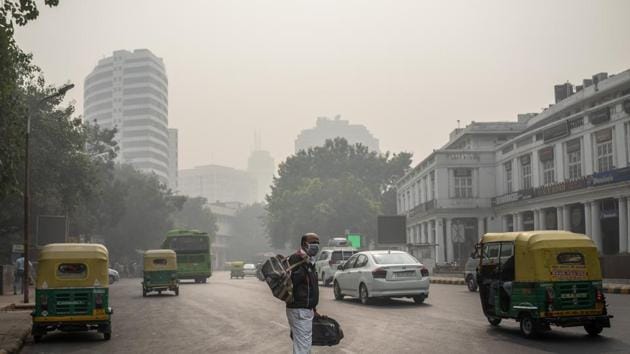
Delhi has ranked consistently among the world’s most populated cities in global surveys in recent years because of emissions from automobiles and power plants, as well as construction dust and cooking with solid fuels. The problem worsens during the winter months, when the capital gets shrouded by thick, smoky haze because of post-harvest farm fires lit by cultivators in states such as Punjab and Haryana to clear their fields of stubble.
The Capital suffered an overall economic loss to the tune of 1.08% of state GDP last year because of both outdoor and indoor pollution and around 1.06% for outdoor pollution alone. The comparative figures of loss due to outdoor air pollution for UP and Punjab are 1.34% and 1.22%, respectively.
Between 1990 and 2019, the death rate per 100,000 population has increased by 115.3% in India because of exposure to high outdoor air pollution. The death rate because of exposure to household air pollution has decreased by 64.2%because of a decline in the use of solid fuels. The death rate due to exposure to ground level ozone increased by 115% during the 29-year period.
It estimated that economic loss caused by premature deaths due to air pollution in India last year was $28.8 billion and from morbidity due to air pollution was $8 billion. Of the total economic loss of $36.8 billion, 36.6% was from lung diseases, which included chronic obstructive pulmonary disorder (21.1%), lower respiratory infections (14.2%), and lung cancer (1.2%), The rest was from ischaemic heart disease (24.9%), stroke (14.1%), diabetes (8.4%), neonatal disorders (13.3%), and cataract (2.7%).
“The most common cause of chronic obstructive pulmonary disorder (COPD) globally is tobacco smoking; more than 90% of COPD cases are liked to smoking. But in India one of the main causes of COPD is air pollution, particularly indoor air pollution,” said Dr GC Khilnani, former head of the department of pulmonary medicine at the All India Institute of Medical Sciences (AIIMS), New Delhi. “PM 2.5 emissions can go up to 30,000 micrograms per cubic metres when food is being cooked with solid fuels in a closed kitchen.”
“When it comes to the health impacts of outdoor pollution, it is important to understand what are the pollution particles made of – it being emitted from burning of rubber, kerosene or diesel etc. For example, diesel emissions are carcinogenic because they consist of polyaromatic hydrocarbons which have a role in development of lung cancer. A majority of deaths caused by air pollution is due to COPD,” he added.
The economic impact of air pollution was estimated by the authors based on output per worker. The output per worker in each state in 2019 was calculated as the labour share of GDP multiplied by GDP in 2018-19, divided by the number of people who were employed.
“Air pollution has the potential to impede accumulation of future human capital by reducing children’s survival, undermining their health, and reducing their ability to benefit from education. The cost savings resulting from the prevention of productivity losses attributable to air pollution would contribute to the formation of new human capital,” the study said.
It cited the example of the US where every dollar invested in the control of air pollution since 1970 is estimated to have yielded an economic benefit of $30.
“The economic impact of this health loss due to lost productivity is huge at 1.4% of the country’s GDP in 2019, besides a roughly estimated expenditure of 0.4% of GDP on treatment of air pollution related diseases. The health and economic impact of air pollution is highest in the less developed states of India, an inequity that should be addressed,” said Prof Lalit Dandona, director of the India State-Level Disease Burden Initiative, national chair of population health at the Indian Council of Medical Research and senior author of the study.


