‘Democracy cannot be held to ransom, Oppn not playing its part’
‘The opposition knows that the business is conducted as per the business of the advisory committee’s decision. After that, there is an informal outreach as well’
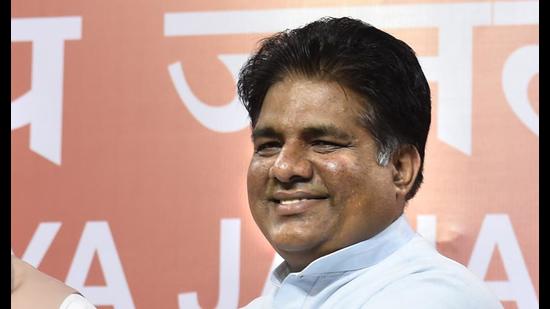
Bhupender Yadav, the union minister for environment, forests and climate change, and labour and employment, blamed the opposition for behaving in an autocratic manner and not letting Parliament function during the monsoon session. In an interview, he said democracy cannot be held to ransom, but works with the agreement, consent and discussion.
Union minister Bhupender Yadav. (HT archive)
Edited excerpts:
The opposition says the government made no efforts to break the deadlock in Parliament.
The opposition did as they pleased. When they wanted a discussion on certain issues such as the OBC Bill they allowed that, when they wanted a division of votes during the passage of any bill, they allowed that, but when the issue did not suit them, or the government wanted to put forth any issue, they did not allow it. People should see this. Democracy cannot be held to ransom; it works on the principle of agreement, consent and discussion. The opposition did not play its part.
The opposition also claims that they were not informed that Prime Minister Narendra Modi would introduce his ministers on the floor of the house and that this was not listed in the day’s business.
The opposition knows that the business is conducted as per the business of the advisory committee’s decision. After that, there is an informal outreach as well. On the OBC bill issue, they allowed the house to run, which means an informal outreach was made. Did they mention the informal outreach when the OBC Bill was taken up or when the division was sought? Ultimately the government could pass some bills but the lawmakers’ right to ask questions was snatched by the protests. They snatched the MPs’ rights to raise questions related to their constituencies, the right of the members to move private members bills. The private member’s bills do not have any government involvement these are selected through the consensus of the House. Then why did the opposition not allow Parliament to run on these issues also? This shows completely autocratic behaviour towards running the house.
The opposition also accuses the government of autocratic behaviour. They say despite their demand to send certain bills to select committees for further scrutiny the government does not agree to do so.
Even those bills that were sent for further scrutiny were not allowed to be taken up or discussed in Parliament. Ordinances are time-bound; they are taken up as per the urgency of the time, and the opposition has the right to seek amendments to these. There have been instances in the Rajya Sabha when despite having the numbers on its side the government has agreed to (make) good amendments sought by the opposition. When has the government said it will not agree to a good suggestion?
What about the General Insurance Business (Nationalisation) Amendment Bill; even the friendly parties wanted further scrutiny?
Bills are sent to select committees when the House takes a decision to do so. But the opposition does not want to follow the first step that is to have a discussion and then agrees or not to move a motion to send the bill to the select committee. Between 2014 and 2019 more bills have been referred to the committees than during the UPA time.
Both inside and outside Parliament there is a demand for the caste-based census, even from the BJP’s allies. Will the government agree to the demand since it is expected to come up during upcoming assembly elections?
The ministry that undertakes this work (of conducting census) takes feedback from experts. This is still in the discussion stages; no decision has been taken on the issue so far. Unlike some of the parties that have only misled people, we are committed to ensuring social equity and justice through our policies and to the social-economic inclusion of all communities.
Smriti covers an intersection of politics and governance. Having spent over a decade in journalism, she combines old fashioned leg work with modern story telling tools.

 E-Paper