
 E-Paper



Denial of speedy, timely justice disastrous to rule of law: SC
The top court warned that courts must act swiftly to curb any attempts by parties to prolong cases without legitimate grounds.


The Supreme Court has underscored that the denial of speedy and timely justice can be “disastrous to the rule of law”, while stressing the need for courts to impose exemplary costs on frivolous proceedings to prevent parties from exploiting legal processes.
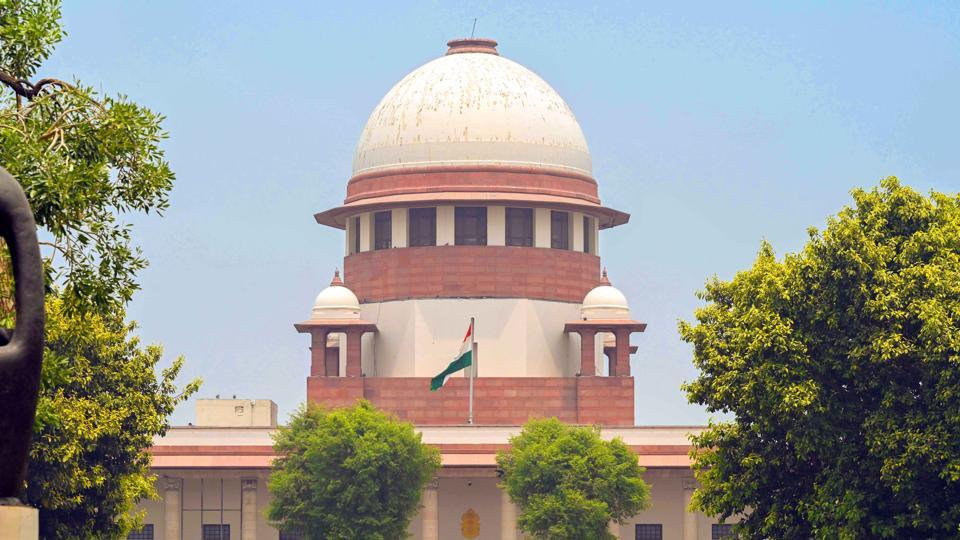
“Denial of speedy and timely justice can be disastrous to rule of law in the long term. Even if the parties involved in a case themselves, with no valid justification attempt to delay the proceedings, the courts need to be vigilant and nip any such attempt in the bud instantly. The administration of justice feeds on the faith of the citizenry and nothing should be done to even remotely shake that faith and confidence,” said a bench of justices Bhushan R Gavai and KV Viswanathan in a judgment on Monday.
Setting aside a Madras high court order that had directed further investigation in a 2013 murder case, despite no valid justification for delaying the trial, the top court warned that courts must act swiftly to curb any attempts by parties to prolong cases without legitimate grounds.
In its ruling, the Supreme Court highlighted that the murder trial had seen significant delays due to repeated and unwarranted applications for further investigation, filed at crucial junctures, including just before the final arguments were set to begin.
The initial FIR was lodged on March 31, 2013, and the charge sheet was submitted on July 11 of the same year. However, the trial came to a standstill in 2019 when the first round of applications under Section 311 of the CrPC (for re-examining witnesses) was filed, followed by an application under Section 173(8) in January 2020 for further investigation. Despite the state initially opposing the requests, it later supported the petition for further investigation, causing additional delays, the bench lamented.
The court expressed concern over the impact such delays have on all stakeholders involved. “In spite of eleven years having elapsed after the incident, the trial has still not concluded. The victims of crime, the accused, and society at large have a legitimate expectation that justice will be available within a reasonable time,” stated the bench.
Emphasising that the pursuit of truth must be balanced with the necessity for a swift conclusion to the legal process, the court also took aim at a broader trend in the legal profession some lawyers file applications with no merit, prolonging litigation and adding to the already extensive backlog of cases.
“Reading some of the averments therein, we are left to wonder whether at all the deponents were conscious of what has been written purportedly on their behalf, before appending their signatures. These misadventures directly impinge on the rule of law, because they add to the pendency and the consequential delay in the disposal of other cases which are crying for justice,” it rued.
The bench asserted it is time that “such frivolous and vexatious proceedings are met with due sanctions in the form of exemplary costs to dissuade parties from resorting to such tactics”.
Addressing the issue of further investigation, the apex court clarified that while the power to order additional probe exists, it should be exercised sparingly and only in exceptional circumstances. The court referred to its earlier rulings, noting that further investigations could be ordered if there is credible evidence to suggest that the initial investigation was flawed or incomplete.
However, in this case, the court found no such justification. “The high court gave no valid reason for ordering a further investigation, and the applications rehashed previously rejected grounds, contributing to unnecessary delays,” it held, setting aside the April 2021 order of the Madurai bench of the Madras high court.
The bench, however, refrained from imposing costs in this particular case due to the high court’s approval of the further investigation, but it made clear that such leniency should not be expected in future cases.
By setting aside the high court’s order and stressing the need for exemplary costs in frivolous cases, the Supreme Court has sounded a caution that parties cannot abuse the legal system for personal gain without risking serious consequences.


