
 E-Paper



Despite opposition, BJP welcomes implementation of Assam Accord’s Clause 6
Many students and indigenous groups in Assam have derided the move as it comes at a time when the central National Democratic Alliance government is pushing to pass the Citizenship (Amendment) Bill, 2016

 Prefer HTon Google


The ruling Bharatiya Janata Party (BJP) in Assam has welcomed the constitution of a nine-member high-level committee by the Centre to implement a clause of the Assam Accord of 1985 despite reservation from several groups.
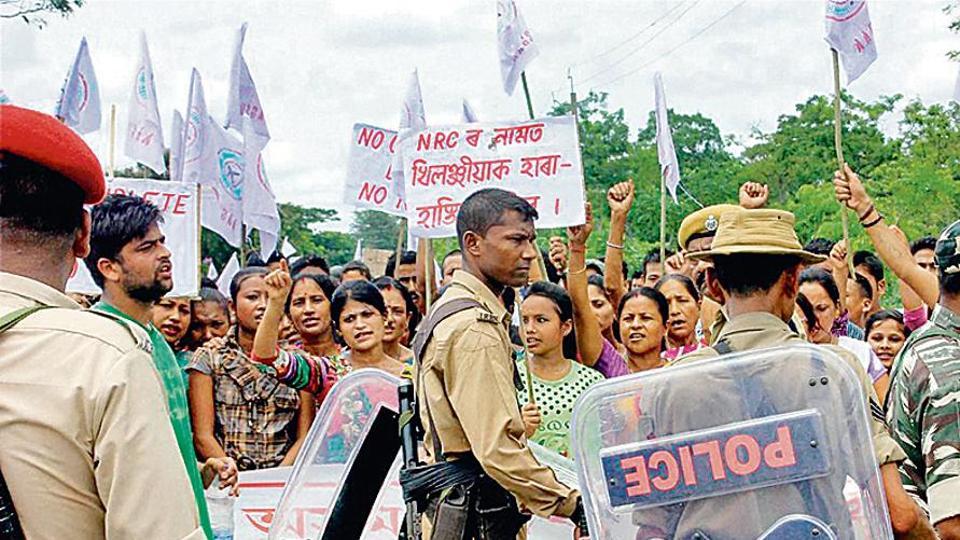
The move to constitute the committee headed by former Union tourism secretary MP Bezbaruah follows a Union cabinet decision in this regard.
Many students and indigenous groups in Assam have derided the move as it comes at a time when the central National Democratic Alliance government is pushing to pass the Citizenship (Amendment) Bill, 2016. A joint parliamentary committee on the bill will submit its recommendations in Parliament on January 7.
While the bill seeks to grant citizenship to religious minorities from three neighbouring states who came to India till December 2014, Clause 6 of the Assam Accord seeks to protect Assam’s cultural, social, linguistic identity and heritage of Assamese people.
Both are contradictory, say indigenous groups. There’s fear among a large section of Assamese if the bill is passed, Hindu Bangladeshis would pour into the state and threaten the indigenous communities.
Several organisations in Assam and across the northeast have called for an 11-hour shutdown on Tuesday to protest the bill.
All Assam Students Union (AASU), which led the six-year agitation against illegal Bangladeshis that culminated with the signing of the Assam Accord, has decided not to send its representative to be a member of the high-level committee.
But the ruling BJP in the state seems unfazed.
“The Citizenship (Amendment) Bill (CAB) and Clause 6 are complementary and not contradictory to each other,” said Himanta Biswa Sarma, Assam cabinet minister and senior BJP leader.
“If CAB is not brought then 17 Assam seats will go the Jinnah way,” said Sarma. Asked if he meant Muslims, “I am not naming any community,” he said.
He gave the example of Sorbhog, an assembly seat in lower Assam which elected BJP state president Ranjit Dass and has a sizeable number of Bengali speaking voters including Hindus.
“If those people are not there those 10,000 crucial votes are not there in Sorbhog and that seat will go to Jinnah,” said Sarma.
He said the committee, which will submit a report within six months, has been formed after a cabinet decision and he has been assured that the recommendations will have constitutional status following his discussion with Prime Minister Narendra Modi.
“If something leads us to make Badruddin Ajmal the chief minister then we will have to check that policy. That is why all this exercise is going on,” Sarma said.
Ajmal, a member of Parliament is the president of the India United Democratic Front (AIUDF), a political party which is believed to have the support of Bengal-origin Muslims among other sections.
Sarma said the committee will also give some attention to the contentious issue of who is an Assamese even as the Centre and the state government are working towards defining it.
“To define the Assamese people we support any cut-off date which is 1951 or prior to it,” Sarma said.


