E-Paper



Developing nations open to locating Loss and Damage Fund in World Bank
The compromise offer was made by developing country parties to kickstart the L&D fund in view of an increase in severe weather events

 Prefer HTon Google


New Delhi: Developing countries have indicated that they are agreeable to locating the Loss and Damage (L&D) Fund in the World Bank but for a pre-determined interim period following which it will become an independent entity -- a significant change from their earlier position and one which could accelerate the creation of the fund.
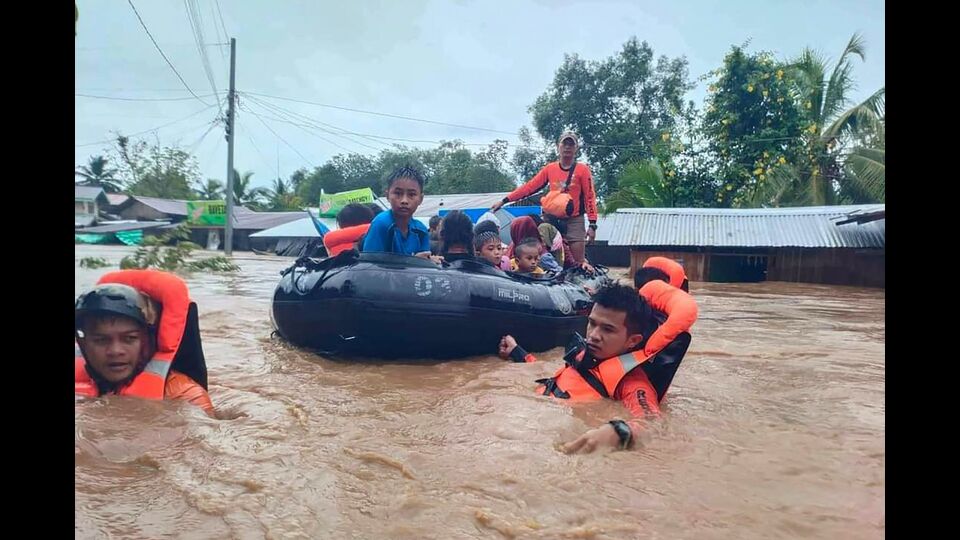
The compromise offer was made by developing country parties to kickstart the L&D fund in view of an increase in severe weather events, many of which are ravaging the economies of least developed, vulnerable and developing economies.
Sonam Phuntsho Wangdi, member of the L&D Transitional Committee representing least developed countries, small islands, the Caribbean, Asia Pacific and Africa said they have an open mind on the location of the fund and their option is to have World Bank as the interim location for a predetermined period with an exit strategy thereafter. The L&D facility will have an independent legal personality after exiting World Bank, he said.
“Loss and damage” is a general term used in UN climate negotiations to refer to the consequences of climate change that go beyond what people can adapt to, or when options exist but a community doesn’t have the resources to access or utilize them. This could include the loss of coastal heritage sites due to rising sea levels, or the loss of homes and lives during extreme floods, according to World Resources Institute.
Read Here: Failure to agree on Loss and Damage facility could risk progress at COP28
The operationalising of the Loss and Damage Facility was discussed at the fifth meeting of the Transitional Committee being held in Abu Dhabi on Friday. HT reported on October 26 that the fourth meeting of the Transitional Committee ended in Aswan last month without a clear consensus on operationalising the fund, exposing a deep trust deficit between rich and emerging economies over historic responsibility, climate reparations and making money available for compensation. The UN Climate Summit (COP28) host , the United Arab Emirates offered to host a fifth meeting to resolve differences among rich and developing countries on November 3 and 4.
Wangdi said they are clear that the fund should offer direct support through largely grant based non-debt finance to developing countries to help them reconstruct their lives. It should address severity of climate impacts on people, infrastructure and ecosystems. There should be flexibility to address variation among events in the developing world. It should also cover slow onset events sea level rise, glacial retreat, drought, land degradation and others, he said.
“Developing countries make a BIG concession to developed countries by agreeing to the #WorldBank being the “interim” host and trustee of the new #LossAndDamage Fund for two years, if the proposed following conditions are met: (a) Is fully consistent with the provisions and principles of the Convention and the Paris Agreement as well as the Fund’s Governing Instrument; (b) The full autonomy of the Board of the Fund to select the Executive Director of the Fund, in line with the relevant World Bank human resources policies...the provisions and principles of the Convention and Paris Agreement as well as the Fund’s governing instrument supersede the policies, definitions and classifications of the World Bank in instances where they differ; allow developing countries to directly access resources from the Fund, including, sub-national, national or regional entities, and small grants funding for communities,” Harjeet Singh, head of global political strategy for Climate Action Network International tweeted.
The US, one of the developed nations pushing for the fund to be located in the World Bank also said there is no obligation for any party under Paris Agreement on providing funds for Loss and Damage. “It is entirely based on cooperation and not on liability,” the US representative said. The payment to the fund based on common but differentiated responsibility and obligation is absolutely unacceptable and a non-starter for US.
HT earlier reported that collapse of the talks on L&D, which could snowball at COP28 if rich and emerging nations are unable to arrive at a compromise, is particularly significant with an over 99% probability of 2023 ending up the warmest year on record, according to the US’ National Centers for Environmental Information’s Global Annual Temperature Outlook and data through September.
Read Here: Fault lines over Loss and Damage fund deepen at key climate meet
Developed countries rejected the foundational principle of common-but-differentiated responsibilities and respective capabilities (CBDR&RC) between developed and developing countries, and thus, their lead role in providing finance to developing countries as part of their financial obligations under the United Nations Framework Convention on Climate Change (UNFCCC) and its Paris Agreement. Developing countries have contended that if the L&D facility is located in the World Bank, it will not have a legal personality and hence will not enjoy as much independence in operating the fund.
“Why are we so suspicious of the World Bank as “interim” host for the L&D Fund? Because once you set up a bureaucracy it is no simple matter to get rid of it and move to something else. The World Bank’s own Climate Investment Funds (CIFs) offer a valuable lesson,” tweeted Brandon Wu, Director of Policy and Campaigns at ActionAid USA.
“Developing countries are keen to host the Fund within the United Nations Framework Convention on Climate Change where the principle of equity will be mandatorily upheld. The World Bank’s funding is primarily focused on loans, while loss and damage funding must necessarily be grant-based and easy to access. Developed countries are proposing a new set of checks and balances for the Fund to be hosted within the World Bank, but if that is the case, why do we need the World Bank -- why not develop a new entity altogether, under the UNFCCC?” Tamanna Sengupta, Programme Officer, Climate Change, Centre for Science and Environment had said on October 19.
“This weekend’s Fifth Meeting of the Transitional Committee must build consensus and deliver clear, clean, and strong recommendations ahead of COP28 to operationalize the Loss and Damage Fund and funding arrangements, so it can be activated and capitalized soon after,” said Sultan Al Jaber, COP28 President in a statement on Friday.
Negotiations will conclude on Saturday.