
 E-Paper



Dharmasthala mass burials: Who is the complainant and what were his 'fake' claims?
Dharmasthala hit headlines last month after a former sanitation worker alleged in a July 3 police complaint that he buried bodies of women raped and murdered.

 Prefer HTon Google


A special investigation team (SIT) on Saturday arrested the complainant, who had alleged that hundreds of human bodies were buried in the forests and riverbanks around Dharmasthala in Karnataka.
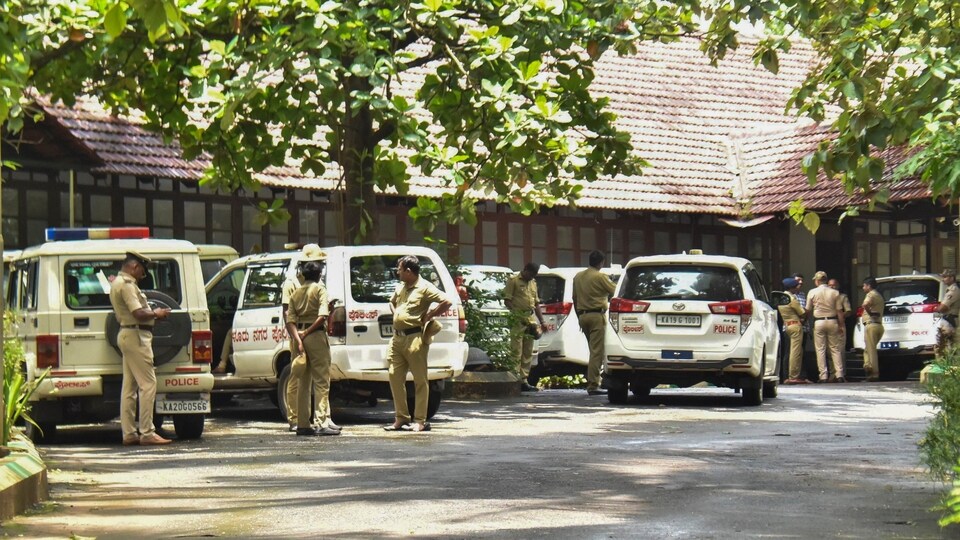
The temple town of Dharmasthala came under the spotlight last month after a former sanitation worker filed a police complaint on July 3, claiming he had buried the bodies of several women who were raped and murdered.
Karnataka home minister G Parameshwara confirmed the arrest, saying that while the complainant had accused people of multiple murders, rapes, and burials over two decades, no conclusions could be drawn until the investigation was complete.
He added that the SIT would proceed with its inquiry based on the complainant’s statements.
"It is true that he has been arrested and is in police custody. As the investigation is on, no information can be shared. The police (SIT) investigation is on, and they have arrested him. SIT will share the details," Parameshwara told reporters when asked about the arrest and its grounds.
Who is the complainant?
The 50-year-old complainant worked as a sanitation worker in Dharmasthala between 1995 and 2014.
He filed a complaint on July 3, claiming that he was forced to bury many bodies in Dharmastala while he worked as a sanitation worker. The bodies were of both men and women, who were allegedly murdered and raped.
The police then began a search for two weeks and also interrogated the complainant. Officials said that there were discrepancies in his statements and evidences, following which he was arrested. After a prolonged questioning, he was also taken for a medical check-up.
Until now, the complainant had appeared before the inquiry panel wearing a mask and was referred to as the ‘mask man’. Officials have now identified him as CN Chinnaiah.
What were his claims? New twists emerge in the case
Chinnaiah alleged that during his years in Dharmasthala he was forced to bury 70-80 bodies, including those of women and minors, some of which bore signs of sexual assault. He said he had given a statement before a magistrate and directed investigators to forested sites along the Netravathi River, where excavations were carried out. Skeletal remains were recovered at two locations, though forensic confirmation is still awaited.
As part of the inquiry, the SIT conducted digs at the sites identified by Chinnaiah along the riverbanks, where remains were unearthed.
The controversy deepened with a separate set of allegations by Sujatha Bhat, who claimed her daughter, Ananya, a medical student, went missing in Dharmasthala in 2003. Bhat initially said Ananya disappeared after a shopping trip near the temple complex, and later alleged she herself had been abducted, assaulted and hospitalised in a coma as part of an attempt to silence her. Her claims linked the disappearance to mass burials and sexual assault, triggering public outrage and protests that prompted the state government to form the SIT.
However, on Friday Bhat retracted her allegations in an interview with a YouTube channel, admitting her story was fabricated. “Some people told me to say it. I was asked to do it because of the property issue. That’s the only reason,” she said, referring to land owned by her grandfather, which she claimed had been taken over by the temple authorities.
Bhat said activists Girish Mattannavar and T Jayanti encouraged her to repeat the allegations, but maintained no financial transaction was involved. “Nobody demanded money from me. I have never asked anyone for money either. What I questioned was how my grandfather’s property was given away without my signature,” she said.


