
 E-Paper



Did Chinese belligerent overreach in the Indo-Pacific bring India, US together?
PLA's action in East Ladakh, the growing threat over Taiwan and in South China Sea and Beijing’s BRI leverage over Indo-Pacific have acted as a super catalyst.

 Prefer HTon Google


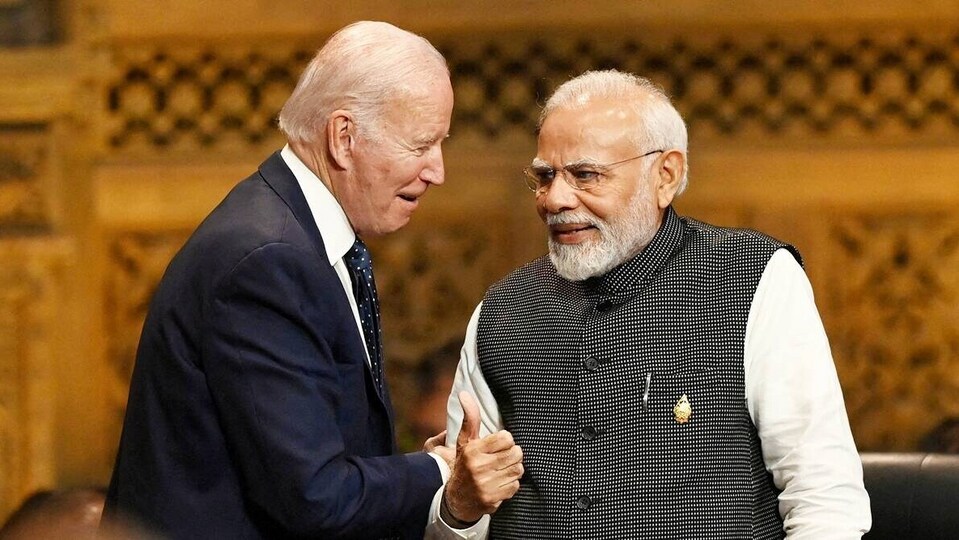
Prime Minister Narendra Modi is headed for the United States with positivity overtaking the past legacy of negativity, hurdles, and restraint in bilateral ties. While PM Modi and US President Joe Biden have worked together to build a strong relationship between two natural allies, it is the wolf warrior diplomacy of the Middle Kingdom that really has acted as a super catalyst in bringing the two biggest democracies together.
Although the US and China are now talking at the highest level to avoid any untoward accident, it is other conversations in Asia that may have caused concern to Chinese President Xi Jinping and his band of wolf warriors. The Vietnamese Defence Minister Gen Phan Van Giang is in New Delhi and held a meeting with Indian Defence Minister Rajnath Singh on Monday. Last week, National Security Advisors of Japan, the Philippines and the US hunkered down in Tokyo to chart out a new trilateral defence partnership including naval exercises to counter the Chinese challenge in the South China Sea.
While India and Vietnam are the two countries that have fought wars with China and have unsettled territorial disputes, Japan and the Philippines also have unresolved territorial claims with China apart from facing existential dispute over the future of Taiwan. Even though India and Vietnam have huge trade with China, the two countries are wary of the Middle Kingdom with the PLA sitting aggressively all along the Line of Actual Control with India, particularly in Western and Eastern sectors. Even today, the Indian Army and the PLA have deployed over 50,000 men on both sides of the LAC in East Ladakh as the Chinese belligerence that began in May 2020 continues.
Fact is that the Chinese aggression in East Ladakh unravelled its larger political strategy to keep India away from the US by pumping New Delhi’s ego in the name of strategic autonomy and independent thinking. The Chinese supporters in India and the Leftist parties always conjured up images of USS Enterprise in Bay of Bengal in the 1971 Indo-Pak war to drive home the message that the US cannot be trusted and that India should go it alone. A flawed strategy that definitely not helped India but worked in favour of the Communist Party of China even as Beijing expanded its area of influence in the Indo-Pacific while growing industrially at the expense of the US. After China bared its teeth in the Indo-Pacific, the era of free lunches for Chinese wolf warriors was over as the world started looking at Beijing most suspiciously.
India under PM Narendra Modi had to shed the past Indian baggage of mistrust with the US after the present Pakistan leadership made it amply evident that China, not the US , was their ultimate strategic partner. Faced with a double whammy from China and Pakistan in Jammu and Kashmir, and in Ladakh and with Beijing holding an economic guillotine over neighbours Sri Lanka and Myanmar, the Indian strategic options were very limited. The Chinese string of pearls had started to choke India in its own backyard as Beijing's push was being felt on the land and maritime frontiers.
The “no limits ally” relationship that has developed between China and Russia also skewed the Indian equation particularly after the Ukraine war as New Delhi realized that its hardware dependency on Russia may lead to grief, particularly at a time when the PLA was amassed in East Ladakh. The China-Russia joint exercises in and over the Sea of Japan on the other hand raised alarm bells in Tokyo and Seoul just as China’s security pact with Solomon Islands raised the hackles of Australia in the Far Pacific.
The revival of Quad and the growing trilateral partnerships minus China in SouthEast Asia are all indications that the wolf warriors have overplayed their hand with uncalled-for aggression. The decision has already been taken as far as New Delhi is concerned.


