E-Paper



Did ULFA-I use ceasefire to regroup, enlist recruits?
A police officer, who spoke on condition of anonymity, said ULFA-I may have taken a chance on regrouping using the ceasefire


On August 6, banned terror outfit United Liberation Front of Asom-Independent (ULFA-I) issued a statement calling for a shutdown and urged people to boycott the Independence Day celebrations. The group last year refrained from calling for a boycott of the celebrations or a shutdown for the first time in ULFA-I’s 43-year history.
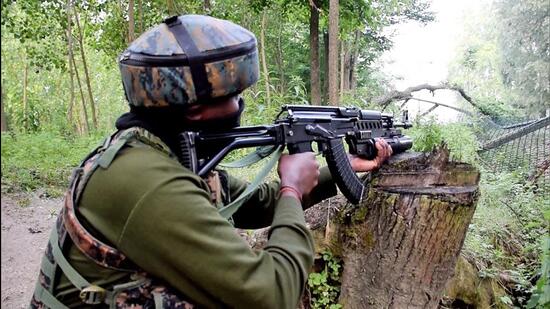
Three days after ULFA-I’s August 6 statement, a junior commissioned officer was injured when an Assam Rifles patrol was fired upon near the India-Myanmar border in Arunachal Pradesh’s Changlang district. ULFA-I and the Yung Aung faction of the National Socialist Council of Nagaland (Khaplang), another banned terror outfit, are believed to have carried out the attack.
The boycott call and the attack have been seen to signal ULFA-I’s unwillingness to change its stance on an independent Assam. The group, which declared a unilateral ceasefire in May 2021 citing the Covid pandemic, is suspected to have used it to regroup and train recruits in its camps in Myanmar.
A police officer, who spoke on condition of anonymity, said ULFA-I may have taken a chance on regrouping using the ceasefire. “In the past year, 70-80 youths from Assam have left their homes for training at the outfit’s camps in Myanmar. While some of them have come back, the figure is still higher than the 25-30 youths who used to get recruited annually earlier.”
Police said the sudden surge in recruitments could be due to expectations of benefits if talks between the Centre and the outfit took place and culminated into an agreement. “Almost none of them [recruits] had any ideological leanings to ULFA-I. Many had financial or personal problems and wanted an outlet. But with talks not taking place...no youths have gone to Myanmar in the past four months,” the officer said.
It is believed that ULFA-I and other terror outfits from the northeast have found a chance to carry on their activities across the border without many obstacles as the Myanmar Army is busy in quelling the pro-democracy movement after last year’s military coup.
Police estimate that ULFA-I has around 180-200 cadres. Around 60-70 of them are believed to be new recruits who joined over the last year. Of the new cadres, 36 are said to have undergone arms training in Myanmar.
Anup Chetia, general secretary of ULFA’s pro-talks faction, said by boycotting the Independence Day celebrations and carrying out attacks on security personnel, ULFA-I was trying to show its presence and assert it is still relevant.
Insurgency in Assam began in April 1979 with the formation of ULFA as an offshoot of the agitation against undocumented immigrants from Bangladesh. ULFA, which sought to create an independent Assam, split into two groups in February 2011. Arabinda Rajkhowa led one group and decided to give up violence and talk with the Centre without any condition. The Paresh Baruah-led faction decided against talks and rebranded itself as ULFA-I.
Chetia said ULFA-I was trying to carry out violent acts in Assam ahead of Independence Day but failed to do so due to surveillance. “..they [instead] resorted to incidents of firing in Arunachal Pradesh and Nagaland.”
He said there was also some positive response from Baruah last year to Assam chief minister Himanta Biswa Sarma’s appeal to ULFA-I for talks. “There were also talks about back-channel negotiations. But the boycott call and attacks on security personnel this month may indicate a break in communication between the two sides.”
Chetia, who is known to be in touch with surrendered and active ULFA-I cadres, said the group’s recruitment drive was a continuous process and its call for the ceasefire may not have been a ruse to strengthen itself.
Hiren Nath, the additional director general of police, said they were keeping a very close watch on developments within ULFA-I. “...most people in Assam do not want violence and terror activities. Law and order situation is much better and development activities are picking up pace.”
He said the Armed Forces (Special Powers) Act was revoked this year from Assam’s 23 districts due to a drop in terror activities. “We want it to be lifted from the entire state.. for peace and development to return, Baruah should come for talks.”
Over the last year, agencies have detected 597 people “who showed tendencies of joining ULFA-I”. Of them, 396 were counselled to deter them. Forty-eight cases were registered against those who were more insistent on going to Myanmar and 32 were arrested.
Another police officer said 228 objectionable posts on social media expressing support for ULFA-I and other terror groups were removed over the last year. “...47 other posts were deleted through social media platforms.”