
 E-Paper



Diplomacy, dark mode: How India-bound ships made safe passage via Strait of Hormuz
India is the world’s fourth largest buyer of the LNG and the second largest of liquefied petroleum gas (LPG).

 Prefer HTon Google


As the war between Iran and US-Israel rages on even during its third week, with no clear signs of de-escalation, all eyes remain on the Strait of Hormuz that still lies choked because Tehran is controlling which ships pass through.
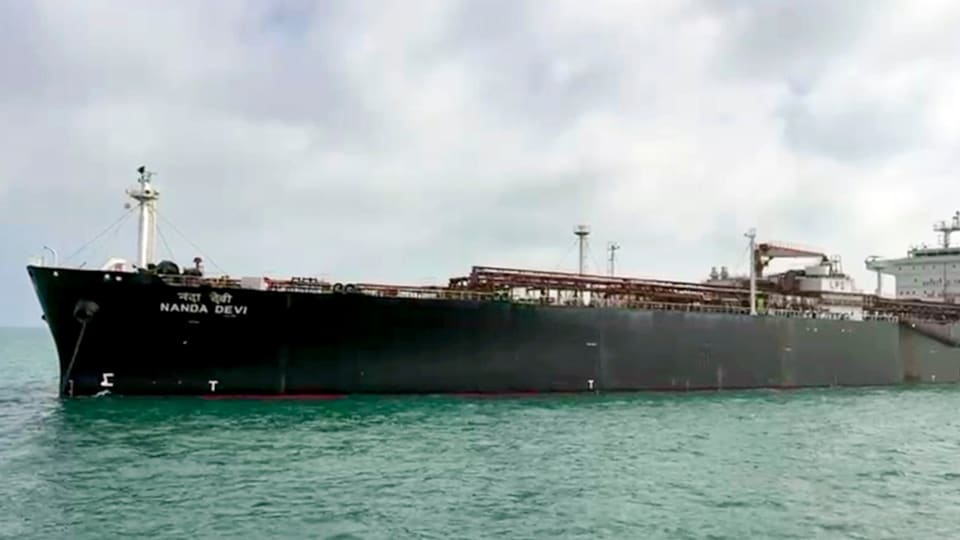
Amid this blockade, three Indian-flagged ships passed the Strait of Hormuz safely last week after several rounds of talks between leaders of India and Iran.
Around 20 per cent of the world’s crude oil and liquefied natural gas (LNG) passes through Strait of Hormuz, and India is the world’s fourth largest buyer of the LNG and the second largest of liquefied petroleum gas (LPG).
Track live updates of US-Iran war here
Inside India’s efforts for safe passage of its ships through Strait of Hormuz
As Iran sought to block the Strait of Hormuz, a key passage for oil, India sought to work up its diplomatic means to make sure that Indian-flagged ships pass through the strait safely.
PM Modi speaks to Iran’s President
Last week, Prime Minister Narendra Modi spoke with Iranian President Masoud Pezeshkian to discuss the “serious situation” in West Asia. He expressed “deep concern” over the escalation of tensions in the area and the loss of civilian lives. The Prime Minister said that he called for dialogue and diplomacy.
“The safety and security of Indian nationals, along with the need for unhindered transit of goods and energy, remain India’s top priorities. Reiterated India’s commitment to peace and stability and urged for dialogue and diplomacy,” Modi wrote in a post on X.
Also read: 'Baseless': India on reports claiming Iranian vessels seized, exchange sought
Iran’s ambassador says ‘India our friend’
Later in the week, Iran’s Ambassador to India Mohammad Fathali confirmed safe passage to Indian ships through the Strait of Hormuz and said, "India is our friend. You will see it within two or three hours. We believe that Iran and India share common interests in the region."
Shivalik, Nanda Devi vessels pass through
Later, two Indian-flagged vessels — Shivalik and Nanda Devi — passed through the war-hit waterway carrying 92,700 metric tonnes of LPG. They reached India this week.
Also read: US allies refuse 'unhappy' Trump's Strait of Hormuz demand, say 'war began without consultation'
Over 20 Indian-flagged vessels remain stuck at the Strait of Hormuz.
‘Dark mode’
Before the aforementioned two vessels, another crude tanker which was bound for India but Liberia-flagged — Shenlong Suezmax — also slipped through the Strait of Hormuz after briefly going “dark” to avoid detection, Hindustan Times reported earlier.
It was the first vessel headed towards India to pass through the strait safely after the war erupted.
Jag Laadki escapes UAE’s Fujairah port
Later, as Iran pounded UAE’s key Fujairah port, another Indian-flagged vessel named Jag Laadki escaped the attack; and is expected to reach India on Tuesday.
Jag Laadki was escorted out of the Gulf of Oman after it sailed from the Fujairah port by an Indian warship, HT reported citing officials aware of the matter. The vessel is carrying 80,800 MT of crude oil.
‘No blanket arrangement’
External affairs minister S Jaishankar said India does not have a “blanket arrangement” with Iran for safe passage of Indian-flagged ships through the Strait of Hormuz, and added that “every ship movement is an individual happening”.
“I am at the moment engaged in talking to them, and my talking has yielded some results…This is ongoing. If it is yielding results for me, I would naturally continue to look at it,” he said while speaking with Financial Times in Brussels on Sunday.
“India and Iran have a relationship. And this is a conflict that we regard as something very unfortunate,” Jaishankar added.
“These are still early days. We have many more ships there. So while this is a welcome development, there is continuing conversation because there is continued work on that.”


