
 E-Paper



US allies refuse 'unhappy' Trump's Strait of Hormuz demand, say 'war began without consultation'
US allies, including the UK and Germany, are hesitant to support Trump's call for military assistance to reopen the Strait of Hormuz amid Iran ‘war’.

 Prefer HTon Google


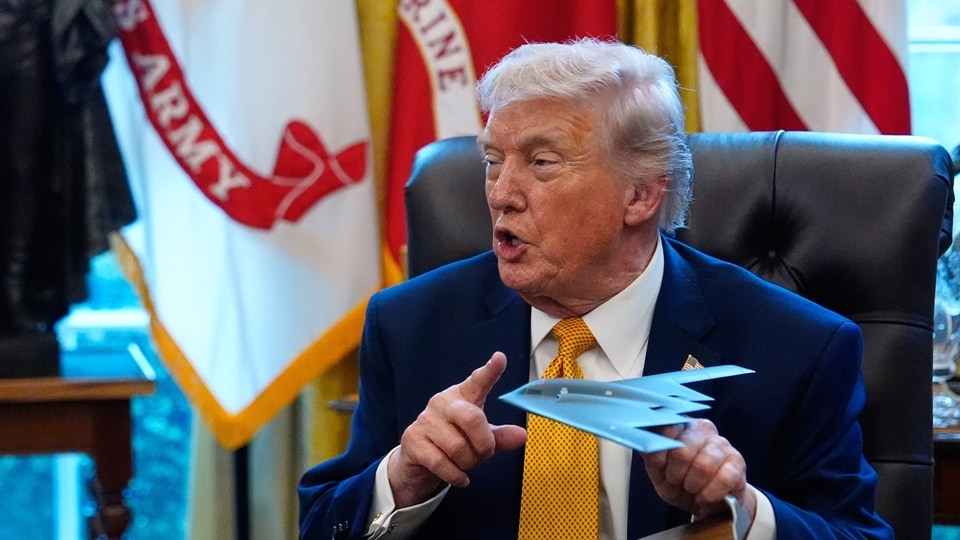
Appearing to accuse Western allies of ingratitude, US President Donald Trump on Monday said some countries "weren't enthusiastic enough" to act on his call for deploying warships to escort tankers through the closed off Strait of Hormuz, key waterway through which 20 per cent of the world's oil and liquefied natural gas flow.
Strait of Hormuz has largely remained closed since the February 28 US-Israeli strikes on Iran sparked a massive exchange of drones and missiles that still continues to rattle the entire Gulf region.
Trump, speaking at a White House event in Washington, said many countries had told him they were prepared to help, but appeared to express frustration with some long‑standing allies.
"Some are very enthusiastic about it, and some aren't," he said, without taking names. "Some are countries that we've helped for many, many years. We've protected them from horrible outside sources, and they weren't that enthusiastic. And the level of enthusiasm matters to me," he said.
“…You mean for 40 years, we’re protecting you and you don't want to get involved in something that is very minor?” Trump added.
'US-Israel didn't consult before starting war': What do allies have to say
A number of US partners, including Germany, Spain, UK and Italy, indicated they had no immediate plans to send ships to help reopen the strategic waterway, which Iran's drone-missile and naval mines salvo has effectively shut.
"We lack the mandate from the United Nations, the European Union or NATO [North Atlantic Treaty Organization] required under the Basic Law," Reuters quoted German Chancellor Friedrich Merz as saying in Berlin, adding that Washington and Israel had not consulted Germany before launching the war.
Britain, the closest US military ally in Europe, has also said it won’t join offensive operations against Iran, although it’s letting the US use its bases to strike missile sites. Prime Minister Keir Starmer told reporters on Monday that the UK was working with security partners to draft a “viable collective plan” to reopen the Strait.
“We will not be drawn into the wider war,” Starmer said during a press conference in Downing Street. “Ultimately we have to open the Strait of Hormuz. That is not a simple task.”
Hours later, Trump criticised the UK prime minister, saying he was “very surprised” that when a US request was made two weeks ago for two aircraft carriers Starmer “really didn’t want to do it.”
“I was not happy with the UK,” the president told reporters, as quoted in a Bloomberg report. “I think they’ll be involved. Yeah, maybe. But they should be involved enthusiastically,” Trump added.
The UK, however, is exploring whether it could help by deploying autonomous mine-hunting drones alongside other US allies, Reuters reported, citing people familiar with the matter.
‘We must not do anything…’: Spain
Spanish foreign minister Jose Manuel Albares said on Monday in Brussels, “We must not do anything that adds even more tension or escalation".
Amid allies deflecting from bending to Trump's call for help with opening Hormuz, European Union foreign policy chief reportedly Kaja Kallas was one of the few voices pushing for the bloc to redirect regional resources to the Strait.
Specifically, she called for member states to consider expanding their Aspides naval mission, which was originally launched in 2024 after the Houthis attacked shipping vessels in the nearby Red Sea, according to Bloomberg.
“If we want to have security in this region, it would be easiest to already use the operation we have in the region and maybe change a bit,” Kallas said.
While the Aspides vessels are currently allowed to navigate in the Strait of Hormuz, their mandate doesn’t let them to do more than that. EU countries would have to unanimously agree to change those directives, which is complicated.
Italy does not seem to be in favour of repurposing the Aspides mission to guard the Strait of Hormuz. The country has one ship deployed in the mission.
“The Red Sea mission needs to be strengthened within the Red Sea, but changing it is complicated,” Bloomberg quoted Italian foreign minister Antonio Tajani as saying on Monday. “We think that for now, it is right it stays in the Red Sea.”


