
 E-Paper



Diverse collectors, matured context and the renewed interest in South Asian art
India is becoming home to a maturing collecting community and this is validated by sales data covering the past 37 years.

 Prefer HTon Google


What is going on with South Asian art? A lot if you have been following the secondary art market and auctions. In the past few weeks alone, we have seen the price threshold of major Indian artists being reset. Maqbool Fida Husain shattered all expectations when on March 19, Gram Yatra, an early work of his sold for ₹118 crore at a Christie’s auction. Prior to this, Husain’s highest priced work was Untitled (Reincarnation), a large-format canvas, also from the 1950s, that achieved ₹26.7 crore, having sold in 2024.
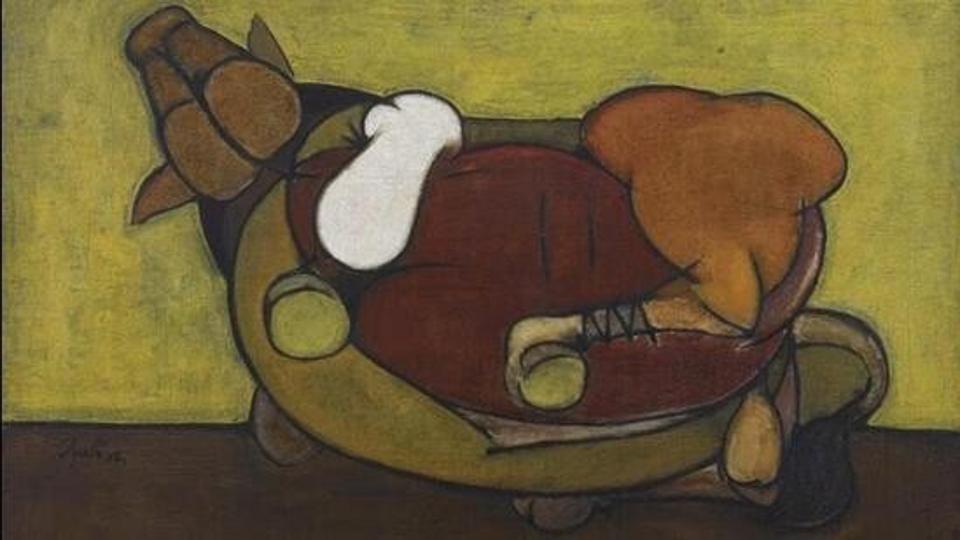
Last week, SaffronArt posted the highest sale yet recorded for South Asian Art on day one of its t wo-day Modern and Contemporary Indian art sale. Tyeb Mehta, Husain’s contemporary and close friend sold for ₹61.8 crore. With Wednesday’s sale of ‘Trussed Bull’, Mehta’s price point has now been reset thrice over the past 36 months, twice in close succession in 2022 — ₹36.8 crore and ₹41.9 crore. Mehta is now tied with Amrita Sher-Gil as the second highest work of art sold at an auction.
What does the recent spate of sales tell us about Indian art?
One, patronage for the Indian art market is at the highest it has ever been. According to the Indian Art Investor Annual Market Report 2024-25, published for private circulation by Indian Art Investor, the turnover from auction sales for this financial year alone was ₹1,016.6 crore, achieved from the sale of 2,833 works. To offer context, according to the Intelligence Report from 2000-01, the turnover was ₹13.2 crore, from the sale of 515 works.
This development is indicative of a maturing social context, with cultural connoisseurship receiving support from a growing range of collectors and patrons, that include old-moneyed barons — born again to the delights that the art world can offer — to freshly-minted Ultra High Net Worth Individuals (UHNWI), the majority of them being relatively new to the domain of collecting art.
Wealth was never the constraint. The hurdle was for art to be deemed worthy of the price that they were asking. Recent art sales seem to indicate that both requisites are being gladly met with and surpassed without any cause for speculation anymore.
To be able to establish how evolved a society and its people are, one must merely consider the number of museums, theatres, art galleries, and clusters of cultural districts in a settlement. Though Gurugram, at this point seems to have more liquor vends, each more dazzling than the previous, I daresay, based upon the number of calls I’ve received over this year past from residents of Camellias and their neighbouring towers, requesting guidance within the high-value asset bracket — held by the majority to be a daunting domain — there is hope yet. There are several private endeavours and museums being announced across the country, including that of Mrs Kiran Nadar to house her unparalleled collection of Indian art.
Two, the rising price-points indicate an increased interest in Indian artists and a deeper knowledge of their important works. In what is a sharp indicator of market maturity, this is the first time collectors have taken note of an important decade for Tyeb and Husain: the 1950s. Typically, the top prices for Mehta’s works have historically been held by those painted in the 1980s and ‘90s. Amongst his 20 highest prices recorded, seven are for works from the ’80s, and six for works from the 1990s. In fact, the highest rank held by any of Tyeb’s paintings from the ’50s was 34 — that was dramatically reset to the top rank, following Wednesday’s sale.
Three, India is becoming home to a maturing collecting community and this is validated by sales data covering the past 37 years. For MF Husain (1915-2011), sales at auction have gone from ₹2.7 crore in 2000-01 to ₹265.5 crore in 2024-25.
To add further financial context, the highest price paid for a work by VS Gaitonde (1924-2001) till 2004-05 was ₹32 lakh. His record now stands at ₹48.3 crore. This was set in early 2022, and is due for a significant correction that will announce itself as soon as an important canvas by the artist is consigned to sale, either in the private market or in a public sale.
That the maturation is not restricted to only the top-slice of the market is evident in that over FY 2024-25, highest prices were achieved for 65 artists, including Dhruva Mistry, Pilloo Pochkhanawala, G Ravinder Reddy, and Manu Parekh — a powerful sign of a widening market that’s ascending with stability and growing patronage. What this indicates is that the collector community is not just looking at a handful of artists but is keen to expand its base as its knowledge deepens.
Arvind Vijaymohan is the founder-CEO of Artery India, an art sales and advisory firm. Views expressed are personal.


