
 E-Paper



Dominance of onions on veggie platter explains price angst
What explains this angst surrounding onions? The answer is simple. Onions are the second most consumed vegetable in the country after potatoes.

 Prefer HTon Google


For the past few weeks, the rise in onion prices has been the main story in the food economy. This is not something new. Every time onion prices go up, there is an outcry against the government.
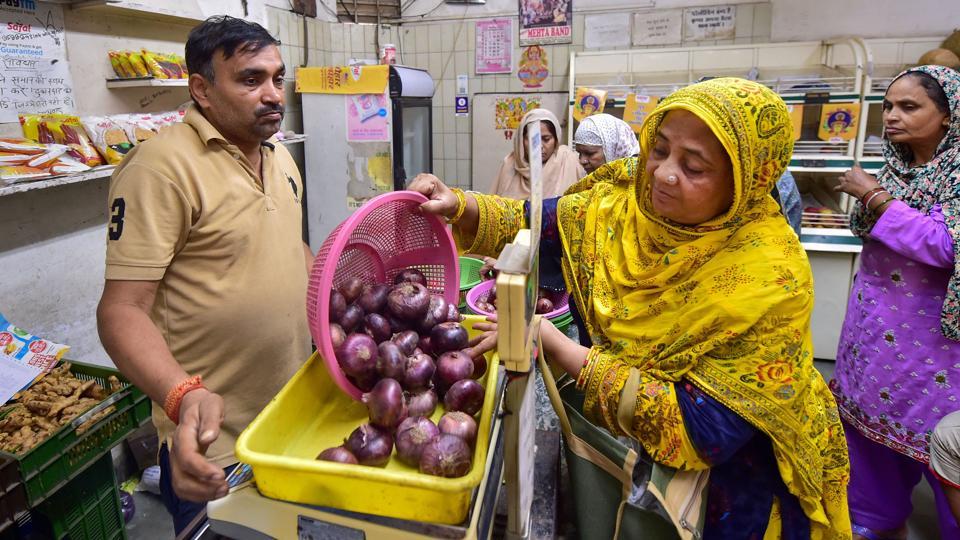
What explains this angst surrounding onions? The answer is simple. Onions are the second most consumed vegetable in the country after potatoes. An average Indian household spends 13% of its total vegetable bill on onions alone.
If one were to include potatoes and tomatoes as well, the share reaches 44% of the total vegetable consumption bill. Potatoes are the most consumed vegetable in India, with a share of 20% in total vegetable spending.
The headline number of the all-India share in vegetable consumption actually hides the dominance of onions in vegetable consumption in large parts of the country. Onions have a greater share in vegetable consumption than potatoes in southern and western states such as Tamil Nadu, Kerala, Andhra Pradesh, Karnataka and Maharashtra.


It is actually the poorer states which drive up the overall potato consumption figures. Potatoes account for more than 30% of the total spending on vegetables in states such as Bihar, Jharkhand, Uttar Pradesh and West Bengal.
This is to be expected, since onions, unlike potatoes, are taste-enhancing ingredients, rather than a source of calories.
These figures have been calculated from the 2011-12 (latest available figures) Consumption Expenditure Survey (CES) conducted by the National Sample Survey Office. CES is the most authoritative source of consumption data in India.
To be sure, spending on vegetables was just 10% and 9% of total food spending in rural and urban India in 2011-12. Cereals, milk, and milk products had the biggest share in food consumption in India.
However, it is more likely that vegetables are bought on a day-to-day basis, unlike food grains.
This means that a spike in vegetable prices is more likely to put an immediate burden on family budgets. Why do we not hear similar stories about potato prices then? This is because potato prices are far more stable compared to that of onions.
Such has been the impact of the onion price hike that governments are doing everything they can to bring down prices. The central government has banned exports.
In Delhi, the government is offloading its stocks to protect consumers.
The modal wholesale price of onions was ₹30-40 per kilogram in Delhi’s Azadpur fruit and vegetable market on September 28, 2019, while the Delhi government has been selling onions at ₹24 per kilogram.
(Ishan Anand teaches economics at Ambedkar University, New Delhi)


